A useful conversation can open a door at work, turn an acquaintance into a friend, or help resolve a problem that has been hanging over a relationship for weeks. Yet plenty of people who communicate well in writing find themselves less articulate in person. They lose track of their point, answer too quickly, struggle to read the room, or realize afterward that they never actually addressed the issue they wanted to discuss.
Improving conversation skills involves several different abilities, and they do not always develop together. Someone who is great at making small talk may struggle to give difficult feedback. A thoughtful listener may have trouble speaking up in meetings. Another person may be persuasive when presenting an idea but overlook the emotional signals that tell them the other person is no longer engaged.
That is why choosing a communication book based on your actual needs is more useful than searching for one universal formula. These five books cover different parts of the process, from understanding how people connect to finding better words when a conversation becomes challenging.
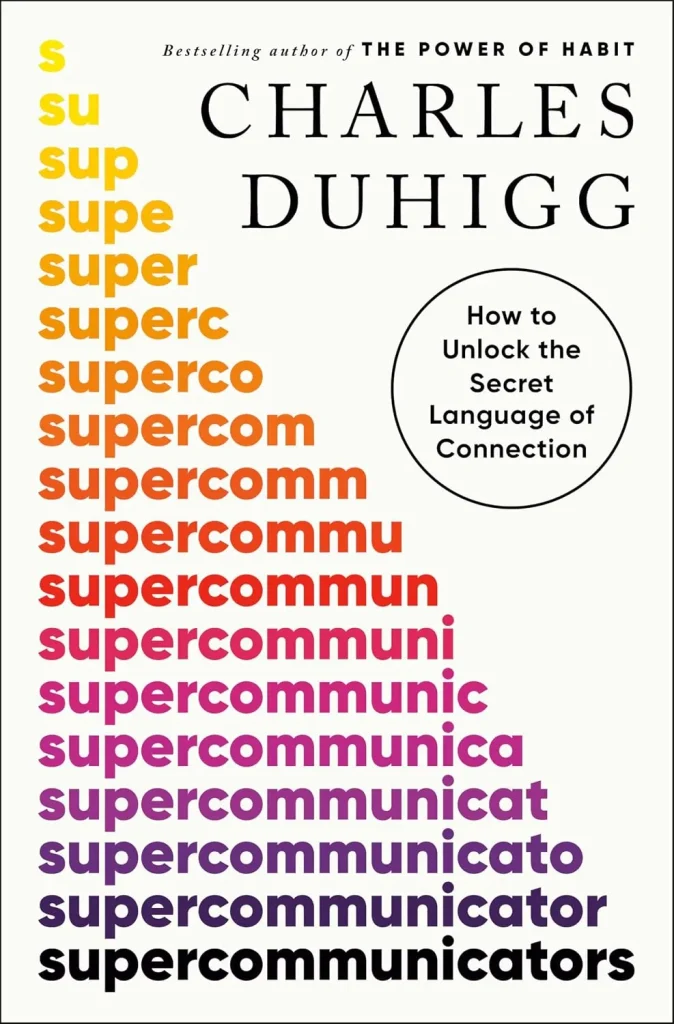
1. Supercommunicators: How to Unlock the Secret Language of Connection by Charles Duhigg
The skill to develop: Understanding what the other person needs from a conversation.
Two people can talk about the same subject and still feel that they are not communicating. One wants to discuss solutions, while the other wants acknowledgment. One sees a disagreement as a practical problem, while the other experiences it as a question of respect. Unless both people recognize this mismatch, adding more explanations may only make the conversation more frustrating.
Charles Duhigg’s Supercommunicators explores how people create connections through conversation and how recognizing different conversational needs can improve mutual understanding. The book examines the roles of practical questions, emotional experiences, and personal identity in the way people communicate.
Consider a friend who tells you they have had a terrible day at work. You might immediately offer a list of ways to handle the situation, but they may not be ready for advice. Asking what happened and giving them room to explain can help you understand whether they want a solution, emotional support, or simply someone who will listen.
The book is particularly useful for people who sometimes feel misunderstood despite making a genuine effort to communicate. It encourages you to pay attention not only to the topic being discussed but also to the kind of connection the other person is looking for.
Try it when: You often give advice that people do not want, struggle to connect across different perspectives, or find that conversations miss the point.
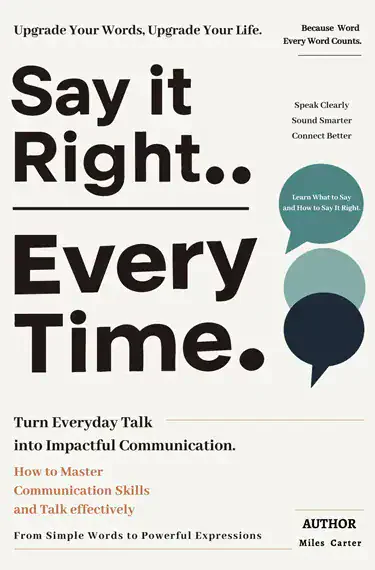
2. Say It Right Every Time by Miles Carter
The skill to develop: Turning your thoughts into clear, appropriate words.
Some communication problems are surprisingly specific. You know you need to tell a colleague that a deadline is unrealistic, but you cannot find a way to say it without sounding uncooperative. You want to decline an invitation, yet your explanation becomes so long that the other person starts negotiating. Or you have a good idea during a meeting but struggle to present it with enough clarity for people to take it seriously.
Say It Right Every Time by Miles Carter focuses on the language and frameworks people can use in situations like these. It includes 115 scripts and 15 frameworks covering mature expression, requests, boundaries, disagreement, professional communication, and calm responses under pressure. The book also addresses people-pleasing and the tendency to sacrifice clarity in an effort to avoid disappointing others.

Say it Right..Every Time.
Miles CarterPractical communication tools for the moments that matter — say what you mean, calmly and confidently.
Its practical emphasis makes it relevant to more than formal speaking or persuasive presentations. Many important conversations happen spontaneously, when you have only a few seconds to decide how to respond. Having practiced ways to express a concern, make a request, or disagree respectfully can make those moments easier to navigate.
For example, there is a difference between saying, “Fine, I’ll do it,” when you are already overloaded and saying, “I can take this on, but I’ll need to move the other deadline.” The second response communicates willingness while making the practical limitation clear. It gives the other person information they can act on instead of leaving your frustration hidden beneath an apparently agreeable answer.
The point is not to turn conversation into a performance. It is to help you express what you mean without unnecessary aggression, vagueness, or overexplaining.
Try it when: You struggle to say no, need to communicate more confidently at work, or often think of a clearer response after a conversation has ended.
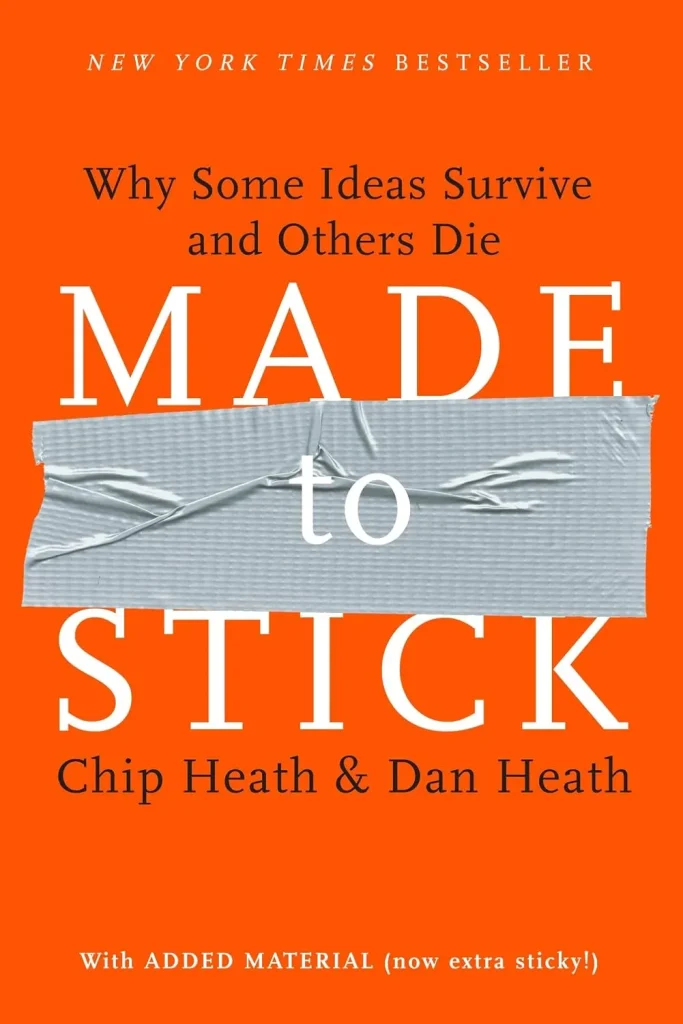
3. Made to Stick: Why Some Ideas Survive and Others Die by Chip Heath and Dan Heath
The skill to develop: Making your ideas clear and memorable.
Have you ever explained an idea that seemed perfectly clear in your head, only to watch the other person look confused? Sometimes the problem is not the idea itself. You may have introduced too much background, used abstract language, or included so many details that the main point became difficult to identify.
In Made to Stick, Chip Heath and Dan Heath examine why certain ideas are easier to understand, remember, and communicate than others. The book explores principles such as simplicity, concreteness, credibility, and storytelling, showing how the way information is presented affects whether people grasp it.
These lessons can improve everyday conversations as well as presentations. When explaining a problem to a teammate, for instance, starting with the specific issue and its impact may be more effective than giving a long account of everything that happened beforehand. A relevant example can also help someone understand a concept that would otherwise sound abstract.
The book is not primarily a guide to small talk or interpersonal relationships, but it offers useful tools for anyone who needs to explain ideas clearly. It is especially relevant when conversations involve planning, teaching, persuading, or making decisions together.
Try it when: People frequently misunderstand your explanations, your stories lose their main point, or you want your contributions in meetings to be more memorable.
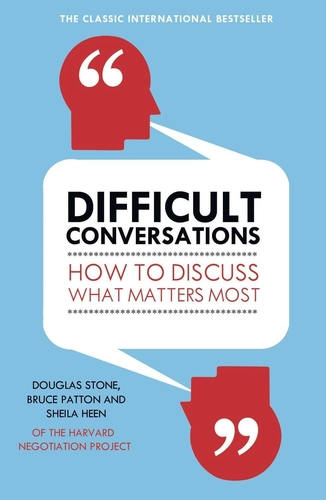
4. Difficult Conversations: How to Discuss What Matters Most by Douglas Stone, Bruce Patton, and Sheila Heen
The skill to develop: Addressing uncomfortable issues without getting trapped in blame.
A missed deadline is rarely just a missed deadline when the people involved have different expectations. One person thinks the other is unreliable; the other feels their workload has been ignored. What begins as a practical discussion can quickly turn into an argument about intentions, respect, or competence.
Difficult Conversations helps readers understand why sensitive discussions become so complicated. The authors explore the facts people disagree about, the emotions attached to the situation, and the personal meaning each person takes from what happened. Recognizing these layers can help you avoid treating your interpretation of events as the only possible explanation.
A practical starting point is to distinguish what you observed from what you concluded. “The report arrived two days after the agreed deadline” describes an event. “You don’t respect my time” assigns a motive. The second statement may reflect how you feel, but presenting it as an established fact can make the other person defensive before you have even discussed the problem.
The book encourages a more curious approach: explain your perspective, make room for the other person’s account, and examine the issue without assuming that understanding one side requires dismissing the other. That approach is valuable in relationships, workplaces, and family discussions where the connection matters as much as the immediate outcome.
Try it when: You have an unresolved disagreement, need to give difficult feedback, or keep postponing a conversation because you expect it to go badly.
5. Just Listen: Discover the Secret to Getting Through to Absolutely Anyone by Mark Goulston
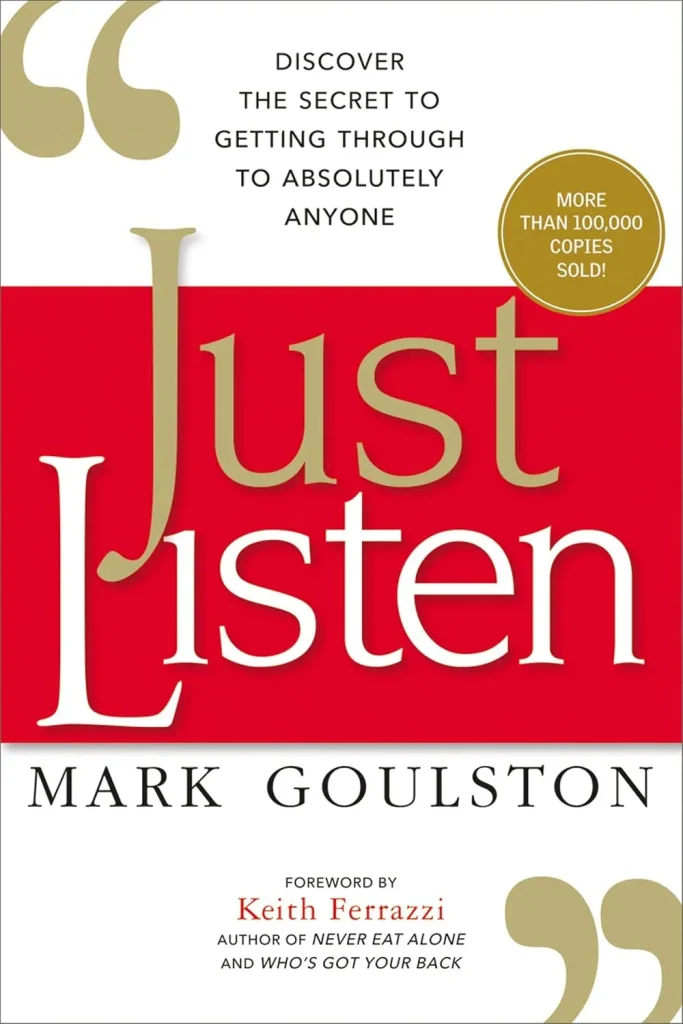
The skill to develop: Helping conversations move forward when emotions get in the way.
You can make a perfectly reasonable point and still fail to get through to someone who feels criticized or threatened. When people become defensive, they may stop considering what you are saying and focus instead on protecting their position. Repeating your argument more forcefully often makes the exchange less productive.
In Just Listen, Mark Goulston explores how listening and emotional awareness can help people become more receptive to communication. The book discusses ways to approach tense interactions, recognize emotional barriers, and make it easier for someone to feel understood before attempting to persuade them.
This does not mean agreeing with everything someone says or taking responsibility for their feelings. It means recognizing that people are more likely to engage constructively when they do not feel that they must defend themselves against every sentence. Acknowledging a concern before explaining your own position can sometimes make room for a more useful discussion.
The ideas are especially relevant for managers, parents, team members, and anyone who regularly needs to navigate frustration or resistance. They can also help in ordinary misunderstandings, when both people are so focused on proving their point that neither has paused to understand what the other is reacting to.
Try it when: Discussions regularly become defensive, you need to communicate with upset people, or you want to resolve misunderstandings without making them worse.
A More Useful Way to Practice Conversation Skills
Reading about communication is a good starting point, but progress is easier to measure when you focus on a behavior you can actually change. Rather than aiming to become more charismatic in general, identify one recurring situation and experiment with a different response.
Here are three ways to put the ideas into practice:
- Before a conversation: Decide what you want the other person to understand or what outcome you hope to reach. You do not need to script every sentence, but knowing your main point can prevent unnecessary detours.
- During a conversation: Pay attention to the other person’s response instead of concentrating entirely on what you will say next. If they seem confused or upset, ask a question before continuing with your explanation.
- After a conversation: Review one moment that went well and one you would handle differently next time. Focus on a specific behavior, such as interrupting less or stating your request more clearly, rather than judging the entire interaction as a success or failure.
These exercises work best when you apply them to real situations rather than waiting for a perfect opportunity. A routine conversation with a coworker can be a useful place to practice a clearer request, just as a casual chat can help you get better at asking follow-up questions.
Which Book Fits Your Biggest Communication Challenge?
If you want to understand how conversations create connection, start with Supercommunicators. If your explanations are difficult to follow, Made to Stick offers a different set of tools. For tense discussions, Difficult Conversations and Just Listen address the interpersonal and emotional challenges that can prevent people from understanding one another.
For readers whose main obstacle is finding the right words in the moment, Say It Right Every Time by Miles Carter is worth considering. Its practical scripts and frameworks cover a broad range of everyday situations, including requests, disagreements, professional expression, and personal boundaries. Rather than focusing only on why communication matters, it gives readers examples they can study and adapt to their own circumstances.
You do not need to become a different person to communicate well. The most meaningful improvement may be learning to make one request without overexplaining, ask one question that helps someone feel understood, or raise a concern before frustration takes over. Those small changes, practiced consistently, can make your conversations clearer and your relationships easier to navigate.
Did this article help you see things differently? Our books turn helpful ideas into practical tools you can return to anytime.



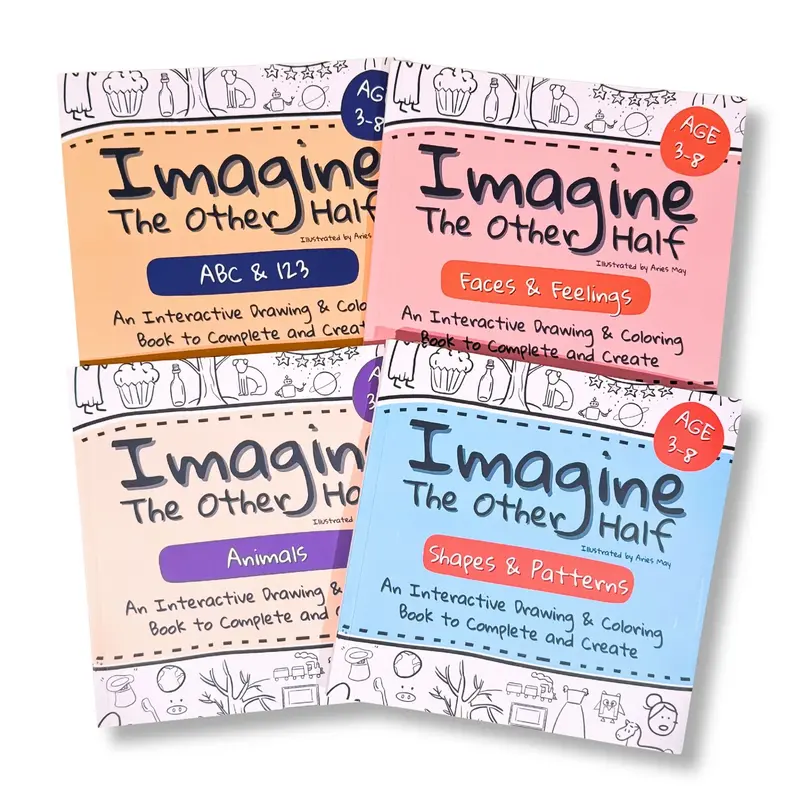
Imagine The Other Half
$24.99

