On a Tuesday evening, a mother asks her son to put away his video game and start his homework. He says, “In a minute.” Ten minutes later, he is still playing. She reminds him again, he argues that he needs to finish the level, and she finally takes the controller away. Now he is shouting, she is frustrated, and the homework has not even started.
The same argument returns the next evening, and the evening after that. The mother begins to wonder whether she is being too strict or not strict enough. She has tried reminders, consequences, and raising her voice, but none of them seems to solve the problem for long.

School age discipline can be difficult because children are learning to manage their impulses, handle frustration, follow expectations, and take responsibility for their choices. Parents need strategies that address the behavior in front of them while helping children develop skills they can use independently. The following books offer different approaches to setting limits, improving cooperation, and responding to challenging behavior without turning every disagreement into a power struggle.
If you’re looking for broader parenting guidance tailored to this age group, explore these best parenting books for 8–12 year olds.
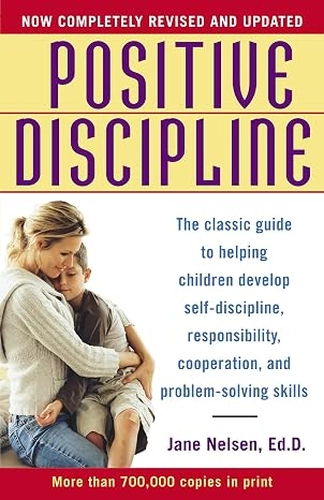
1. Positive Discipline by Jane Nelsen
A child refuses to tidy their room. A parent repeats the instruction several times, threatens to remove privileges, and eventually does the job themselves because everyone is tired of arguing. The room gets cleaned, but the child has not necessarily learned anything about responsibility.
Positive Discipline by Jane Nelsen explores how parents can combine kindness with firmness instead of relying on punishment or giving in to avoid conflict. The approach emphasizes mutual respect, cooperation, problem-solving, and helping children understand the consequences of their choices. It encourages parents to look beyond the immediate goal of stopping unwanted behavior and consider what children need to learn for the future.
One useful shift is to involve children in solving recurring problems. If getting ready for school always becomes a battle, parents can discuss what needs to happen, agree on a realistic routine, and decide what responsibilities belong to the child. The goal is not to remove parental authority but to help children participate in the process of meeting expectations.
The book is a strong starting point for families who feel caught between harsh discipline and excessive accommodation. It provides a broader framework for building cooperation and teaching responsibility over time.
Best for: Parents who want consistent rules, fewer power struggles, and children who gradually become more responsible for their behavior.
2. The Parent You Aspire to Be by Miles Carter

A parent tells a child to stop interrupting while adults are talking. The child interrupts again a few minutes later. After several warnings, the parent snaps, “Why do you never listen?” The child becomes defensive, the parent gets angrier, and the original problem gets buried beneath an argument about attitude.
This is where discipline becomes more complicated than simply deciding what consequence to use. Parents have to correct behavior while managing their own reactions, understanding what may be driving the child’s response, and making sure the lesson is clear enough to be repeated in everyday life.
The Parent You Aspire to Be by Miles Carter focuses on child behavior, emotional regulation, parent-child communication, and practical ways to respond to common parenting challenges. It addresses situations such as refusing to study, procrastinating, lying, speaking rudely, having emotional outbursts, and resisting parental instructions. The book emphasizes recognizing ineffective responses, choosing more constructive language, and using practical steps to guide children toward better behavior.

The Parent You Aspire to Be
Miles CarterPractical guidance for tantrums, backtalk, lying, screen addiction, emotional outbursts, and everyday parenting struggles.
Its approach is particularly relevant when the same conflict keeps returning despite repeated warnings. A child who refuses homework, for example, may need clearer expectations and a more consistent routine, while a child who reacts angrily to correction may need help expressing frustration without becoming disrespectful. Parents can learn to address the specific behavior without turning the moment into a judgment about the child’s character.
The book also considers the parent’s role in the interaction. When adults respond to every difficult moment with anger, threats, or lengthy lectures, children may focus more on defending themselves than understanding what needs to change. Learning to communicate calmly while maintaining firm boundaries can make discipline more consistent and easier for children to understand.
Best for: Parents dealing with repeated behavior problems, homework resistance, lying, rude language, emotional outbursts, or difficulty getting children to cooperate.
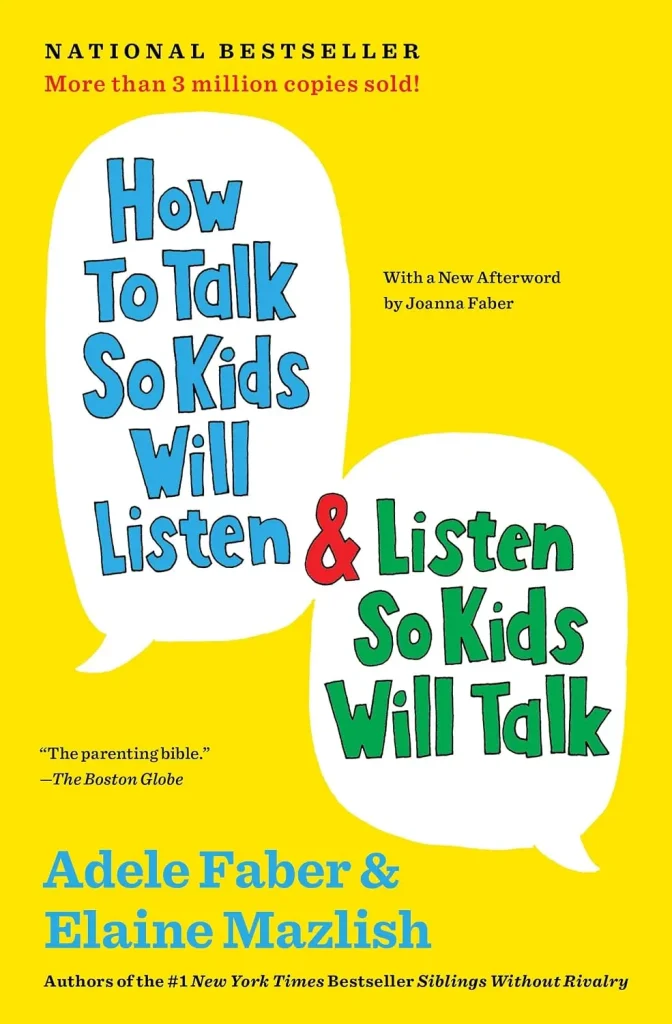
3. How to Talk So Kids Will Listen & Listen So Kids Will Talk by Adele Faber and Elaine Mazlish
Sometimes the problem is not that a child has failed to hear an instruction. It is that the conversation has become so frustrating that neither person is listening anymore.
Consider a child who comes home upset after receiving a poor grade. A parent immediately explains why the child should have studied harder, lists the consequences of falling behind, and offers several solutions. The child responds with short answers or walks away. The parent sees this as disrespect, while the child feels criticized before having a chance to explain what happened.
This classic communication book explores ways to acknowledge children’s feelings, encourage cooperation, and set limits without relying on constant criticism. It offers practical approaches to listening, expressing concerns, and involving children in problem-solving. Its examples are especially useful for parents who find themselves repeating instructions or turning small mistakes into lengthy lectures.
For discipline, the distinction between acknowledging a feeling and accepting a behavior is important. You can recognize that a child is angry about turning off a game while still requiring them to follow the agreed screen-time limit. Children do not have to like every rule for the rule to remain in place.
Best for: Parents who want fewer arguments, more cooperation, and clearer communication when correcting behavior.
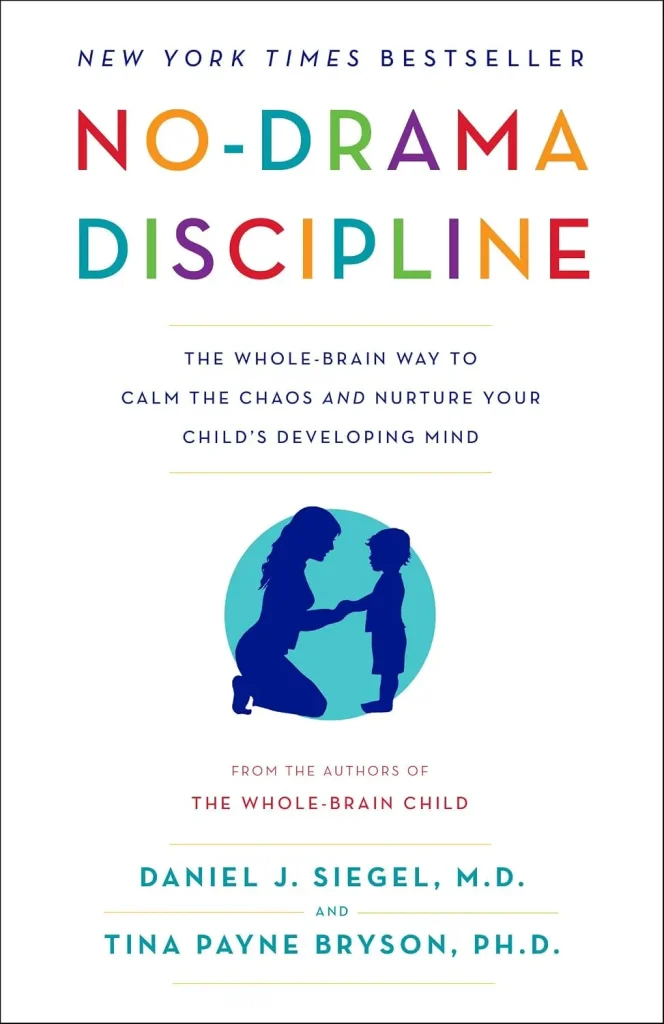
4. No-Drama Discipline by Daniel J. Siegel and Tina Payne Bryson
Your child loses a board game, becomes furious, and sweeps the pieces off the table. Your first reaction may be to demand an apology and impose a consequence immediately. But if the child is still overwhelmed by anger, the conversation can quickly become another confrontation.
No-Drama Discipline explores how parents can respond to misbehavior in ways that address both the immediate problem and the learning that needs to follow. Daniel J. Siegel and Tina Payne Bryson explain the importance of understanding children’s emotional states, helping them regain control, and using difficult moments to teach rather than simply punish.
This does not mean ignoring the behavior or allowing a child to throw things whenever they become upset. A parent can stop the behavior immediately, protect others, and maintain the rule while postponing a longer discussion until the child is better able to participate. Once everyone is calmer, the parent can revisit what happened, discuss how to handle frustration, and establish what needs to happen next.
The book is especially helpful for parents who feel that discipline repeatedly turns into yelling, resistance, and apologies without lasting change. It encourages a more deliberate response that still holds children accountable.
Best for: Parents dealing with emotional outbursts, intense arguments, and situations where discipline escalates before any useful lesson can be learned.
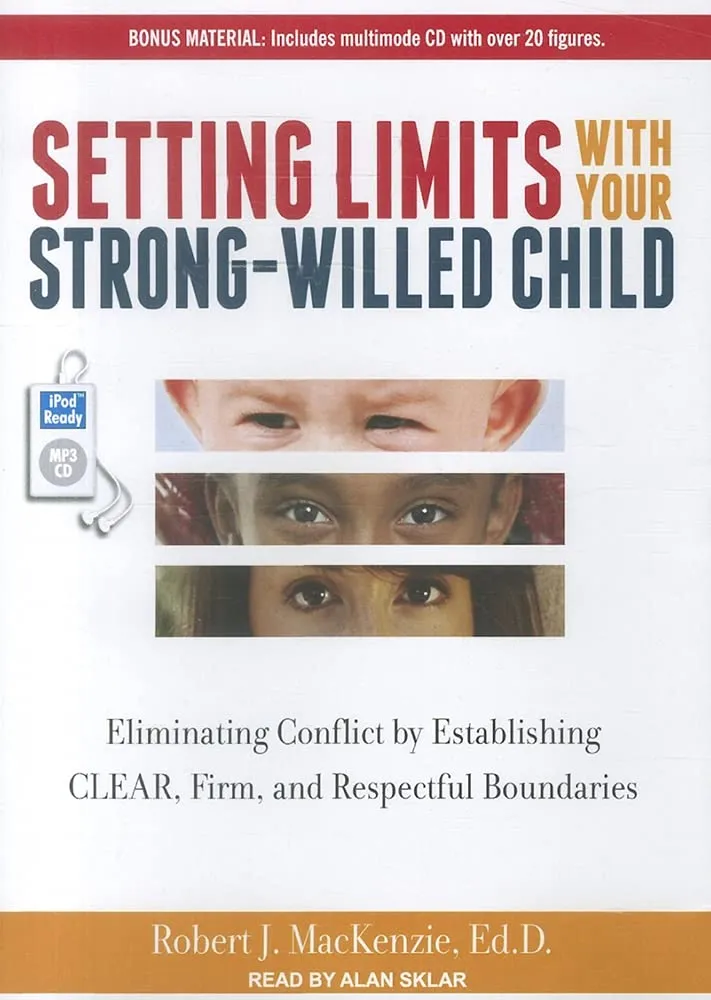
5. Setting Limits with Your Strong-Willed Child by Robert J. MacKenzie
Some children challenge almost every instruction. They argue about when to start homework, negotiate over screen time, and test whether a rule will still apply when their parent is tired. The more the parent explains, the more the discussion seems to turn into a negotiation.
Robert J. MacKenzie’s Setting Limits with Your Strong-Willed Child focuses on establishing clear expectations and maintaining consistent boundaries. The book explores how vague instructions, repeated warnings, and inconsistent follow-through can contribute to ongoing conflict. It encourages parents to communicate rules in ways children can understand and to respond predictably when those rules are not followed.
For example, if screen time ends at a specific time, parents can explain the expectation beforehand and establish what happens when the agreement is ignored. This is different from repeatedly threatening increasingly severe consequences in the middle of an argument. A predictable response gives children a clearer understanding of the boundary and reduces the need to renegotiate it every day.
The approach is especially relevant to families where ordinary requests become extended debates. It can help parents become more consistent without making every interaction a contest of wills.
Best for: Parents struggling with repeated rule-breaking, arguing, resistance, and children who continually test boundaries.
What Kind of Discipline Problem Are You Facing?
Different behavior problems call for different strategies. A child who becomes overwhelmed by frustration may need help regulating emotions, while a child who repeatedly ignores an established routine may need clearer expectations and more consistent follow-through.
| Your main challenge | Book to consider |
|---|---|
| Repeated power struggles and poor cooperation | Positive Discipline |
| Homework resistance, lying, rude behavior, and emotional reactions | The Parent You Aspire to Be |
| Arguments caused by ineffective communication | How to Talk So Kids Will Listen & Listen So Kids Will Talk |
| Emotional outbursts and escalating conflicts | No-Drama Discipline |
| Constantly testing rules and boundaries | Setting Limits with Your Strong-Willed Child |
Before choosing a new discipline strategy, it can help to identify the pattern behind the problem. Ask yourself whether the rule is clear, whether your child understands what is expected, and whether your response is consistent from one day to the next. Also consider whether the behavior tends to occur at a particular time, such as when homework begins, a game ends, or your child is already tired or frustrated.
You do not need to change every family rule at once. Choose one recurring conflict and work on making the expectation clearer, the response more predictable, and the follow-up more constructive.
Discipline Should Teach Skills, Not Just Stop Behavior
A child who obeys because they are afraid of being shouted at may stop a behavior temporarily without learning how to make a better choice independently. Effective discipline aims for more than immediate compliance. It helps children gradually develop self-control, responsibility, respect for others, and the ability to handle frustration.
That requires parents to balance firm boundaries with opportunities to learn. Some situations call for an immediate consequence, while others call for a conversation, a new routine, or support with a skill the child has not yet mastered. The key is to respond to the actual problem rather than treating every difficult moment as a test of parental authority.
If you are dealing with several recurring behavior challenges and want practical guidance on how to respond, The Parent You Aspire to Be by Miles Carter is a useful place to begin. Its focus on correcting behavior, managing emotions, communicating effectively, and establishing healthy boundaries can help parents move away from repeated arguments and toward more consistent, constructive discipline.
Did this article help you see things differently? Our books turn helpful ideas into practical tools you can return to anytime.



Break the Anxiety Circle
$19.90

From Debt to Wealth
$19.90


