Somewhere past midnight on a night train, I caught myself counting things I had quit. Not dramatic quits. Small ones. A half-finished course. A letter never sent. The Steps does that to you.
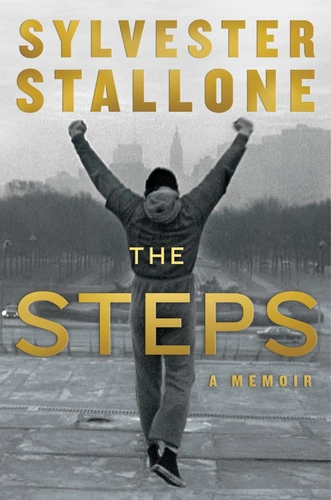
Sylvester Stallone’s memoir, framed between his arrival in New York in 1969 and the 1977 Oscars, isn’t really a success story, though it is marketed as one, and it isn’t a how-to either, though it keeps flirting with the form. It is a long argument about what persistence actually costs. When does refusing to give up stop being courage and start being a kind of stubbornness that eats a person alive?
The Man Who Wouldn’t Sell
Stallone arrives in Manhattan broke, with a face that casting directors keep describing as wrong and a voice they find worse. He cleans out lion cages at the Central Park Zoo. He works as a ticket taker in a small cinema and watches the same films dozens of times, trying to reverse-engineer why some of them live and others vanish. There is a scene in a public library where a guard lets him look at rare manuscripts, including a strange hand-rolled scroll of Edgar Allan Poe’s work, and that encounter sends him off writing a Poe screenplay he rewrites more than twenty times. It goes nowhere.
Then comes Rocky. He writes it fast, on fumes, and the studios bite, only they want a name in the lead. The offers climb, reportedly into the hundreds of thousands, and he keeps saying no, because the part has to be his. This is the spine of the book, and it is genuinely tense even though we all know how it ends.
What I hadn’t expected was how much of the script he had to fight for beyond that one decision. Early drafts of Rocky were harsher, less lovable, and it took criticism from people close to him to make the character someone an audience could actually care about. That revision matters more than the famous gamble, I think. It shows the work behind the myth.
The cross-country drive to Los Angeles with his girlfriend and a large dog is the section that wrecked me a little. Heat, hunger, a dog given away to a stranger so it might survive. He does not dramatize it much. He just reports it, and the flatness lands harder than any speech would.
Why We Cheer for the Bruise
Audiences bond with damage, not perfection. Rocky is memorable because he is an imperfect man hungry for dignity, and Stallone understood that hunger from the inside. The steps of the Philadelphia museum become the book’s organizing image, and he uses them well. Each step is small, unglamorous, and you cannot skip any of them. I rolled my eyes the first time the metaphor appeared. By the end I had stopped rolling them.
There is a second image I keep returning to: the manuscript scroll. Something handmade, odd, rejected, and preserved anyway. It mirrors the whole book. The Poe script failed, and its failure taught him structure, patience, and how to cut what doesn’t work. Failure is information, not a verdict. That is a more useful claim than any motivational slogan.
The strongest cage in this story was never poverty. It was the belief that he had to keep proving himself, and that belief outlived the poverty by decades. The book is honest about that in flashes, though not always as honest as I wanted.
The Step After the Applause
The memoir stops at the Oscars, and that cutoff flatters the arc. We never see the cost of the years after, the way that relentless drive can curdle into defensiveness. The pacing also jumps around in time in ways that occasionally lost me, and some readers will find the childhood chapters repetitive. It is not a self-critical book. If you want a memoir that interrogates its author’s choices with real severity, look elsewhere.
What it does offer is a specific, portable idea: measure progress in steps taken, not in distance remaining. That idea has traveled well beyond 1976. It shows up in how people talk about recovery, about training, about rebuilding a life after a loss. Stallone got there early and got there honestly, from the inside of the struggle.
What I took away is this: the climb doesn’t make you worthy, it just shows you what you’re made of, and sometimes that’s a bruise and sometimes it’s a hand still reaching for the next step.

