You send a message and keep checking whether the other person has replied. After sharing an idea, you pay more attention to everyone’s facial expressions than to what you actually think about it. When someone seems distant, you immediately wonder whether you did something wrong. None of these moments may seem significant on its own, but together they can leave you feeling as though your confidence depends on other people.
Wanting to be liked is normal. The problem begins when approval becomes the main way you decide whether you are good enough. You might hide your real opinions, agree to things you do not want, or spend too much time trying to repair situations that may not be your responsibility. Building self-worth means learning to value yourself even when someone disagrees with you, feels disappointed, or does not respond the way you hoped.
Break the Anxiety Circle by Miles Carter
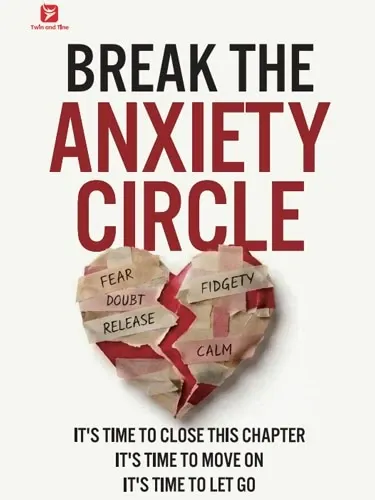
Break the Anxiety Circle by Miles Carter explores self-love, self-worth, people-pleasing, emotional patterns, and the difficulty of accepting imperfection. These themes are closely connected to the habit of seeking reassurance from others. When your sense of value depends on external reactions, even small signs of disapproval can trigger overthinking and self-doubt.
The book also addresses self-forgiveness, regret, personal boundaries, and attachment patterns. Together, these topics help readers examine why certain relationships or interactions can feel so emotionally consuming, and why it may be difficult to feel secure without knowing what other people think.

Break the Anxiety Circle
Miles CarterA mental reset for people trapped in the overthinking loop. Understand why your mind won’t stop racing — and how to break free from anxiety, people-pleasing, and emotional exhaustion.
Recognize When Approval Is Making Decisions for You
Consider how often you change your answer because someone might not like it. You may agree with a group even when you have a different opinion, accept extra responsibilities to avoid disappointing a colleague, or apologize when you have not actually done anything wrong.
Before automatically agreeing, pause and ask yourself three questions:
- Do I genuinely want to do this?
- Am I agreeing because it matters to me, or because I fear someone’s reaction?
- What would I choose if I knew the other person might be disappointed but would eventually accept my decision?
You do not need to stop considering other people’s feelings. The point is to include your own needs in the decision rather than treating them as less important by default.
Stop Treating Every Reaction as a Verdict on Your Worth
Someone can disagree with your opinion without rejecting you as a person. A friend may be busy rather than upset with you, and a colleague may question your suggestion because they see the problem differently. When you automatically interpret these moments as proof that you have failed, ordinary interactions can become sources of unnecessary distress.
Break the Anxiety Circle explores overthinking and the emotional strain that comes from repeatedly revisiting uncomfortable experiences. A useful practice is to separate what you know from what you are assuming. You may know that someone disagreed with you, but you may not know that they have lost respect for you.
Make Room for Your Own Boundaries
People-pleasing often becomes difficult to change because saying no can feel like risking a relationship. You might worry that someone will think you are selfish, unhelpful, or difficult. As a result, you keep giving more than you can comfortably offer.
Setting boundaries helps you act according to your actual capacity rather than your fear of disapproval. You can say, “I can’t take that on this week,” or “I need some time to think before I decide.” You do not have to make every boundary sound convincing to everyone else for it to be reasonable.
Let Yourself Be Imperfect
When you depend heavily on validation, mistakes can feel particularly threatening. You may work harder than necessary to prove yourself, replay small errors, or avoid situations where you might look inexperienced.
Accepting imperfection does not mean abandoning your goals. It means allowing yourself to learn without making your worth conditional on flawless performance. You can improve a skill, acknowledge a mistake, or change your mind while still treating yourself with respect.
Your Worth Does Not Need Constant Confirmation
Building self-worth is not about becoming indifferent to feedback or refusing to care about your relationships. It is about developing enough trust in yourself that other people’s reactions can inform your choices without controlling them.
Break the Anxiety Circle offers a way to explore the connection between self-love, people-pleasing, overthinking, and personal boundaries. Start by noticing one situation in which you usually seek reassurance or ignore your own preference. Practice making a decision that reflects both your values and your needs, even if you cannot guarantee that everyone will approve.
The more you learn to tolerate ordinary disagreement and uncertainty, the less energy you may spend trying to earn reassurance. You can care about how others see you without making their opinions the only measure of who you are.
If you found this helpful, these books go deeper into the same themes.



Break the Anxiety Circle
$19.90

From Debt to Wealth
$19.90

