You come home after a difficult day and try to tell your partner what has been bothering you. Before you finish explaining, the conversation shifts to what you did wrong, what they meant, and why the situation is not entirely their fault. Within minutes, neither person feels understood, and the original concern is still unresolved.
This pattern can develop when feelings come out as accusations, or when people interpret any expression of hurt as an attack. You might keep quiet to avoid another argument, only to become more resentful over time. Learning to express your feelings more clearly can help you address problems before frustration builds up, without requiring you to hide what you genuinely feel.
Say It Right Every Time by Miles Carter offers practical communication scripts and frameworks for expressing yourself maturely, making requests, and responding calmly when a conversation becomes tense.

Why Sharing Your Feelings Can Turn Into an Argument
Feelings are personal, but the words used to express them can sound like judgments about someone else’s character. Saying “I felt ignored when you kept checking your phone while I was talking” describes an experience. Saying “You never care about anything I say” makes a much broader accusation, which can leave the other person focused on defending themselves instead of understanding what hurt you.
Another common problem is bringing several unresolved issues into one conversation. You may start by explaining why a particular comment upset you, then mention three other occasions when you felt dismissed. The other person now has several complaints to respond to, and the original concern becomes harder to address.
Before starting a difficult conversation, consider these questions:
- What happened that I want to discuss?
- What feeling did the situation bring up for me?
- What do I want the other person to understand?
- Is there a specific change or response that would help?
You do not need to have every answer figured out. Even a little preparation can help you explain the main issue without letting the conversation become a list of old grievances.
Put Your Experience Into Words Without Assigning Blame
A useful way to begin is to describe the situation from your perspective. Explain what happened, how it affected you, and what you would like to happen next. This gives the other person a clearer understanding of your experience without claiming to know their intentions.
For example, instead of saying, “You embarrassed me on purpose in front of everyone,” try, “I felt embarrassed when that comment came up in front of the group. I’d rather discuss concerns like that privately next time.”
The revised statement does not minimize your feelings. It identifies the specific moment and explains what you need in the future, while leaving room for the other person to explain their intention.
A few other changes can make emotional conversations easier:
- Talk about one situation at a time. Avoid using a current disagreement to revisit every previous disappointment.
- Replace assumptions with questions. If you are unsure why someone acted a certain way, ask instead of treating your interpretation as fact.
- Make your request clear. Tell the person what would help rather than expecting them to guess.
- Avoid apologizing for having feelings. You can acknowledge your delivery if necessary without saying your concern does not matter.
- Choose a workable moment. If either person is exhausted or already angry, waiting until you can both listen may be more productive.
The purpose is not to control the other person’s reaction. It is to make your own message clear enough that a real conversation becomes possible.
What If the Other Person Gets Defensive?
You may express yourself carefully and still receive a defensive response. The other person might interrupt, explain why they disagree with your interpretation, or bring up something you did in return. That does not automatically mean your attempt to communicate has failed.
Try returning to the concern without increasing the intensity. You might say, “I understand that you remember the situation differently. I’m trying to explain how it affected me, and I’d like us to talk about what we can do differently next time.”
Then listen to the response. The other person may have a perspective you had not considered, and understanding it does not mean you must withdraw your own feelings. If the exchange becomes hostile, you can pause and return to the subject when both of you are ready to speak more constructively.
There is also a limit to what communication techniques can accomplish. You can express yourself clearly and respectfully, but you cannot guarantee that someone else will respond with empathy or take responsibility for their behavior. Healthy communication requires participation from both sides.
A Book for Finding Better Words Under Pressure
Say It Right Every Time by Miles Carter is built around practical scripts and frameworks for conversations that are difficult to navigate in the moment. The book covers mature expression, calm responses, boundaries, requests, and handling pressure, giving readers examples they can adapt when emotions make it harder to choose their words.
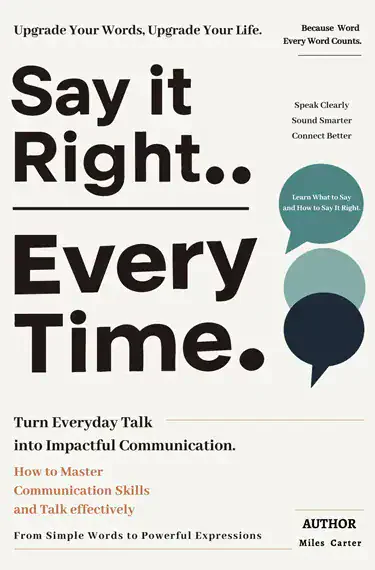
Its 115 scripts and 15 frameworks offer a starting point for people who know what they feel but struggle to explain it without sounding accusatory or becoming defensive. Instead of relying on vague advice to “communicate better,” readers can study specific ways to approach a conversation and practice putting them into their own words.
The goal is not to remove every uncomfortable feeling from a relationship. It is to make room for honest conversations in which both people can explain their experiences, hear each other out, and work toward a more useful response.

Say it Right..Every Time.
Miles CarterPractical communication tools for the moments that matter — say what you mean, calmly and confidently.
Let Your Feelings Be Heard Without Losing the Point
You should not have to suppress every difficult feeling to keep a relationship peaceful. At the same time, expressing hurt does not require attacking the other person or proving that your interpretation is the only correct one.
Start with one specific situation, explain how it affected you, and make a clear request about what would help. Say It Right Every Time can help you practice these skills through practical language and communication frameworks, so difficult conversations become easier to approach with clarity and composure.

