It’s 1:24 a.m. You have to get up early, but your mind is still replaying a conversation from earlier in the day. You wonder whether your response sounded strange, whether someone took your words the wrong way, and whether tomorrow’s responsibilities will go as planned. You tell yourself to stop thinking, check the time again, and somehow end up more awake than before.
Nighttime overthinking can feel especially intense because the distractions of the day have disappeared. Small concerns become difficult to put down, and problems that cannot be solved immediately start demanding your attention. A useful book won’t promise to eliminate every anxious thought, but it can help you understand why your mind gets stuck and develop healthier ways to respond.
These five books approach overthinking from different angles, including self-compassion, present-moment awareness, emotional flexibility, and practical ways to interrupt repetitive thinking.
1. The Power of Now by Eckhart Tolle
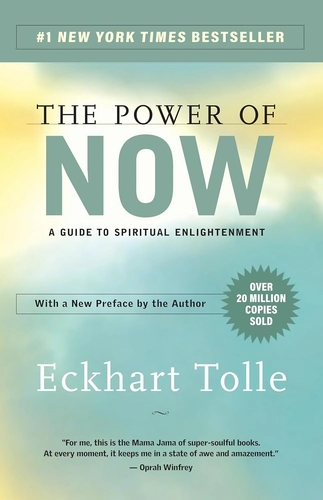
Best for getting out of repetitive thoughts and returning to the present
When you’re lying awake replaying something that happened yesterday or worrying about what might happen tomorrow, your attention is no longer on the moment you’re actually experiencing. Your mind is moving between memories, imagined conversations, and possible future problems.
The Power of Now by Eckhart Tolle explores the relationship between thought, awareness, and the present moment. It encourages readers to notice mental activity without automatically identifying with every thought that appears.
This perspective can be useful when you treat each anxious thought as a problem that needs an immediate answer. Instead of following every mental scenario to its conclusion, you can practice recognizing that a thought is happening without continuing to build on it.
The book takes a philosophical and spiritual approach, so readers looking for step-by-step exercises may find it less structured than a practical workbook. However, it offers a different way to think about the habit of living mentally in the past or future.
Why it fits this topic: It helps readers explore how constant mental involvement can pull attention away from the present, especially when there is nothing productive to do about a worry at that moment.
2. Break the Anxiety Circle by Miles Carter
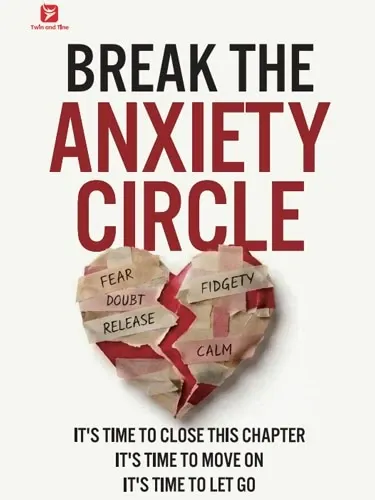
Best for overthinking, self-blame, and emotional exhaustion
Sometimes nighttime anxiety is not simply about tomorrow’s schedule. It is about the way you judge yourself after the day is over. You remember a mistake, question whether you handled a relationship well, or worry that someone else’s reaction says something negative about you. Even when the original situation has passed, your mind continues looking for reasons to criticize yourself.
Break the Anxiety Circle by Miles Carter focuses on self-worth, self-forgiveness, rumination, emotional regulation, boundaries, and the struggle to let go of past experiences. It is particularly relevant to readers whose overthinking is closely connected to regret, people-pleasing, or the need for reassurance from others.
One useful distinction is the difference between learning from an experience and repeatedly punishing yourself for it. If you handled a conversation poorly, you can decide what you would do differently next time. You do not need to replay the interaction all night or turn one imperfect moment into a judgment about your entire character.

Break the Anxiety Circle
Miles CarterA mental reset for people trapped in the overthinking loop. Understand why your mind won’t stop racing — and how to break free from anxiety, people-pleasing, and emotional exhaustion.
The book also explores accepting imperfection and paying attention to your own needs. These themes can help readers recognize the emotional habits that keep familiar worries returning, rather than treating each anxious night as a separate problem.
Why it fits this topic: It connects overthinking with the deeper patterns of self-criticism, regret, and emotional strain that can make it difficult to mentally let go at the end of the day.
3. Chatter: The Voice in Our Head, Why It Matters, and How to Harness It by Ethan Kross
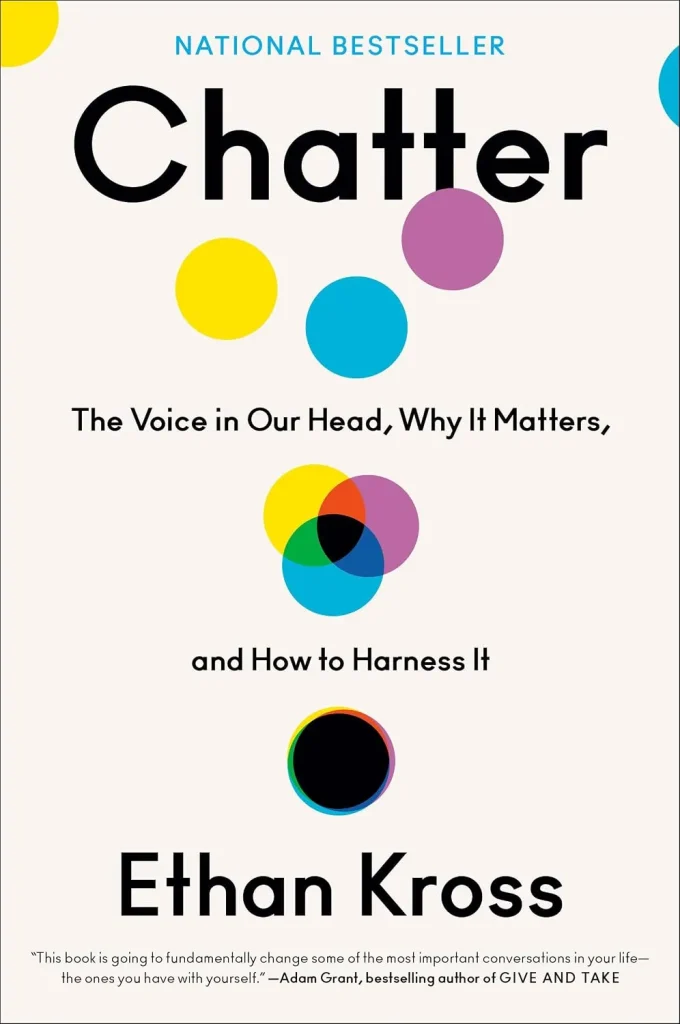
Best for understanding your inner voice and breaking repetitive thinking
Your inner voice can help you plan, reflect, and solve problems. But when it becomes repetitive, the same mental ability can work against you. You might analyze a difficult interaction from several angles without gaining any new information, or keep asking yourself why something happened until the question itself becomes exhausting.
In Chatter, psychologist Ethan Kross examines inner dialogue and the ways it can affect our emotions, decisions, and behavior. The book explores strategies for creating psychological distance from distressing thoughts and changing the conditions that influence how we think.
One useful idea is to step back from a problem instead of experiencing it as if you were still inside the original situation. You might describe what happened as though you were advising a friend, or ask what you would recommend to someone facing the same concern. This change in perspective can make it easier to see options that are difficult to notice when you are caught up in the emotion.
The book also considers how surroundings and social support can influence our mental state. That makes it useful beyond bedtime, particularly for people who find themselves repeatedly revisiting stressful events throughout the day.
Why it fits this topic: It offers a practical look at inner dialogue and ways to gain distance from thoughts that keep circling without leading to a solution.
4. Emotional Agility by Susan David
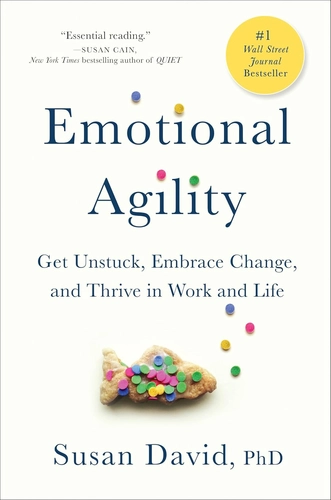
Best for handling uncomfortable emotions without getting trapped by them
Sometimes the thought itself is only part of the problem. You feel anxious, then become frustrated with yourself for being anxious. You worry that you are overreacting, criticize yourself for not being able to relax, and end up with more emotional pressure than you started with.
Emotional Agility by Susan David explores how people relate to difficult thoughts and feelings, encouraging a more flexible response instead of automatically avoiding, suppressing, or obeying them.
The book helps readers consider the difference between experiencing an emotion and allowing that emotion to determine their next action. Feeling worried does not mean that something terrible is about to happen. Feeling embarrassed does not mean you have permanently damaged a relationship. An emotion can be acknowledged without being treated as a complete description of reality.
This approach can be especially helpful when you try to force yourself to feel calm before you can continue with your day. Rather than fighting every uncomfortable feeling, you can notice it, understand what it may be signaling, and choose a response that reflects what matters to you.
Why it fits this topic: It helps readers develop a more flexible relationship with anxiety and self-doubt, reducing the extra struggle that comes from judging themselves for having difficult emotions.
5. Self-Compassion by Kristin Neff
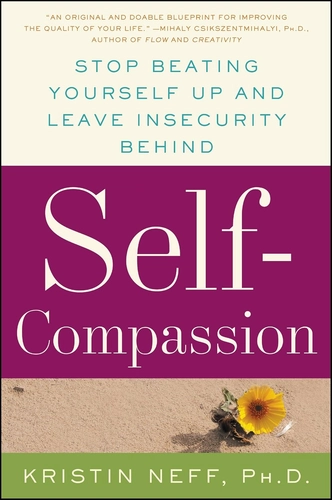
Best for reducing harsh self-criticism after a difficult day
For some people, the hardest part of nighttime overthinking is the way they speak to themselves. They remember an awkward comment and immediately call themselves foolish. They make a small mistake at work and question their competence. They look back on an ordinary day and focus almost entirely on what they could have done better.
Self-Compassion by Kristin Neff explores how responding to personal difficulties with greater kindness can change the way we experience failure, inadequacy, and emotional pain. It introduces self-compassion as an alternative to harsh self-judgment, without suggesting that people should ignore their mistakes or avoid responsibility.
Imagine that a friend tells you they are embarrassed about something they said. You might remind them that everyone has awkward moments, help them consider whether anything needs to be repaired, and encourage them to move forward. Self-compassion asks you to extend a similar degree of fairness to yourself.
This does not make every problem disappear. It can, however, reduce the additional distress created when you turn a mistake into an attack on your own worth.
Why it fits this topic: It is a strong option for readers whose nighttime rumination revolves around regret, perfectionism, and the feeling that they are never doing enough.
Which Book Should You Start With?
The best choice depends on what tends to keep you awake. You may be replaying the past, anticipating the future, criticizing yourself, or struggling to tolerate the emotions that arise when everything becomes quiet.
| If your main struggle is… | Consider starting with… |
|---|---|
| Feeling mentally stuck in the past or future | The Power of Now |
| Regret, self-blame, and emotional exhaustion | Break the Anxiety Circle |
| Repetitive inner dialogue | Chatter |
| Getting caught up in difficult emotions | Emotional Agility |
| Harsh self-criticism and feelings of inadequacy | Self-Compassion |
You do not need to read all five at once. Start with the book that most closely matches your experience, and focus on applying one useful idea rather than trying to change every habit immediately.
Give Your Mind a Different Way to Respond
When your brain won’t turn off at night, the instinct is often to keep thinking until you finally feel certain, reassured, or prepared. But many worries cannot be settled through repetition alone. Sometimes what helps is learning to recognize when reflection has stopped being useful, treating yourself more fairly, and allowing an unanswered question to wait until morning.
These five books offer different approaches to that process. Whether you begin with present-moment awareness, practical strategies for inner dialogue, emotional flexibility, or self-compassion, the goal is not to guarantee a perfectly quiet mind. It is to develop a healthier relationship with your thoughts so that they no longer have to occupy every available moment.
If you found this helpful, these books go deeper into the same themes.



Break the Anxiety Circle
$19.90

From Debt to Wealth
$19.90

