Can you believe it? Sometimes the entire direction of human history comes down to a decision made in a few minutes. A few seconds.
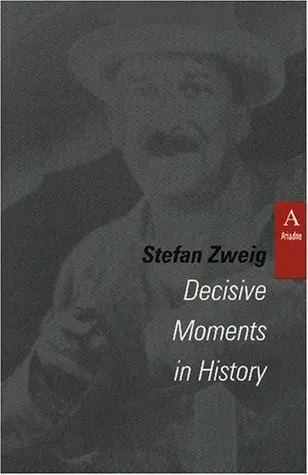
I didn’t see it coming when I first opened Decisive Moments in History. Stefan Zweig writes with almost obsessive intensity, using it like a camera. He takes those moments we thought were long buried in dust, pushes the lens in close, and forces you to look closer . How did Constantinople really fall? A forgotten little gate left open. An enemy no one bothered to defend against. One overlooked crack, and an entire empire gets consigned to history. You believe that? Open this book—it feels like you’re sitting right there in the scene, watching the world change under its own weight.
Most heroes don’t start shining until they’re backed to the edge of a cliff
Zweig gives you fourteen stories. The one I can’t shake is Handel’s. You know the composer, don’t you? Struck down by a stroke. Paralyzed. The doctors said he was finished. And yet — that man dragged himself out of bed through sheer will. Then he went on to write Messiah.
Then there’s Rouget, a French officer. One night, he wrote “La Marseillaise.” The song spread across all of Europe. But him? He ended up poor, forgotten—no one remembered he was the one who lit the fire of a revolution. And don’t forget the businessman, Field. He bet everything on laying the transatlantic cable. Failed three times. Mocked by the press. But the fourth time—he actually connected Europe to America.
Zweig doesn’t lecture you with big ideas. He just pushes these living, breathing people in front of you and makes you watch how fate seemed to single them out, how they fought, how they ground it out.

Reading this book feels like eavesdropping on the most dangerous conversations in history
Zweig writes with brutal honesty. He won’t waste your time with flat narration. Instead, he rebuilds every turning point with the tension of a novel. You can feel the weight of Handel’s breath in that sickbed. You can hear the desperate scream of that last soldier in Constantinople. You can almost feel the cold beneath an explorer’s boots somewhere beyond the edge of the known map. That kind of writing will actually make your heart race.
And don’t think he’s just glorifying heroes—he’s not. What he’s really saying is that these were ordinary people history suddenly called upon. They had fear. Doubt. Failure. But it was precisely because, at that one critical moment, they chose to stand up—that history took a different course.
You’ll never get that feeling from a history textbook. You only get it by following Zweig’s words, diving into one story after another, until you finally understand what they mean by “the crossroads of fate.”
You might be thinking: “These things happened centuries ago — what do they have to do with me?”
But here’s the thing—and this is what cuts deepest about this book. It tells you that inside every ordinary person’s life, there could be a “decisive moment” hiding. When you’re forced to choose—do you walk away? Or do you grit your teeth and keep going?
Zweig doesn’t hand you a ready answer. He just lays these stories out in front of you and lets you think for yourself. After I finished reading, I went back and looked at my own “should I push through or not” moments—and somehow, they didn’t feel the same anymore.
I think it’ll be the same for you. You don’t need to become Napoleon or Goethe. But some of your own decisions are shaping your history—right now. Open this book. Don’t just read it as history. It’s more like a mirror—one that shows you there may be more courage in you than you realize that can light something up.