To be honest, Dune Messiah is a much more exhausting read than the first book. The first one, at least, had the framework of a prince’s revenge story to hold it together, so even when the plot got complicated, you could still follow along. This one, though, is filled with long stretches of dialogue where I couldn’t even tell what the characters were saying; there’s also a bunch of stream-of-consciousness stuff that made me zone out while reading. It’s more than half the length of the first book, but the atmosphere is incredibly oppressive.
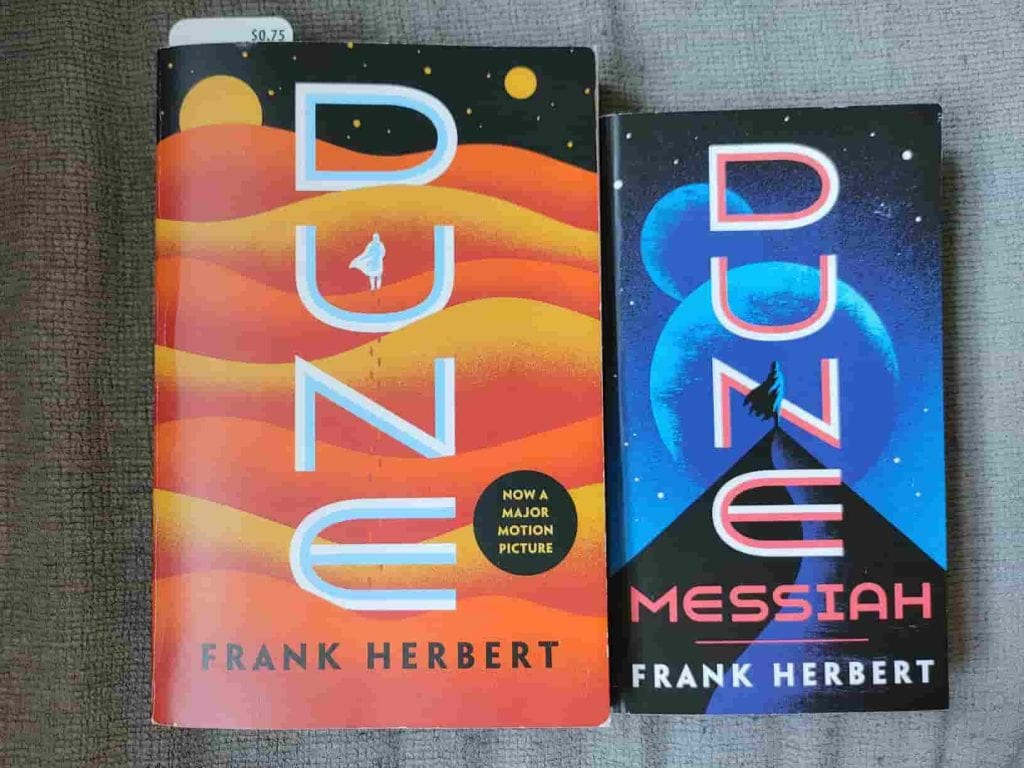
But after forcing myself to finish it and reflecting on it, I realized that, in terms of the story, it is indeed more profound than the first book. The government relies on the law, while religion shapes the gods. Paul and Chani ultimately meet deep in the desert, while the emperor sacrifices his own life to ensure the empire’s survival. Extraordinary leaders inevitably bring about destruction; aside from the overly optimistic ending, everything else in the novel depicts human history—which is precisely why most people dislike it.
The old problem persists, and it’s quite off-putting. Just like in the first book, there’s a subconscious tendency to devalue women. Under the Dune selection process, female Fremen are both excellent warriors and politicians, yet they’re still expected to fulfill the roles of mothers and caregivers—even sharing a single man for the sake of the race’s survival—and are still viewed as sexual objects. I won’t even mention modern times; even in medieval history, there were plenty of women who were far more assertive than this. I had expected Alia to be a fresh new character, but judging by the writing, that’s not the case.

This book is no longer about Paul; it is about humanity. It repeatedly explores religious fanaticism, the despair of prophecy, and the calamities of war—reading it is indeed a bleak experience. Fortunately, the Dune in the book endures forever, embracing and accepting everything, and granting people freedom.
Dune is compelling because of its sweeping heroism, while Dune Messiah does the exact opposite: the hero remains, yet he has become indecisive, utterly exhausted, and one might even say his personality has grown clingy. The charm of this installment lies precisely in its transcendence of Muad’Dib’s heroic myth, gradually revealing the dark side of the “savior,” laying bare the hero’s helplessness and suffering.
When it comes down to it, stepping down from the throne is far harder than ascending it.
