I was standing in my kitchen, staring at my own hand. It was the middle of the night. I had just finished a chapter from Susan Orlean’s latest anthology, and I couldn’t shake the feeling that my body had become a stranger to me. The Best American Science and Nature Writing 2025 collects essays about animals, ecosystems, and the weird edges of biology. But here is the thing. It is not really about them. It is about us. About the quiet, terrifying ways our bodies are not our own.
Why do we feel so alone inside our own skin?
Let me tell you about one piece that wrecked me. It is an essay by a biologist who studies death in animals. You know, the big question. Do they know it is coming? The writer follows a dying elephant in a sanctuary. The elephant walks away from its herd, slowly, deliberately. It stands under a tree for three days. It does not eat. It waits. The other elephants do not follow. They stand at a distance, watching. The researcher calls this a “death ritual.” I call it a mirror.
We think we invented grief. We think we invented the idea of an ending. But reading this, I realized something uncomfortable. Maybe we just gave it a name. The elephant knows. The dog knows. The rat in your subway station knows. They just do not have words for it. The essay does not answer the question. It deepens it. And that is the point. We are not special. We are just loud about it.
But here is where the anthology really gets under your skin. Another essay, the one that made me stare at my hand at 3 AM, is about the microbiome in your gut. The writer, a science journalist, follows a team of researchers who are mapping the bacteria that live inside us. The numbers are staggering. You have more bacterial cells in your body than human cells. More.
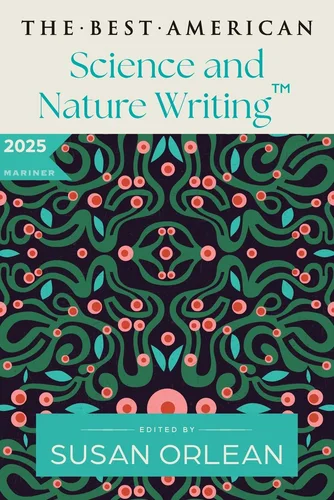
You thought your body belonged entirely to you. The book quietly asks whether it ever did.
So when you say “I feel sad,” who exactly is speaking? Is it you, or is it the little colony in your stomach that craves sugar? I do not have an answer. But I have not looked at a craving the same way since.
The editor, Susan Orlean, has a knack for picking stories that unsettle. She does not go for the big, flashy discoveries. She goes for the small ones. Ones that sit in your chest. There is an essay about crows that remember human faces. Another about the fungus that makes ants climb to the top of a leaf and die. Each one feels like a small betrayal. You thought you knew the world. You thought you knew your place in it. You were wrong.
I will be honest. This is not a book you read cover to cover in one sitting. It is too dense for that. Too sharp. You read one essay. Then you put it down. You walk around your house. You look at things differently. That is the design. The book is built for digestion, not devouring. And that is its only weakness, really. If you want a smooth narrative, a single story that carries you from beginning to end, this is not it. It is a collection of fragments. But maybe that is the point too. Science is not a story. It is a thousand small stories, all colliding.
What you get from this book is not knowledge. Not exactly. You get a new kind of attention. You start noticing things. The way your cat watches the window. The way your own stomach lurches when you are anxious. The way the city around you is not just concrete and glass, but a living system of rats and pigeons and soil and roots. You start to see the invisible threads.
Maybe that is the real gift. We spend so much time trying to prove we are separate. Special. Above it all. But this anthology keeps pulling you back down. Into the dirt. Into the swarm. Into the shared, messy, impossible fact of being alive on a planet that does not care.
I finished the last essay at sunrise. The light came through the window, pale and gray. I thought about the elephant under the tree, waiting. I thought about the bacteria in my gut, waking up. I thought about the rat in the subway, just trying to survive.
“We are not visitors here. We are the place itself.”
And I realized something. We are all just bodies. Trying to hold on.
The essays that made me question what a body is
I was standing in my kitchen, staring at my own hand. It was the middle of the night. I had just finished a chapter from Susan Orlean’s latest anthology, and I couldn’t shake the feeling that my body had become a stranger to me. The Best American Science and Nature Writing 2025 collects essays about animals, ecosystems, and the weird edges of biology. But here is the thing. It is not really about them. It is about us. About the quiet, terrifying ways our bodies are not our own.
Why do we feel so alone inside our own skin?
Let me tell you about one piece that wrecked me. It is an essay by a biologist who studies death in animals. You know, the big question. Do they know it is coming? The writer follows a dying elephant in a sanctuary. The elephant walks away from its herd, slowly, deliberately. It stands under a tree for three days. It does not eat. It waits. The other elephants do not follow. They stand at a distance, watching. The researcher calls this a “death ritual.” I call it a mirror.
We think we invented grief. We think we invented the idea of an ending. But reading this, I realized something uncomfortable. Maybe we just gave it a name. The elephant knows. The dog knows. The rat in your subway station knows. They just do not have words for it. The essay does not answer the question. It deepens it. And that is the point. We are not special. We are just loud about it.
But here is where the anthology really gets under your skin. Another essay, the one that made me stare at my hand at 3 AM, is about the microbiome in your gut. The writer, a science journalist, follows a team of researchers who are mapping the bacteria that live inside us. The numbers are staggering. You have more bacterial cells in your body than human cells. More.
You thought your body belonged entirely to you. The book quietly asks whether it ever did.
So when you say “I feel sad,” who exactly is speaking? Is it you, or is it the little colony in your stomach that craves sugar? I do not have an answer. But I have not looked at a craving the same way since.
The editor, Susan Orlean, has a knack for picking stories that unsettle. She does not go for the big, flashy discoveries. She goes for the small ones. Ones that sit in your chest. There is an essay about crows that remember human faces. Another about the fungus that makes ants climb to the top of a leaf and die. Each one feels like a small betrayal. You thought you knew the world. You thought you knew your place in it. You were wrong.
I will be honest. This is not a book you read cover to cover in one sitting. It is too dense for that. Too sharp. You read one essay. Then you put it down. You walk around your house. You look at things differently. That is the design. The book is built for digestion, not devouring. And that is its only weakness, really. If you want a smooth narrative, a single story that carries you from beginning to end, this is not it. It is a collection of fragments. But maybe that is the point too. Science is not a story. It is a thousand small stories, all colliding.
What you get from this book is not knowledge. Not exactly. You get a new kind of attention. You start noticing things. The way your cat watches the window. The way your own stomach lurches when you are anxious. The way the city around you is not just concrete and glass, but a living system of rats and pigeons and soil and roots. You start to see the invisible threads.
Maybe that is the real gift. We spend so much time trying to prove we are separate. Special. Above it all. But this anthology keeps pulling you back down. Into the dirt. Into the swarm. Into the shared, messy, impossible fact of being alive on a planet that does not care.
I finished the last essay at sunrise. The light came through the window, pale and gray. I thought about the elephant under the tree, waiting. I thought about the bacteria in my gut, waking up. I thought about the rat in the subway, just trying to survive.
“We are not visitors here. We are the place itself.”
And I realized something. We are all just bodies. Trying to hold on.
