I was sitting in a park last week, watching a father teach his daughter to ride a bike. She fell, he picked her up. She fell again. He laughed. And I thought: what if there were no more children after her? What if she was the last one? Would he still bother to teach her?
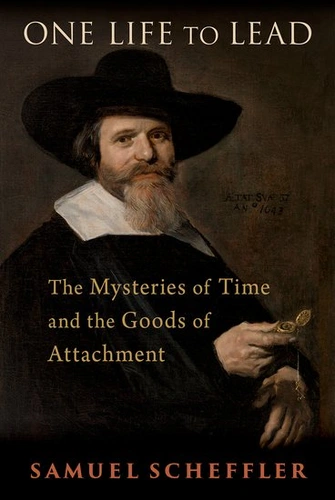
This is the question Samuel Scheffler asks in One Life to Lead. It is not a self-help book. It is a philosophical argument, dense and careful, about something we rarely examine: the role of other people’s futures in our own sense of meaning. The book made me uncomfortable. But here is the thing about discomfort. Sometimes it is the only honest thing.
What the Book Is Actually About
Scheffler does not start with grand declarations. He starts with a thought experiment. Imagine you know that humanity will end thirty days after you die. Not violently, not painfully. Just quietly, with extinction. Would the things you care about now still matter?
I read that and felt something shift. Honestly, I wanted to dismiss it. This is too abstract, I thought. But Scheffler is patient. He does not ask you to imagine apocalypse. He asks you to imagine a world that simply stops having people in it. No one to read the books you leave behind. No one to remember the joke you told. No one to argue about the meaning of your work.
The book’s core argument is this: many of the things we value depend, more than we admit, on a future that includes other people. Not our own immortality. Not even our own legacy, exactly. But the simple continuation of human life. Scheffler calls this “the goods of attachment.” I found myself nodding, then resisting, then nodding again.
Why This Hurts to Read
Here is what I struggled with. The book implies that my personal projects, my ambitions, my attempts at making meaning are not entirely self-sufficient. They lean on something beyond me. On strangers I will never meet. On children I will never know. On a future I will not see.
Scheffler does not say this to depress you. He says it because he believes it is true, and because he thinks we live more honestly when we admit it. I am not sure I agree with everything. But I appreciate the courage of the argument. It is rare to read a philosopher who is willing to say: you are not enough. Your life needs other lives to be meaningful.
One limitation, I should note. The book is academic. Scheffler writes with precision, which sometimes means slow going. If you prefer punchy arguments and immediate takeaways, this might frustrate you. It is more like a long conversation with someone who thinks carefully before speaking.
What You Get From Reading It
After finishing the book, I found myself noticing things I had not noticed before. The way I feel when I see a crowd of strangers on a train platform. The way I feel when I read about a new invention I will never use. These small attachments to a future I will not inhabit. They are real.
The book also made me think about grief differently. We grieve people, of course. But Scheffler suggests we also grieve the loss of a shared world. When someone dies, a whole network of relationships and futures disappears with them. I had not thought of it that way.
Who is this for? Someone who has wondered, late at night, why they keep working on something that feels pointless. Someone who has felt the strange weight of caring about things that will outlast them. Someone who does not mind sitting with a difficult idea for a few chapters.
The book has a quiet power. It does not shout. It does not sell you a solution. It simply asks you to look at what you already value and notice who else is standing there with you.
I closed the book and thought about the father in the park. He was not teaching his daughter to bike for her sake alone. He was teaching her because there would be other children after her, and other fathers after him, and the chain of teaching would continue. That is what meaning looks like. It is not a monument. It is a relay race you join without knowing who comes next.
Maybe that is enough.
