I was at a dinner party last month. A friend spent twenty minutes telling me how I should handle my difficult mother-in-law. She meant well. But I felt that familiar tightening in my chest. The pressure to defend my choices. The urge to explain why I had already tried her suggestions.
I went home exhausted. Not because of the conversation. Because of the energy I had spent mentally rehearsing rebuttals.
Then I picked up Mel Robbins’s new book. It is called Let Them Theory. And within two pages, I realized something uncomfortable. I had been doing the opposite of what it says for years.
This is not a self-help book that tells you to be stronger or more positive. It is simpler than that. It asks one question: What would happen if you just let people be who they are?
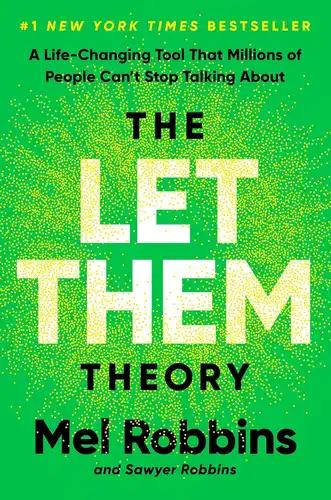
The Woman Who Gave Up Control
Mel Robbins is the kind of writer you trust because she has been messy herself. She talks about her own failures. Her panic attacks. The way she used to obsess over what her husband thought of her parenting.
The book’s central character is not a fictional hero. It is you, the reader. And the version of you that is exhausted from trying to manage other people’s reactions.
The core conflict is this: we spend our lives trying to control things we cannot control. We want our boss to respect us. We want our partner to understand us. We want strangers on the internet to approve of us.
Robbins says: Let them.
Let them think you are rude. Let them be disappointed. Let them gossip about you. It sounds passive. But she argues it is the most active choice you can make. Because when you stop trying to control others, you free up all that energy for what you can control.
I will not spoil the specific stories she tells. But there is one about a friend who was stuck in a toxic friendship. Robbins did not tell her to leave. She told her to let the friend be who she was. And then decide what to do with that information.
That is the twist. “Let them” is not surrender. It is clarity.
The Craft of a Simple Idea
Some readers will call this book too simple. They will say it is just Stoicism repackaged. Or that it lacks academic depth.
Honestly, I think that misses the point.
Robbins is not a philosopher. She is a translator. She takes a complex psychological truth and boils it down to two words. And she does it with remarkable discipline. Every chapter returns to the same idea. She does not overcomplicate it. She shows you how it works in different situations. At work. In relationships. With your own inner critic.
The key imagery in the book is the boundary. Not a wall. A fence with a gate. You decide who comes in. You do not try to change the people standing outside.
What makes the book work is the way Robbins connects this to a universal pattern. She calls it the “control loop.” You feel anxious. You try to fix someone else. They resist. You feel more anxious. The loop repeats.
The only way out is to let them.
I found myself highlighting sentences I wanted to remember. Small ones. Things like: “You are not responsible for how someone else feels about your decision.” Or: “Letting them be wrong is a form of freedom.”
These are not new ideas. But the packaging makes them land differently. It is like hearing the same song in a new key.
What You Actually Get From This Book
I will be honest. I had moments of resistance while reading. I thought: This is too easy. Real life is messier. What about systemic injustice? What about people who are hurting others?
Robbins addresses this in the later chapters. She distinguishes between “letting them” and “letting them harm you.” The theory is not about being a doormat. It is about choosing your battles.
The book is best for people who feel drained by other people’s drama. People who are tired of explaining themselves. People who carry the emotional weight of everyone around them.
Its weakness is that it can feel repetitive. After the fifth chapter, you get the idea. But maybe that is the point. We need to hear it again because we keep forgetting.
I finished the book and tried an experiment. I stopped defending my parenting choices to my aunt. She thinks I let my kids watch too much TV. I let her think that. It felt strange at first. Then it felt light.
The core insight is this: You cannot make someone see you clearly. You can only stop hiding. And when you stop hiding, the people who matter will find you. The ones who do not matter will fall away. That is not a loss. It is a filter.
Maybe that is what the Let Them Theory really is. Not a tool for controlling others. A permission slip to stop trying.
