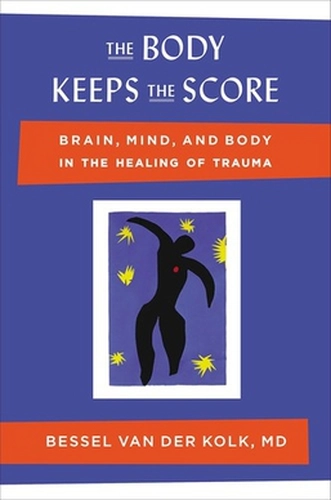
I joined a friend for a yoga class yesterday. Mid-practice, she paused abruptly with watery eyes. After class, she looked embarrassed and said she could not name the reason for her urge to cry. Slow, steady breathing had unlocked long-forgotten moments all at once. It struck me that painful experiences never fully fade; they settle deep inside our bodies instead. This thought led me to pick up Bessel van der Kolk’s The Body Keeps the Score. I expected a dense academic book on trauma psychology, yet it unpacks a familiar, hard-to-describe truth: events fade from our days, but our bodies hold onto them.
Drawing from extensive clinical research and patient stories, the book explores how trauma reshapes the brain, nervous system and physical responses. Unlike most psychology reads, it cares less about what happened and more about what those experiences turn into long after. Many survivors escape harmful surroundings yet struggle for years with sleepless nights, constant anxiety, hypervigilance and broken close relationships. Van der Kolk proves trauma lives beyond conscious memory, rewriting how the body perceives the world.
Its core message resonates most deeply with me: trauma rarely sticks only as painful memories; it reveals itself through physical symptoms. The book’s iconic line sums this up perfectly: “The body keeps the score.” Our bodies log shocks the mind cannot process right away. People may believe they have moved on, until certain triggers spark racing hearts, short breaths or unexplained unease. These passages brought back my post-graduation days. Burdened by heavy work pressure, I carried permanent shoulder tension and frequent insomnia at home. I once blamed plain tiredness, only to realize my body voiced the suppressed feelings I ignored.
One veteran’s story stuck firmly in my mind. Plagued by relentless panic and recurring nightmares from wartime, he gained little relief from standard talk therapy. His healing started only after yoga, physical training and targeted trauma work helped him regain control over his body. These cases taught me healing is not just processing the past mentally, but rebuilding physical safety. We often rush to overanalyze troubles while ignoring clear warnings from our bodies.
The book is not an easy read. Later chapters dive into neuroscience, brain imaging data and clinical treatments, which feel heavy for readers without relevant background knowledge. Repeating cases and theories occasionally drag the pacing. Still, such repetition drives home the author’s core point: trauma is not rare. It manifests in countless subtle forms across ordinary people’s lives.
It suits anyone curious about mental health, trauma or the mind-body connection. It offers no quick fixes or instant recovery plans, focusing instead on fresh perspectives to understand ourselves. After finishing, I pay closer attention to my physical cues. Tiredness, strain and anxiety do not always need immediate suppression; they are gentle reminders to acknowledge overlooked emotions.
The book’s greatest value lies in shifting our view of the human body. We tend to define ourselves by thoughts and memories, forgetting our bodies store our life stories. Unspoken hurts and buried feelings never disappear entirely. They hide in uneven breathing, chronic muscle tightness, or unexpected tears on quiet afternoons. Learning to spot these traces is not about dwelling on the past, but learning to treat our present selves with greater kindness.
