SEO Answer:
Yes, childhood trauma can be healed, but not by erasing the past. It heals through changing how your nervous system responds to memories, triggers, and relationships over time.
I remember sitting on the edge of my son’s bed one night, his breathing finally slow and even, while my own chest still felt tight from a flash of anger I couldn’t trace. He’d asked me why I never talked about my dad. That question hung in the air like smoke.
Can childhood trauma be healed? I’d been turning that question over for decades—quietly, in grocery store aisles, long drives alone, and moments just like this one.
If you’re here, you’re probably asking the same thing.
Quick Healing Realities Today:
- The past cannot be erased, but your response to it can change
- Healing is nervous-system based, not just emotional understanding
- Small daily regulation matters more than big breakthroughs
- You may need boundaries with people who keep reopening wounds
- Progress is nonlinear: some days feel like setbacks
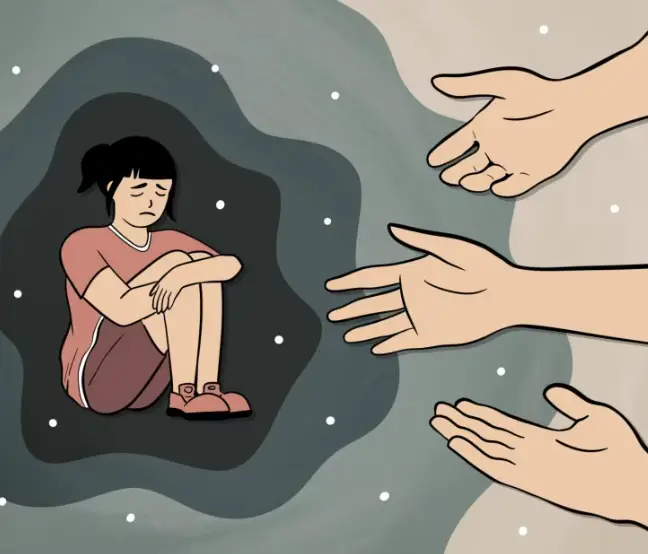
Why Is It So Hard to Heal Childhood Trauma?
Can childhood trauma be healed easily? I used to hope so. I wanted a clear answer, a clean reset.
But trauma doesn’t work that way.
When you grow up in emotional instability, your nervous system learns survival, not safety. You become hyper-aware of tone shifts, silence, rejection, or anger. Even as an adult, your body reacts before your logic catches up.
For me, it showed up in small but overwhelming ways:
- A neutral text felt like abandonment
- A raised voice felt like danger
- Silence felt like punishment
I wasn’t reacting to the present. I was reacting to the past replaying itself in the body.
This is why childhood trauma can feel so persistent. It is stored not only in memory, but in emotional and physiological patterns.
Can Childhood Trauma Be Healed? What Healing Actually Means
Yes—childhood trauma can be healed, but healing doesn’t mean “it never affects you again.”
It means:
- The trigger loses intensity
- The emotional reaction becomes smaller
- You recover faster after being activated
- You stop confusing past danger with present safety
Healing is not forgetting.
It is re-training your internal response system.
For a long time, I thought healing meant becoming unaffected. Now I understand it means becoming aware without being overwhelmed.
That shift changes everything.
How I Started Healing Childhood Trauma (What Actually Worked)
I didn’t heal through insight alone. I healed through repetition.
Not big breakthroughs—small, repeated corrections.
1. Naming what I was feeling
Instead of “I’m fine,” I started saying:
- “I feel unsafe right now”
- “This feels like rejection”
- “This is an old reaction”
Naming created distance between me and the emotion.
2. Learning my triggers are not reality
A silent phone used to mean:
“I did something wrong.”
Now I understand:
“My nervous system is predicting abandonment.”
That distinction is everything.
3. Building regulation through the body
Talking alone wasn’t enough. I had to include the body:
- walking
- breathing slowly
- grounding touch (hands on chest or arms)
- stepping away from triggers briefly
Trauma lives in the body, so healing has to reach the body too.
4. Accepting that some relationships stay limited
One of the hardest truths:
Not every parent or caregiver will understand your healing.
I had to stop expecting emotional repair from people who caused emotional injury.
That acceptance reduced re-injury more than anything else.
The 3-Step “Nervous System Reset” I Use When Triggered
When I feel old trauma activating, I don’t try to “think my way out.”
I use a simple reset:
1. Pause
Stop reacting immediately.
2. Name
“I am having a trauma response, not a present danger.”
3. Return
Do one grounding action:
- drink water
- touch something physical
- step outside for 30 seconds
- slow breathing
This interrupts the automatic loop.
Over time, this is what teaches the brain:
the present is not the past.
Can Childhood Trauma Be Healed Without Therapy?
Yes, some people heal without formal therapy, but it usually requires:
- consistent self-awareness practices
- safe relationships
- emotional regulation tools
- long-term repetition
Therapy often speeds up the process, especially when trauma is deep or repeated.
But healing is not dependent on one method.
It depends on:
repeated experiences of safety over time
What Healing Actually Feels Like
Healing childhood trauma does not feel dramatic.
It feels like:
- not spiraling after a delayed text
- recovering faster from emotional triggers
- noticing old patterns before reacting
- feeling less urgency in emotional pain
- being able to pause instead of collapse
Most days, it is quiet.
That’s how you know it’s working.
FAQs: Can Childhood Trauma Be Healed?
Q: Can childhood trauma be healed completely?
Yes, but “complete healing” usually means integration, not erasure. The memories may remain, but they no longer control your emotional responses.
Q: How long does it take to heal childhood trauma?
There is no fixed timeline. Some people notice changes in months, others in years. What matters is consistency, not speed.
Q: What is the first step in healing childhood trauma?
The first step is awareness: recognizing your reactions are connected to past experiences, not only present events.
Q: Why do triggers feel so intense even in adulthood?
Because the nervous system stores emotional memory. It reacts before rational thinking can intervene.
Q: Can childhood trauma come back after healing?
Old triggers may still appear, but their intensity usually decreases, and recovery becomes faster over time.
One Last Thing
I still have moments where something small cracks something old open.
But now I don’t collapse into it the same way.
I notice it. I pause. I return.
And slowly, that has become what healing means to me—not becoming someone new, but learning how to stay with myself when the old pain shows up.
So if you’re asking can childhood trauma be healed, maybe the most honest answer is this:
It doesn’t disappear.
But it stops running your life.