I woke up at 3 a.m. again, my heart pounding. A mistake from three years ago replayed in my head, like a video I couldn’t pause. I’d said the wrong thing in a meeting. I’d let someone down. The details didn’t matter anymore, but my brain kept torturing me with them.
I’d lie there, trying to reason with myself, but the loop just got tighter. And then the anxiety came, heavy and familiar. That’s when I realized: I wasn’t just bad at letting go. I was obsessing. I was constantly seeking reassurance from my own mind that I was still okay.
If this sounds like you, you’re not broken. You just need a different way to work with the memories.
I’m not a therapist. I’m someone who spent years trapped in my own past, trying every technique I could find—journaling, drawing, meditation, podcasts, temple visits. These are the tools that finally helped me break the cycle.
Quick Ways to Let Go of Past Mistakes Today
If you’re stuck in a guilt loop right now, start here:
- Name the mistake out loud. “I made an error. I am not an error.”
- Ask one question: “What is this memory trying to teach me?”
- Write the lesson down. Your brain doesn’t need to hold the whole painful story anymore.
- Feel empathy toward your past self. They were doing the best they could with what they knew.
- Say to yourself: “I’ve done the work. I can let this go for now.”
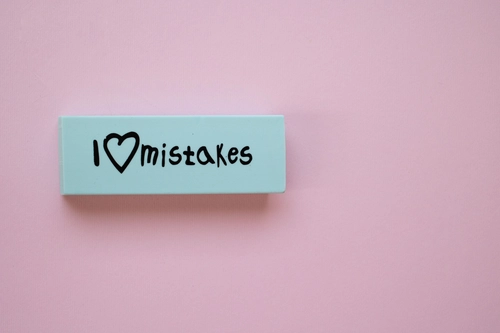
Why Do My Past Mistakes Keep Haunting Me?
Our brains are built to learn from danger. When you make a mistake that costs you something, your mind tags it as critical information. It replays the scene to make sure you never do that again. For most people, the replay fades once the lesson sinks in. For some of us, it doesn’t stop. The thoughts become sticky.
You might have a mind that craves certainty, and a mistake feels like evidence that you’re flawed. So you ruminate. You go over every detail, hoping that if you think about it enough, you’ll finally feel safe.
I know this territory well. My own thoughts used to spiral until I felt physically sick. I’d journal, draw, keep podcasts playing constantly—anything to drown out the noise. I’d meditate or visit a temple just to find a few moments of peace. Those things helped temporarily. But the troublesome thoughts crept back. I was trying to erase the mistake instead of learning from it. I was fighting the memory, and the memory fought back harder.
What finally shifted things was this simple idea: letting go doesn’t mean forgetting. It means taking the lesson and leaving the pain on repeat.
What Actually Helps When You Can’t Stop Obsessing
The goal isn’t to never think about the mistake again. It’s to change your relationship with the memory. When it shows up, you don’t panic. You don’t spiral. You acknowledge it, extract something useful, and gently set it aside.
Step 1: Interrupt the immediate panic.
If you’re in a rumination storm, sometimes you just need to break the cycle first. Put on a funny podcast. Scribble your ugly feelings on a page. Go to a place that feels calm. These aren’t permanent fixes, but they give your brain a chance to reset.
Step 2: Stop trying to erase the memory.
Letting go, if you think of it as deleting the memory, is counterproductive. You need to remember the mistake, the pain, and the lesson it taught you. Every time the memory pops up, I now ask myself: What is this here to teach me? I write that lesson down in a small notebook. When the same memory returns, I read my lesson again and say, “Yes, I know this one. I’m not going to make that mistake again.” The memory loses its power because I’ve already done the work it was trying to accomplish.
Step 3: Feel empathy toward your old self.
The person who made that mistake was doing the best they could with what they knew at the time. They weren’t trying to mess up. They didn’t wake up that morning planning to cause harm. When the guilt hits, I pause and feel empathy toward that younger version of me. I say, “You were doing what you thought was right. I see that. And I’m going to learn from it.” That softens the whole experience. It turns self-punishment into self-compassion.
A Simple Framework for Turning Regret Into Growth
I started using a process I think of as a “lesson-first” approach. It changes how you experience past errors. Instead of starting with self-criticism, you start with curiosity. The memory arrives, and you ask three questions:
- What specific lesson does this memory contain?
- How will I act differently next time?
- What does my past self need to hear right now?
Here’s a real example. A few years ago, I snapped at my partner over something trivial. That night, the memory hit me, and my chest tightened. In the past, I’d have spent hours replaying the argument, feeling like a monster. This time I paused. The lesson: when I’m tired and hungry, I need to step away before speaking. I wrote it down. Next time, I promised myself I’d say, “I need a minute—I’m not in a good headspace.”
Then I thought about my past self. She was exhausted, running on fumes. She wasn’t evil. She was human. I told her, silently, “I get it. You were at your limit. Now we know what to do.”
The tightness in my chest eased. The memory still visits, but now I see it as a teacher, not a torturer.
You can use any format—a notes app, voice memos, a physical journal. The point is to externalize the lesson so your brain doesn’t have to keep holding onto the whole painful story. If you don’t extract the lesson, your mind will keep presenting the evidence. Once you honor the learning, the urgency fades.

When Distraction Isn’t Enough: Coping With Recurring Thoughts
Sometimes, even after you’ve identified the lesson, your mind still loops. Journaling and podcasts are great, but on harder days, the thoughts barrel past all my defenses.
What helped me was pairing physical grounding with a mental shift. I’d sit in a quiet corner and notice the thoughts without fighting them. I’d let the thought be just a thought, like clouds moving across a sky. I didn’t have to engage. A simple mantra I used: “This is a thought. It will pass.”
Drawing became another powerful tool. Not beautiful art, but scribbling the feeling. I’d fill a page with wild lines and words until my hand hurt. The physical act pulled my attention away from the mental loop. It didn’t solve the root cause, but it gave me a moment to breathe. Sometimes that breath is all you need to remember you’re not the mistake itself.
You Are Not Your Mistake
The hardest part for me was learning that I could hold the lesson without hating the person who learned it. The past isn’t up to you. What is up to you are the judgments you make now about your past behavior.
I stopped judging my old self as “bad” and started seeing her as someone who was scared, doing what made sense at the time. That shift changed everything.
One idea that stuck with me: life will beat you up no matter what. You don’t need to join in every single time. When the mistake memory arrives, I consciously choose not to pile on extra suffering. I say, “I see the lesson. I feel the regret. I’m not going to make it worse.” The regret stays, but it’s quiet now. It’s just information.
A Simple Daily Ritual to Anchor the Lesson
To make this stick, I created a tiny evening ritual. Before bed, I ask myself: Did I remember a past mistake today? If yes, I write down the lesson I already learned from it. If it’s a new insight, I add it to my notebook. Then I close the book and say, “I’ve done the work. I can rest.”
This signals to my brain that the loop is complete. Over time, my mind stopped throwing the same memory at me because it knew I would handle it calmly and then move on.
FAQ: How to Let Go of Past Mistakes
Q: How do I let go of past mistakes when I can’t stop replaying them?
A: Start by asking: “What is this memory trying to teach me?” Write the lesson down. Your brain replays the mistake because it thinks you haven’t learned yet. Once you honor the lesson, the urgency fades.
Q: What if the mistake feels too big to forgive myself for?
A: Separate the action from your identity. You did something you regret, but you are not permanently defined by that single moment. Try writing what you’d say to a friend who made the same mistake. Then say that to yourself.
Q: How do I stop feeling like the same person who made the mistake?
A: You’re not. You’ve grown. Write down three ways you’ve changed since that mistake—things you know now that you didn’t know then. This isn’t about making excuses. It’s about acknowledging that growth is real.
Q: What if the memory keeps coming back even after I’ve learned the lesson?
A: Recurring thoughts often have less to do with the lesson and more to do with your nervous system being stuck in a loop. Try physical grounding—cold water on your face, walking, pressing your feet into the floor. Then use a mantra like “I’ve already done the work on this one.”
Q: Is it possible to let go without forgetting the lesson?
A: Yes. In fact, that’s the goal. You keep the wisdom and release the shame. The memory becomes a teacher instead of a torturer. You remember what happened, but you no longer feel the same gut-wrenching pain.
One Last Thing
The other night, I woke up at 3 a.m. again. The same old memory flickered. But this time, I didn’t panic. I took a breath, recognized the lesson I’d already carved out of it, and let the image drift away.
My heart stayed steady. I was still me, just a little wiser than before. And then I fell back asleep.
References
- Neff, K. (2011). Self-Compassion: The Proven Power of Being Kind to Yourself. William Morrow.
- Brach, T. (2003). Radical Acceptance: Embracing Your Life With the Heart of a Buddha. Bantam.
- Watkins, E. R. (2008). Constructive and unconstructive repetitive thought. Psychological Bulletin, 134(2), 163–206.
