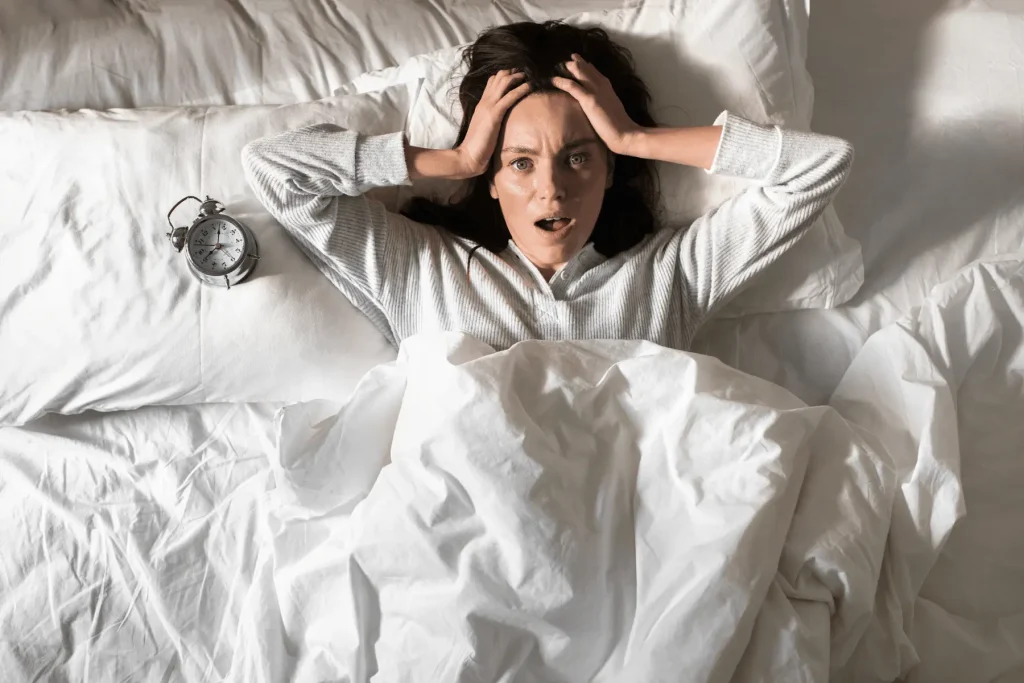
It was 3:14 a.m. again.
I was staring at the ceiling while my brain refused to shut off.
My body felt tired, but my mind felt awake.
And that’s when I realized something important:
A lack of sleep can induce anxiety.
Quick Understanding: Sleep and Anxiety
A lack of sleep can induce anxiety because sleep deprivation increases emotional sensitivity and reduces the brain’s ability to regulate stress.
- Higher emotional reactivity
- Increased stress hormones
- Racing or intrusive thoughts
- Physical tension and restlessness
Why Lack of Sleep Causes Anxiety
Sleep deprivation makes the brain more reactive to stress.
Small problems feel bigger.
Normal thoughts feel urgent.
This is not weakness. It is biology.
The Sleep-Anxiety Feedback Loop
Poor sleep increases brain reactivity → anxiety rises → bedtime feels unsafe → sleep becomes harder → the cycle repeats.
Breaking this loop requires reducing pressure, not increasing effort.
How to Break the Cycle
The goal is not to force sleep. It is to reduce anxiety about sleep.
- Stop trying to “force” sleep
- Focus on resting instead of sleeping
- Get out of bed if awake too long
- Avoid caffeine after early afternoon
- Use slow breathing (4 in / 6–8 out)
The 15-Minute Reset Rule
If I stay awake too long, I leave the bed.
I sit somewhere dim and quiet.
No phone. No stimulation.
Just calm repetition until my body resets.
The “Rest, Not Sleep” Shift
Instead of demanding sleep, I tell myself:
I am just resting. Sleep is optional.
This removes pressure, which often makes sleep possible again.
Frequently Asked Questions
Q: Can lack of sleep really induce anxiety?
A: Yes. Sleep deprivation increases emotional reactivity and stress hormones, which can directly trigger anxiety symptoms.
Q: Why does anxiety get worse at night?
A: At night, distractions decrease and fatigue increases, making the brain more sensitive to intrusive thoughts.
Q: How do I stop sleep anxiety quickly?
A: Shift focus from “I must sleep” to “I am resting,” and remove pressure from bedtime expectations.
Q: Is it normal to feel panic when sleep deprived?
A: Yes. Sleep loss affects the brain’s regulation system, which can increase physical and emotional panic responses.
One Last Thing
I still wake up sometimes at night.
But I no longer fight it.
I rest instead of panic.
And slowly, sleep comes back on its own.