Last Saturday, I hosted a playdate. It seemed fine at the time. But the next morning, my brain started replaying everything. Every sentence. Every pause. Every glance. That’s anxiety after socializing.
Quick Understanding: What This Is
Anxiety after socializing often comes from post-event processing, where the brain replays social interactions and focuses on perceived mistakes instead of neutral or positive moments.
- Replaying conversations repeatedly
- Focusing on “awkward” moments
- Ignoring neutral or positive cues
- Assuming negative judgment without evidence
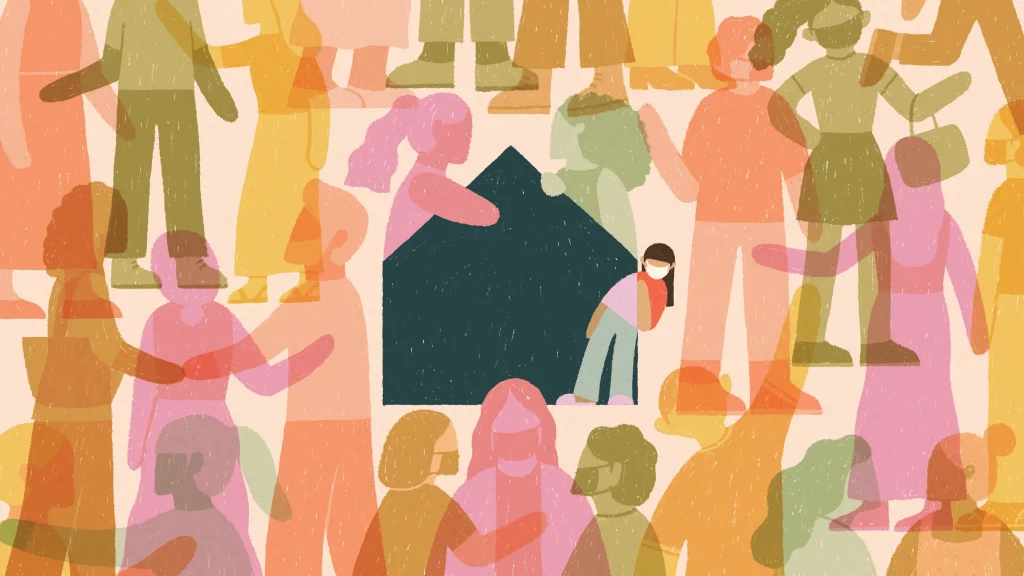
Why Anxiety After Socializing Happens
The brain does not store social events objectively.
It filters them through emotion.
When anxiety is present, it highlights perceived mistakes and hides neutral information.
The Post-Event Processing Loop
Social situation → uncertainty → selective memory → negative interpretation → emotional distress → replay
This loop feels like analysis, but it is actually repetition without new information.
How to Stop Replaying Conversations
The goal is not to erase thoughts, but to interrupt the loop.
- Name the pattern (“this is post-event processing”)
- Remind yourself it is not a factual replay
- Shift attention to physical grounding
- Write down one neutral or positive memory
The PEP Trap Reset
Write the anxious thoughts for two minutes.
Then remove them physically (tear, delete, discard).
Finally, write one positive or neutral moment from the interaction.
Frequently Asked Questions
Q: Why do I keep replaying social situations?
A: This is post-event processing, a cognitive habit where the brain focuses on perceived social errors after interactions.
Q: Is anxiety after socializing normal?
A: Yes. Many people experience some level of post-social rumination, especially under stress or self-doubt.
Q: How do I stop overthinking conversations?
A: Interrupt the loop by labeling the thought, grounding your attention, and redirecting focus to neutral or positive memories.
Q: Does this mean I have social anxiety disorder?
A: Not necessarily. Occasional post-event anxiety is common. Only a professional can diagnose a disorder if symptoms are severe or persistent.
One Last Thing
The event is already over.
But your brain may still be replaying it.
You do not have to follow the replay.
You can notice it… and let it pass.