I was in my car, parked at the grocery store, sobbing into an old napkin. My three-year-old had just thrown an epic tantrum in aisle seven and I’d held it together until I got back to the driver’s seat. Then the tears just came. It wasn’t sad, exactly. More like a pressure valve releasing. By the time I wiped my face, my shoulders felt lighter. My breathing was slower. I felt… better.
Which made me wonder: is crying a way to regulate emotions, or was I just exhausted? Why did that messy, messy cry leave me feeling so much more like myself?
Quick Ways to Understand Crying and Emotional Regulation Today
If you’re wondering whether to let the tears come, start here:
- Let the tears come without judging yourself.
- Notice how your body feels before and after.
- Give yourself a few minutes of quiet space post-cry.
- Find a safe person or place where you can let go.
- Remember: tears are your nervous system’s reset button.
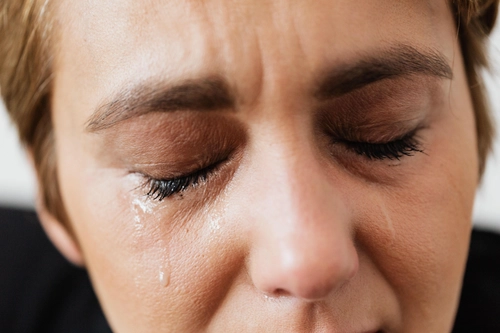
Why Does Crying Make Me Feel More Grounded?
I used to think I only cried when everything was too much. But lately I’ve noticed that even a tiny happy cry, like at a sweet video or a friend’s good news, leaves me feeling strangely regulated. My breaths feel fuller. The world seems a little softer. Is that weird?
From what I’ve read, no, it’s actually biology. Researchers have found that emotional tears contain stress hormones and other chemicals that build up during intense feelings. When you cry them out, you’re literally flushing away the fight-or-flight leftovers. That’s why a good cry can lower your heart rate and make you feel more relaxed afterward. For me, it’s as if my body is saying, “Okay, you’re safe now. You can let go.” And once I do, the calm that follows isn’t exhaustion. It’s regulation.
One afternoon, my daughter fell and scraped her knee and I held her while she wailed. After a few minutes, she sniffled, looked up, and said, “I feel better now.” I realized she hadn’t stopped hurting. She’d just processed the shock through tears. She’d figured out, at four, what I’m still learning: crying is a way to regulate emotions, even the ones that feel too big. When I let myself cry without rushing to stop, I too can move from “everything is falling apart” to “I can handle this.” And that shift is the whole point of emotional regulation.
How to Use Crying as a Healthy Regulation Tool
For years, I fought tears. I’d bite my lip, stare at the ceiling, and swallow that lump in my throat. All it ever did was give me a headache and make me snap at someone an hour later.
So I started experimenting. I would excuse myself to the bathroom when I felt the prickle behind my eyes and just… let it happen. No shame. No trying to “fix” the feeling. Just me, some tissues, and permission to be a mess for two minutes. The first time, I felt silly. But then, that same grounded-ness showed up. My thoughts cleared. I could re-enter the chaos of dinner time without screaming.
What changed? I stopped treating tears as a sign of weakness and started seeing them as my brain’s own off-ramp from overwhelm. When you let yourself cry, you’re communicating to your nervous system: “I see this pain. I’m not ignoring it.” That act of acknowledgment seems to short-circuit the loop of anxiety and self-criticism. Especially now as a parent, when I model that it’s okay to cry, I’m teaching my kids that big feelings aren’t emergencies. They’re just signals. And sometimes, the best way to answer is with a few honest tears.
One trick that helps me: I’ll set a timer for three minutes after a tough moment. I’ll say to myself, “You can cry as hard as you need for three minutes.” Often, I don’t even need that long. Just knowing I have permission dissolves the pressure. Then I splash cold water on my face and the reset is real.
A Simple Practice for Tearful Moments
After many tearful grocery store parking lots, I started using a little practice I call the “Notice and Release.” It’s not science-backed or fancy. It’s just a sequence that helps my tears actually do their regulating job instead of leaving me more drained.
Step 1: Notice the feeling before the tears. Is it tightness in your chest? A burning behind your eyes? Name it silently: “I’m feeling overwhelmed.”
Step 2: Find a private spot. Even a closet or a parked car works.
Step 3: Let the first tears fall without a story. Don’t replay the argument or the worry. Just pay attention to your breath and the sensation of crying.
Step 4: Place a hand on your chest. That gentle touch can trigger your body’s calming response.
Step 5: When you feel steadier, take three deep sighs. Not deep breaths—sighs, like you’re blowing out all the leftover tension.
This little practice has changed how I view my own tears. Instead of fearing them, I welcome them as messengers. It also helps me answer that self-judgy question “What’s wrong with me?” with a kinder one: “What’s just right about me right now?” For me, crying has become my most honest way to come back home to myself.
What If I Cry In Front Of My Kids?
This scared me a lot. I didn’t want to burden my children with my sadness. But kids are emotional detectives. They know when you’re faking it. The first time I cried in front of my daughter, I was worried she’d be upset. Instead, she crawled into my lap and just sat. That was it. Later, she brought me her stuffed bunny. By letting her see my tears and my recovery, I gave her a template: cry, be held, feel better. Not broken. Just human.
I still try not to make her my comforter, but I’ve stopped hiding every tear. When crying becomes a normal part of your emotional vocabulary, your kids learn that sadness moves through us, not that it’s a scary thing that breaks us.

Joy Tears Are Regulation Too
A few weeks ago, I watched a video of a soldier surprising his dog and I welled up. It wasn’t sadness. It was this sudden rush of tenderness and awe. Happy tears seem to flood our bodies with oxytocin, that love-and-connection hormone. And after those tears, I feel so calm.
The interesting thing is that those joyful cries are still regulating. They release the same tension that joy brings—the almost-too-much feeling. Letting them spill over helps me absorb the goodness without short-circuiting. So I’ve stopped wiping away happy tears at birthday parties. I just let them roll.
FAQ: Crying as Emotional Regulation
Q: Is crying a way to regulate emotions for everyone?
A: Some people feel immediate relief, others feel shaky at first. It depends on your history with tears. But many find that if they can safely let themselves cry, the aftermath brings a sense of clarity or calm. It’s a natural human mechanism.
Q: What if I can’t cry even when I want to?
A: That’s really common. Sometimes we’ve learned to lock tears away. You might experiment with quiet music, looking at old photos, or even just sitting with a heavy feeling and naming it aloud. Tears may come gently. Some people find that a warm shower or writing a letter they’ll never send helps unlock the cry.
Q: Is crying a healthy way to regulate anger too?
A: Anger often sits on top of hurt or fear. When you cry from anger, you’re often releasing the pain underneath. A good angry cry can take you from wanting to throw something to feeling sorrowful but present. That shift is regulation in action.
Q: How is crying a way to regulate emotions differently from just “letting it out”?
A: Regulation isn’t about endless venting. It’s about moving through the feeling to a calmer baseline. With crying that regulates, you’re not just reliving the upset. You’re allowing your body to process it and then finding a more settled state. Afterward, you can think more clearly and make better choices.
Q: Can I teach my child that crying helps regulate emotions?
A: Yes. When your child cries, don’t rush to hush them. Offer comfort, name the feeling, and let them come to the other side at their pace. After they calm down, you can reflect: “You were so sad and you cried, and then you felt a little better.” That simple observation teaches them what you’re learning too.
One Last Thing
That parking lot cry feels far away now. But the lightness that followed, the way my daughter’s little hand felt in mine when I walked back into the house—that’s what I remember. If you’re questioning whether your tears are a sign of strength or something to hide, maybe the answer is in how your body feels afterward. For me, crying is how I untangle the knots. It’s not the whole answer, but it’s often the first honest step.
References
- Frey, W. H. (1985). Crying: The Mystery of Tears. Winston Press.
- Brown, B. (2012). Daring Greatly: How the Courage to Be Vulnerable Transforms the Way We Live, Love, Parent, and Lead. Gotham Books.
- American Psychological Association. (n.d.). Stress effects on the body. Retrieved from https://www.apa.org/topics/stress/body
