Last Tuesday I found my seven-year-old on the stairs at 7:15 a.m., fully dressed and crying. She whispered that her stomach hurt. Again. But there was no fever, no vomiting. She just sat there, small fists clenched, eyes fixed on the front door. I had seen this before and brushed it off as a phase. That morning, though, I finally asked myself: Is she just tired? Or is something else going on? What I was seeing were child anxiety symptoms at home, hiding in plain, everyday moments.
Here’s the truth: You are not alone. This is normal. Anxious kids often hold it together all day at school, and then the second they step through the front door, the dam breaks. Home is safe. That’s where the internal noise gets loud. Below are five under-the-radar signs, followed by the exact shift that helped my family dial down the inner chaos.
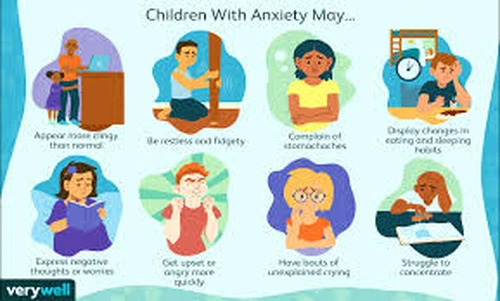
5 Silent Child Anxiety Symptoms at Home
- Physical complaints with no medical cause (stomachaches, headaches, “my legs feel wobbly”).
- What-if spirals that last more than ten minutes, especially around bedtime.
- Sudden avoidance of familiar things—a favorite show, a food they loved, playing outside.
- Irritability that feels explosive and out of proportion, often right after school.
- Asking the same reassurance question over and over, like “Are you sure you’ll pick me up?” even when you’ve answered twelve times.
Why Does My Child’s Anxiety Flare Up at Home?
Have you ever noticed that your child barely shows a flicker of worry at school, but at home they fall apart? That is not ingratitude. It is trust. When a child holds it together for teachers and peers, they are performing. Home is the only place the guard comes down. So the anxious thoughts they suppressed all day—about friendships, about being laughed at, about making a mistake—suddenly race through their mind the moment they see you.
My daughter once told me, right after a calm afternoon of play, “What if I forget how to read tomorrow?” She was in second grade and reading above grade level. I almost laughed, but then I saw her hands shaking. She was not being dramatic. Her brain was stuck in a what-if loop it could not turn off. That is what internal friction looks like. It is not a bad attitude. It is a tired mind fighting itself.
How to Spot Child Anxiety Symptoms at Home Before They Explode
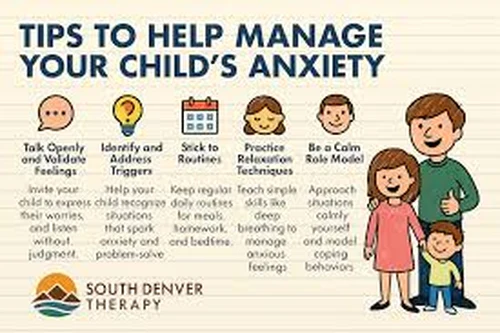
Instead of waiting for a meltdown, I started treating the quiet moments as signals. Here is what I watch for now, and what you might try.
1. Track the four-o’clock shift. After school, does your child go silent? Do they pick a fight over snacks? That hour is a flashpoint. I started saying, “You don’t have to talk yet. Let’s just sit.” Sometimes she’d just lean on me for ten minutes. That pause often stopped the spiral.
2. Listen for the “maybe” language. Anxious kids rarely say “I’m scared.” They say things like, “Maybe I’ll just stay home today” or “Maybe nobody wants to play with me.” When I stopped correcting the statement and started asking, “What made you wonder that?” the real worry spilled out.
3. Notice when the playlist changes. In our house, the soundtrack of anxiety was the same three worry phrases on loop. “What if the bus crashes?” “What if I throw up at school?” “Will you die while I’m gone?” They were not random. They were her brain’s way of trying to control the uncontrollable. I jotted them down, and a pattern emerged: all of them were about losing someone.
4. Check for physical “Teflon.” If every child in the family got a cold, my anxious kid got it twice. I’m not saying anxiety causes illness. I’m saying her nervous system was so on edge that it had little left for fighting germs. Sleep went sideways. Appetite disappeared. She wasn’t sick; she was depleted.
5. Watch what they stop asking for. One day she stopped asking for stories about when she was a baby. That had been our ritual for years. When I asked why, she said, “It makes me miss being little.” Loss. That was the theme. Child anxiety symptoms at home are often quiet withdrawals, not loud tantrums.
The “Worry Wall” — A Simple Ritual for Nighttime Overthinking
I needed something that worked in the dark, right when the what-ifs started. No long conversations. No logic. Just a physical, repeatable release. I named it the Worry Wall, and my daughter still uses it two years later.
Here is how it goes. At bedtime, I hand her three sticky notes and a pen. I say, “Any worries knocking around?” She writes one word per note—no full sentences. “Bus.” “Stomach.” “Dad.” Then she sticks them on a small corkboard on her wall and locks an imaginary key over her heart. The rule: The wall holds them all night. She does not have to. In the morning, we check the notes. Some worries feel smaller by sunrise. Some we talk about. Some just get thrown away. That board gave her an external container for the internal noise. It was not therapy. It was a door she could close herself.
When Anxiety Starts Looking Like Anger
For months I mistook my child’s anxiety for defiance. She would scream, “I hate this house!” or throw a shoe across the room. I’d react. And then I’d feel awful. Because later she’d sob and say, “I don’t know why I did that.” Do you know that feeling? That jolt of anger that seems to come from nowhere? In anxious kids, anger is often fear with nowhere to go. The next time it happened, instead of consequences, I tried saying, “You seem really on fire right now. Is something scaring you?” She stared at me. Then she said, “I’m scared you’ll leave me alone in the house.” She was not angry. She was terrified. The anger was a mask. Once the fear had words, the anger left.
Signs That Anxiety and Depression Overlap
Sometimes the worries don’t just hum. They go silent. And that silence can be a sign that something heavier is settling in. The National Institute of Mental Health notes that in children, depression and anxiety often occur together. I’m not a clinician, but I’ve seen it in my own home—when the what-ifs stopped entirely and my daughter just seemed hollow. She stopped playing. She said things like, “Nothing really matters.” That was not just anxiety anymore.
If your child’s anxiety shifts into persistent sadness, loss of interest, or talk of hopelessness, please reach out. Confidential, free, 24/7 help is available. You can call or text 988 or chat 988lifeline.org. Resources for help are there, even if you just have a hunch that something is off. I called once, shaking, and the person on the line helped me breathe. That call did not fix everything. But it reminded me I was not alone.
Sources and Further Reading:
- National Institute of Mental Health, Anxiety and Depression in Children (resource page, 2026).
- Dr. Debra Kissen, Overcoming Parental Anxiety, which includes practical scripts for worried kids.
- 988 Suicide & Crisis Lifeline: call or text 988, or visit 988lifeline.org.
One Last Thing: That morning on the stairs, my daughter did not need me to fix her stomachache. She needed me to see it. Child anxiety symptoms at home are not a parenting failure. They’re a signal that your child trusts you enough to fall apart. Wrap your arms around that quiet chaos. It is not broken. It is just loud.
