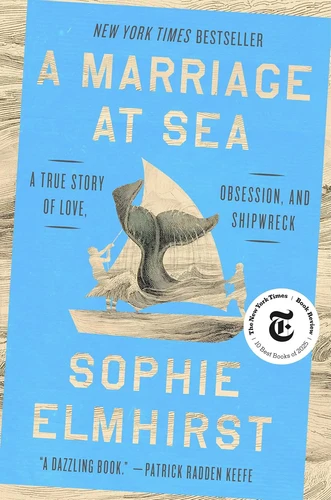
I was folding laundry when I first heard about Maurice and Maralyn Bailey. A podcast, mid-voice, mentioned a couple adrift on a raft for 117 days. I stopped folding. I thought about my own marriage, how we fight over dish duty and sleep schedules. How fragile that all seems now. Sophie Elmhirst’s A Marriage at Sea isn’t a survival story, exactly. It’s a question posed in salt and silence: When the world disappears, what do you become to each other?
The Protagonist: Two People in One Small Space
Maurice and Maralyn Bailey were not adventurers. They were a quiet British couple who dreamed of sailing away from suburban tedium. In 1973, they got their wish. A whale rammed their boat near the Galapagos. They escaped onto a nine-foot inflatable raft. The next four months became a slow, brutal unmasking.
Maurice was the planner, the pragmatic one. Maralyn was the emotional anchor, the one who kept talking when silence felt like drowning. They divided tasks. He navigated by stars. She caught rainwater. They took turns sleeping, holding each other against hypothermia. But the real drama wasn’t the sun or the sharks. It was the tiny, grinding friction of two people who could not walk away.
They fought over a dropped tin of food. They fought over who was more tired. They considered suicide, separately, then confessed it. The book doesn’t hide their ugliness. And that’s what makes it so gripping. You keep reading because you’ve been in that small room with someone, the one where the door is locked and the walls are closing in. What holds you together when you can’t leave?
The Craft: Salt, Skin, and Silence
Elmhirst’s writing is the quiet hero here. She doesn’t dramatize. She observes. The sea is not a character, it’s a condition. Endless, gray, indifferent. The raft becomes a stage for something more intimate.
The core theme is dependency. Not the romantic kind, the raw kind. When Maurice’s skin blisters open from salt sores, Maralyn must clean the wounds with her own urine, the only sterile liquid they have. That image stays with me. It’s not heroic. It’s just what you do. The key imagery is the raft itself, a tiny circle of rubber holding two people against infinity. Every day, they floated closer to death or rescue. Every night, they held each other for warmth. The author shows how this physical proximity erodes and rebuilds their connection in equal measure.
You start to see the pattern. It’s not about love in the Hollywood sense. It’s about a pact. A stubborn refusal to let the other person die alone. Elmhirst uses their diaries and interviews to reconstruct the slow erosion of privacy and dignity. There’s no grand epiphany. Just small, repeated decisions to stay.
The Echo: What We Bring Ashore
I finished the book on a rainy Sunday. I thought about my own relationships. Not the big crises, the small ones. A tense car ride. A disagreement about money. The moments when I wanted to slam the door and walk into another life.
A Marriage at Sea completes its argument by showing us what rescue looks like. The Baileys were saved by a Korean fishing boat. They returned to England, wrote a book, and stayed married until Maurice’s death in 2018. They were not transformed into saints. They remained ordinary. But they carried something inside them, a knowledge of what they could endure together.
The book’s real emotion isn’t in the rescue. It’s in the quiet afterward. Maralyn said, “We never talked about the raft much. It was ours.” That’s the truth I can’t shake. The hardest things we survive are often the ones we don’t speak about. They become a private language, a shared wound, a strange kind of glue.
Reading this, I felt smaller and bigger at the same time. Smaller because my problems seemed manageable. Bigger because I saw what humans are capable of. Not just surviving, but staying. Honestly, I don’t know if I would have lasted. But I know I’ll think about Maurice and Maralyn the next time I want to walk away from a fight.
