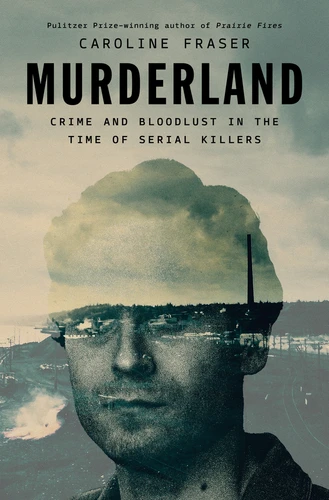
I grew up in a small town that seemed peaceful. Everyone knew everyone. We left doors unlocked. Then, years later, I learned a man who lived two blocks away had been arrested for something terrible. It made me wonder: What else was hiding in plain sight? That’s the question Caroline Fraser asks in Murderland, her new book that won the 2026 Edgar Award for Best Fact Crime. She grew up in the Pacific Northwest during the 1970s and 1980s, when Ted Bundy and so many others were hunting. She wants to know: Could the place itself, the culture, the silence, have made these men?
The Protagonist: A Girl Who Learned to Watch the Shadows
Fraser doesn’t write herself as a hero. She writes herself as a witness. A child who noticed things. The way her mother locked the car doors twice. The way neighbors whispered about the missing girls. The way the forests seemed to swallow people whole. She was a smart, observant girl who became a journalist because she needed to understand. The core conflict is simple and terrifying: How do you live in a beautiful place that keeps producing monsters? She traces Bundy’s path, the Green River Killer’s hunting grounds, and the lesser-known names. She doesn’t give us the gory details. She gives us the geography of loneliness. The highways that connected small towns to nowhere. The logging roads where bodies were found months later. The book builds suspense not through violence, but through the slow realization that these men weren’t anomalies. They were symptoms. I’ll be honest, I had to put the book down a few times. Not because it was graphic. Because it felt too close to home. The question becomes: Is evil born, or is it cultivated by the ground beneath our feet?
The Craft: How a Landscape Becomes a Character
The core theme of Murderland is that evil doesn’t happen in a vacuum. Fraser argues that the Pacific Northwest’s culture of isolation, its frontier mentality, its distrust of outsiders, and its deep, dark forests created a perfect storm. The key imagery she uses is the land itself. She describes the rain that never stops. The moss that covers everything. The way the trees block the sun, keeping secrets in the shadows. She contrasts this with the American myth of the rugged individual, the lone man who makes his own rules. That myth, she suggests, became a license for destruction. Her writing is careful, almost clinical, when discussing the killers’ methods. But when she writes about the victims, the language softens. She names them. She gives them small details: the girl who loved horses, the boy who played guitar. It’s a quiet, devastating technique. She doesn’t need to scream at you. She just shows you what was lost. The universal pattern she reveals is uncomfortable. It’s not just about serial killers. It’s about any community that chooses silence over accountability. Any place that worships freedom without responsibility. That’s the deeper layer. The book isn’t really about monsters. It’s about us.
The Resonance: What We Still Haven’t Learned
I finished Murderland feeling something I didn’t expect. Not fear. Not anger. Something closer to grief. Fraser ends by stepping back from the 1970s and looking at today. She points out that the same conditions exist. The same isolation. The same myths. The same refusal to look too closely at the men who seem “normal.” She doesn’t offer easy solutions. She offers a mirror. The book’s greatest strength is its refusal to sensationalize. It respects the victims. It respects the reader. It doesn’t pretend to have all the answers. The real emotion I felt was exhaustion. The exhaustion of a woman who has spent her life trying to understand something that maybe can’t be understood. But she keeps trying anyway. That’s the human thing to do. I think that’s why the book won the Edgar. Not because it’s shocking. Because it’s honest. It asks us to look at the places we love and wonder what we’re not seeing. It asks us to stop pretending that evil is always a stranger. Sometimes, it’s just a neighbor who keeps to himself. And we let him.
