The first time I noticed my daughter’s hands shaking over her cereal bowl, I told myself she was just overtired. Then came the questions—twenty before breakfast, each one circling the same fear I could not name. She was not crying. There was no meltdown. Just a small girl unraveling quietly at the kitchen table, and I almost missed it.
Here is the truth: you are not alone. This is so normal it rarely gets talked about. Most anxious kids hold it together all day at school and then fall apart the moment they walk through the front door. Home is where the armor comes off. The symptoms can be subtle, physical, and easily confused with bad behavior. Learning to read them before they scream is what this guide is about.
Why Does My Child Show Anxiety Symptoms at Home but Not at School?
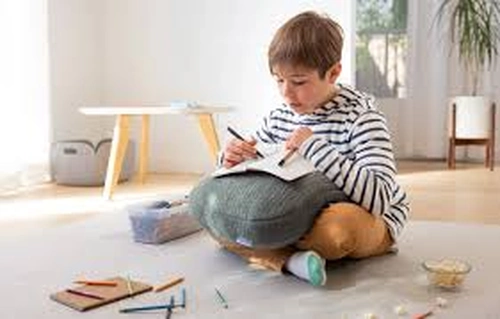
Home is the safest container a child has. At school, the nervous system stays on high alert, scanning for social threats, following rules, performing. The minute they cross the threshold into your hallway, the pressure releases. That release often looks like a sudden storm: clinging, stomachaches, explosive anger over a broken crayon. They are not giving you a hard time. They are finally letting go.
Many parents describe the same pattern. A child who is a star student, praised by teachers, comes home and argues about every single thing. Or a preschooler who refuses to sleep alone after a perfectly ordinary day. The body stores the tension, and home is the only place it feels safe enough to process. As Dr. Mona Delahooke explains in Beyond Behaviors, what we see as misbehavior is often a stress response, not a choice.
Some children mask their anxiety with perfectionism. Others turn inward, growing silent and distant. Depression and anxiety often travel together. A child who has stopped enjoying favorite activities may be carrying something heavier than worry. If you see a persistent flattening of mood, a loss of interest, or talk of wanting to disappear, it helps to know that confidential support is available 24/7. In the U.S., you can call or text 988 or visit 988lifeline.org. Resources for help are free and immediate. That number is not only for adults; kids can use it too. Keeping it handy is just smart parenting.
How to Help a Child with Anxiety Symptoms at Home Without Making It Worse
My biggest mistake was trying to talk her out of the fear. “There is nothing to be scared of,” I would say, and her little jaw would set like concrete. I learned the hard way that logic does not live in the same brain region as panic. First comes connection, then regulation, then problem solving. That is the order. Every time.
What worked for us—and for several families I have coached—was to name the body sensation before the emotion. “I notice your hands are in fists. Your breathing is fast. Is your body telling you something?” This language gives a child permission to feel without drowning in the feeling. It also pulls them out of the amygdala fog and into the observing brain. After that, we can decide together what might help: a weighted blanket, a cold drink, ten minutes of roughhousing. The goal is not to eliminate anxiety. The goal is to teach the body it can ride the wave and survive.
Dialogue is everything. Once, my son curled up on the floor and refused to get ready for bed. I lay down next to him instead of pulling him up. I said, “This floor feels pretty good, actually. Are we staying here forever or just a few minutes?” His shoulders dropped an inch. He whispered, “Just a few minutes.” That moment cost me five minutes and saved us a forty-minute battle. The power was in the choice I handed him wrapped in silliness.
The Emotional Weather Check: A Daily 2-Minute Ritual to Catch Anxiety Early
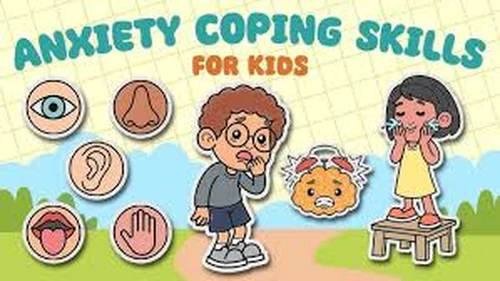
I stumbled onto this tool during a particularly rough week. We started a simple routine right after the school bag hit the floor. I would ask, “What’s the weather inside you right now? Sunny, cloudy, stormy, or tornado?” It was the same question every day, so there was no pressure to come up with a novel answer. And because weather changes, nothing was permanent. A tornado passes.
My kids could point to the fridge chart we made together—a piece of paper with four doodled weather icons—without having to formulate complex sentences. Over time, that two-minute check became a release valve. A “tornado” meant we would do a physical reset immediately: jumping jacks, a pillow fight, running up and down the stairs twice. A “cloudy” meant cuddling on the sofa with no questions asked. The ritual gave anxiety a name and a map, and the predictability of it built safety into the afternoon routine.
What Do Anxiety Symptoms at Home Look Like in Different Ages?
A three-year-old might follow you from room to room, head-butt your leg, and scream when the dog walks too close. That is not defiance. That is a nervous system on fire, asking for co-regulation. The same anxiety in a nine-year-old might show up as endless questions about death, constant requests for reassurance, or a new refusal to eat foods that touch each other. In a teenager, it can masquerade as irritation, refusal to join family meals, or obsessive phone scrolling that is actually a desperate attempt to numb the noise inside. The symptoms shift shape, but the need beneath them stays the same: Am I safe? Do you see me? Can you handle this even when I cannot?
Using Play to Decode Anxiety Symptoms in Young Children
Before my daughter could explain her panic, she acted it out with dolls. The baby doll was always lost and the mommy doll could not find her. I started playing along, saying, “Oh no! The mommy keeps looking. She will not stop until she finds her baby.” The relief that washed over my daughter’s face was immediate. I did not need a degree to understand that separation anxiety was the invisible script. Play is a child’s first language, and it often reveals what words hide. Fifteen minutes on the floor with action figures, drawing, or even playing chase can unlock the exact theme an anxious child is wrestling with.
FAQ: Child Anxiety Symptoms at Home
What are the most common child anxiety symptoms at home that parents miss?
Frequent stomachaches or headaches without a medical cause, sudden clinginess after a typically calm day, sleep resistance, and irritability that seems disproportionate to the trigger. Many parents also miss the quiet symptoms—withdrawal, perfectionist meltdowns over small mistakes, and excessive people-pleasing that hides a deep fear of disapproval.
How can I tell if stomachaches are actually child anxiety symptoms at home?
Keep a simple log for one week. If stomachaches reliably appear Sunday evening before the school week or right after you announce a transition, and vanish during playtime or on Saturday morning, anxiety is a likely driver. Always rule out medical causes first, but patterns often speak louder than any one symptom.
Do anxiety symptoms at home mean my child needs to see a professional?
Not necessarily. Many children benefit from consistent, calm connection and the tools described here. However, if symptoms persist for weeks, interfere with eating or sleeping, or include talk of self-harm, a conversation with a pediatrician or a child therapist can offer added support. There is no shame in that door.
Is it common for child anxiety symptoms at home to appear out of nowhere?
Yes, very common. Development leaps, a change in classroom seating, overheard adult conversations, even a single nightmare can trigger a delayed anxiety spike. What looks sudden to you has often been building inside them for days. The emotional weather check can catch those shifts before they boil over.
One last thing. The morning after the cereal bowl shaking, my daughter asked if I would just sit next to her while she ate. I did. She did not need me to fix anything. She needed my calm nervous system right next to hers, steady as an anchor. That is the work. It is quiet, repetitive, and the most powerful tool we have.
