I stared at the mirror after another 12-hour shift, exhausted, and whispered, “I can’t find value in myself, and I don’t know what to do.” That sentence wasn’t dramatic. It was a plain fact, the same way you’d say the sky is gray. I had tried everything I was supposed to try. I worked overtime until my body ached just to feel a flicker of accomplishment. I followed makeup tutorials, dieted, even fasted. I read articles on celebrating small wins. But none of it landed. A win was never a win. It was just something I did, like brushing my teeth. And the real question kept circling: why do I undervalue myself so completely, even when people tell me I’m enough?
Quick Ways to Start Valuing Yourself Today
If you’re feeling worthless right now, start here:
- Notice one moment when the inner critic took a breath. A reprieve, not an achievement.
- Say out loud: “Right now, I feel worthless. That’s what my brain is doing. It’s not the truth.”
- Name one honest thing you did today. Not good or impressive. Just honest.
- When someone says something kind, say “thank you” even if you don’t believe it. File it for later.
- Remind yourself: You don’t get to decide for others whether they find value in you.
Why Do I Undervalue Myself Even When People Say I’m Enough?
For the longest time, I thought the problem was that I hadn’t found the right thing to fix me. High school therapy? Pills to numb the pain because that’s all our small town offered. Adult therapy? More pills and a well-meaning nod. I’d seek validation from friends, family, my partner—then pull away because I feared my neediness was intolerable. They’d say, “It’s okay,” but something in me said, “No, it’s not okay to be like this every single time.” I was the common denominator.
What I learned slowly, painfully, is that undervaluing yourself isn’t a truth you discover. It’s a habit you practice. When you grow up—or live through experiences—that teach you your worth is something you must earn, your brain becomes a constant evaluator. It grades every action, every reflection, every conversation. And if the bar is set impossibly high, you fail every single time. The voice that says, “I will never be enough,” gets so loud that compliments sound like lies. You discount them instantly. That’s not a flaw. That’s a pattern your mind has repeated ten thousand times. And patterns can be changed. Not overnight. Not with one article. But with tiny, stubborn, unglamorous shifts.
Does this sound familiar? You work yourself to the bone and still feel like you’ve done nothing? You look in the mirror after getting dressed up and honestly can’t see what anyone else says they see? I’ve been there. It’s exhausting. And the exhaustion itself reinforces the belief: “See? I can’t even handle my own feelings. I’m not worth much.”
But here’s a thought that started to loosen the knot: maybe this isn’t about finding value. Maybe it’s about noticing that the value was never absent—only obscured by the noise of self-judgment. When you’re always asking “why do I undervalue myself?”, you’re already engaging in the very thing that keeps you stuck: you’re analyzing your worth instead of experiencing it.
How to Stop Undervaluing Yourself When Nothing Seems to Work
I remember telling a friend, “I can’t feel proud of anything.” Not my job. Not my body. Not my creative projects. They asked, “When was the last time you let something just be okay?” That stopped me. I had no answer.
The first practical shift I tried was embarrassingly small. I stopped trying to feel valuable and started tracking moments when I felt even a sliver of “not terrible.” Not good. Not proud. Just… neutral. A moment when the inner critic took a breath. I wrote them down in a notes app. “Made coffee and didn’t criticize myself for not grinding beans fresh.” “Smiled at a stranger and didn’t wonder if I looked weird.” These weren’t achievements. They were reprieves. And reprieves are data. They prove the harsh voice isn’t constant.
Why does this help? Because when you’re deep in the habit of undervaluing yourself, aiming for pride feels like climbing Everest without legs. But noticing a pause in the pain? That’s doable. And each pause is a crack in the pattern.
Then I tried something my therapist didn’t suggest (I had stopped going by then). I gave myself permission to say out loud, “Right now, I feel worthless, and that’s exactly what my brain is doing. It’s not the truth. It’s just weather.” I said it in the car, alone, like a weird mantra. At first it felt ridiculous. But after a week, I noticed a shift. The thought “I’m worthless” didn’t disappear, but it had less weight. It became a passing cloud, not a permanent address.
Here’s a conversation I had with myself that might help:
Inner critic: “You’re a burden to everyone who loves you.”
Me (responding out loud): “Maybe I am. And maybe they still choose to stay. That’s their choice. I don’t get to override it.”
That small reframe—you don’t get to decide for others whether they find value in you—was huge. When you constantly seek validation then dismiss it, you’re essentially telling your loved ones, “Your opinion doesn’t count.” That’s not fair to them or to you.
A Simple Evening Practice to Build Self-Worth
I started using a practice because I needed something concrete. The rule is simple: every evening, say out loud (or write) one thing you did that day that was genuinely you. Not good. Not impressive. Just honest. For example: “I let myself cry for three minutes instead of stuffing it down.” Or “I wore the shirt I like even though I felt ugly.” Or “I said no to overtime because I was bone-tired.”
At first, I couldn’t think of anything. My mind would go blank and that voice would hiss, “See? Nothing worth mentioning.” So I started with absurdly small things. “I breathed.” “I woke up.” The point wasn’t the content. The point was the act of turning my attention inward with a gentle, curious gaze instead of a judging one. That shift—from evaluation to observation—is where self-worth begins to rebuild, not from big revelations.
Why this practice works: traditional gratitude journals felt fake when I was in the pit. Listing things I “should” be grateful for just reminded me how broken I was. But naming an honest moment? That felt real. Even if the moment was acknowledging the pain. “Today I felt jealous of everyone who seems to love themselves. That was my honest thing.” That’s a step toward owning your experience, and ownership is the soil where value grows.
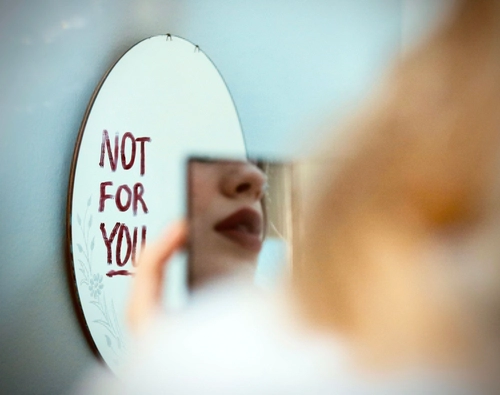
When the Mirror Feels Like an Enemy
I spent years trying to look better so I could finally feel worth looking at. I dieted, exercised, fasted. I’d stand in front of the mirror and see only flaws. The makeup tutorials didn’t work because the issue wasn’t my face; it was the lens I saw it through.
One day I tried a different approach: I looked in the mirror and instead of scanning for beauty, I scanned for signs of life. Tired eyes meant I worked hard. Faint smile lines meant I’d laughed once. Dry hands meant I’d done dishes, cooked, lived. I wasn’t looking at a model; I was looking at someone who showed up. That didn’t make me feel pretty. But it made me feel human. And human is more useful than pretty when you’re trying to stop undervaluing yourself.
Breaking the Validation Cycle With People You Love
I worried constantly that my neediness was pushing people away. I’d ask for reassurance, receive it, then immediately distrust it. That put my loved ones in an impossible position. So I made a small rule: when someone said something kind about me, I’d simply say “thank you,” even if I didn’t believe it. And then I’d add silently to myself, “They see something. I don’t have to see it right now. But I’ll file it.” I kept a folder in my phone called “Filed” where I’d paste texts like “You’re such a good friend” or “I love talking to you.” I never reread them. The act of filing was enough. It was a gesture of trust in future me, the one who might one day believe them.
What to Do When You Can’t Find Value in Anything You Do
If you’re like I was—show up at work, push through, yet feel no sense of worth—you might be mistaking productivity for value. I had to learn that my value wasn’t in output. It was in presence. When I cooked a mediocre dinner, I was nourishing myself. That’s value. When I held space for a friend’s venting, that’s value. When I got out of bed on a day when everything hurt, that’s enormous value. But my brain didn’t register it because it was looking for trophies.
So I started a “bare minimum day” log. On days when I felt especially worthless, I’d note the barest acts: “Fed the cat.” “Showered.” “Walked to the mailbox.” These were evidence of a person still trying. And that person deserves respect, even from herself.
FAQ: Why Do I Undervalue Myself?
Q: Why do I feel worthless even when people tell me I’m enough?
A: External validation can’t fill an internal gap. When you’ve practiced undervaluing yourself for years, compliments feel like lies. The issue isn’t the lack of praise—it’s the habit of dismissing it. Start by simply noticing when someone says something kind, even if you don’t believe it yet.
Q: How do I stop undervaluing myself when nothing seems to work?
A: Stop trying to feel valuable. Start by noticing moments when you feel “not terrible.” Track those reprieves. They’re evidence that the harsh voice isn’t constant. Also, try the “one honest thing” practice—name one thing you did that was genuinely you, not impressive, just honest.
Q: Why do I dismiss compliments so quickly?
A: Your brain has a well-worn path to self-doubt. When you hear something kind, it doesn’t fit the story you tell yourself, so you reject it. Try saying “thank you” and filing it away, even if you don’t believe it. You’re building a folder of evidence for future you.
Q: How do I stop seeking validation from others?
A: You’ll still want it sometimes—that’s normal. The shift is noticing when you’re seeking it and pausing. Ask yourself: “What would I do if no one was watching?” Then do that. Small acts of self-directed living build self-trust faster than external approval ever will.
Q: What if I’ve tried everything and still feel worthless?
A: That feeling is heavy, and I’m sorry you’re carrying it. Sometimes the first step isn’t feeling better—it’s naming the feeling out loud without trying to fix it. That’s progress. If you’re stuck, consider talking to a professional who specializes in self-worth. You don’t have to figure this out alone.
One Last Thing
I still have days when I stare at the ceiling and feel like I’m failing at being a human being. That voice hasn’t disappeared. But somewhere along the way, I stopped believing it was the only voice that mattered. And maybe that’s enough.
References
- Neff, K. (2011). Self-Compassion: The Proven Power of Being Kind to Yourself. William Morrow.
- Brown, B. (2012). Daring Greatly: How the Courage to Be Vulnerable Transforms the Way We Live, Love, Parent, and Lead. Gotham Books.
- Harris, R. (2019). The Happiness Trap: How to Stop Struggling and Start Living. Shambhala Publications.
