It is 11:47 p.m. The rest of the house has gone quiet. I am wide awake, replaying a conversation from three days ago. Did I say the wrong thing? What did she mean by that pause? My chest tightens. My brain flips through variations of what I should have said. I glance at the clock: 1:12 a.m. Still going. This is not insomnia, exactly. This is my mind eating itself alive.
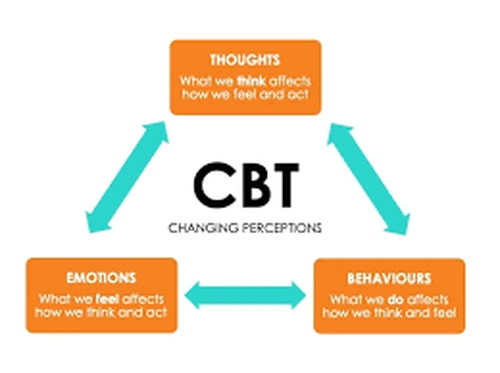
Here is the truth: You are not alone. That churning, noisy, exhausting mental loop has a name many of us recognize now: internal friction, or 精神内耗. And it often feels inescapable. But what if the real problem is not the thoughts themselves? What if it is that no one ever taught you how to regulate the emotions underneath them?
That is where CBT skills for emotional regulation come in. Not as clinical jargon, but as a set of quiet, practical tools that help you stop the spin. I started using them after a particularly rough stretch of burnout, and slowly, the midnight replays lost their grip.
5 Quick-Pick CBT Skills for Emotional Regulation
- Name the emotion without story: Say “I feel shame” instead of “I am a failure.”
- The 90-second pause: When you feel a wave of panic, wait it out before acting.
- Externalize the critic: Give your inner negativity a silly name and talk back.
- Shift the physical channel: Splash cold water on your face to interrupt the spiral.
- Ask the evidence question: “What is one real fact that challenges this thought?”
These are not magic. They are drills. And they build a muscle most of us were never given: the ability to feel something intense without becoming it.
Emotion regulation is a foundational psychological skill that plays a vital role in promoting mental well-being and preventing emotional disorders such as anxiety and depression. At its core, it involves the ability to respond to emotional experiences in a controlled, flexible, and constructive way—rather than being overwhelmed or reactive. This skill allows us to influence the intensity, duration, and expression of our emotions. Whether consciously or not, we use emotion regulation strategies every day. Some work. Many do not. Internal friction is often a sign of dysregulation: the system is trying to protect you but instead keeps you trapped in a feedback loop of dread and self-criticism.
Why does the mind do this? In cognitive behavioral therapy, emotion regulation is often broken down into three processes: reducing emotional triggers, regulating emotional intensity, and shortening the duration of distress. When these are compromised, a small hurt can spiral into hours of mental exhaustion. But by learning even a few targeted skills, you can start to untangle the knot right when it forms.
Why Are My Emotions So Exhausting? The Link Between Dysregulation and Internal Friction
Here is something I wish I had understood earlier: emotion dysregulation—using maladaptive or unhealthy coping methods—is often what turns a bad moment into a bad week. When intense emotions hit and you have no framework, the brain defaults to whatever it knows. For me, that was avoidance. I would push the feeling down, distract myself, and then wonder why I exploded over trivial things three days later. Some people use aggression, emotional eating, or endless scrolling. These are not character flaws. They are an absence of skill. And they feed the internal friction machine.
The good news is that emotion regulation skills are learnable. I remember the first time I tried to not just endure a wave of anxiety but to observe it. I sat in my car after a meeting and said out loud, “Okay, I feel embarrassed. That is what this is.” The feeling did not vanish, but it stopped growing. It was no longer a monster under the bed. It was just a sensation with a name. That small shift—labeling without judgment—is a CBT foundational move. It directly addresses the second process: regulating emotional intensity. Before, I was at a 9. Naming it brought me to a 6. That was enough to stop the internal argument that usually followed.
Cognitive reframing is another component. Not toxic positivity, but a deliberate question: What else could be true here? When a friend did not text back, my old story was “She is mad at me.” The new skill asked, “Could she simply be busy?” It sounds almost too simple. But that space between stimulus and response is where emotional regulation lives.

How Can I Use CBT Skills for Emotional Regulation Right Now?
Let me give you the sequence I still use when I catch myself starting the spin. I call it the One Fact, One Body, One Breath drill, and it leans hard on CBT principles for emotional regulation.
First, find one fact. When your mind is weaving catastrophic narratives, grab the steering wheel. Ask: What do I actually know? Not what I assume. Not what I fear. I know that I sent an email and have not received a reply. That is the whole story. My emotional brain wanted to add, “They think I am incompetent.” Denying that thought does not work, so I don’t bother. I just place it next to the lone fact. The fact is the concrete. The story is smoke. That is reducing emotional triggers in real time.
Second, move one body part. Emotional intensity lives in the body. My jaw clenches, my shoulders creep up. A CBT trick I learned is to deliberately relax the hands. Uncurl your fingers. Rest them on your thighs, palm up. It is a physical signal of surrender, and the brain often follows. This regulates intensity by shifting sensory input. It is not deep meditation. It is one second of softness.
Third, take one audible breath. Not a silent, tight breath. A sigh. A long, noisy exhale that you actually hear. It tells your nervous system: the danger is not immediate. This helps shorten the duration of distress. You are not trying to be calm. You are just buying yourself thirty seconds.
The first time I strung these three together—fact, body, breath—I cried. Not from sadness, but from relief. My body finally understood that the crisis was internal, not external.
What trips people up is the belief that emotional regulation means feeling less. It does not. It means feeling without being destroyed by feeling. Some days, I do this three times in an hour. Some days, I forget completely and spiral for twenty minutes before I remember. That is the practice.
The 3-Step Reset: A CBT-Based Ritual for Emotional Regulation
Over time, I shaped the drill into a tool I can use anywhere. I call it the Unhook, Name, Redirect reset. It is based on the three key processes of emotion regulation—reducing triggers, regulating intensity, shortening duration—but stripped of any clinical weight.
Step one: Unhook the trigger. Catch the first thought that sets off the cascade. For me, it is often a repeated phrase like “You messed up.” I visualize that thought as a train pulling into a station. I do not have to board it. I can stand on the platform and watch it arrive, then let it leave. This is a form of cognitive defusion from acceptance and commitment therapy, a CBT-adjacent approach. The key is not to fight the thought but to create a tiny margin of choice.
Step two: Name the real emotion underneath. Not the top-layer anger or anxiety, but the deeper ache. When I am spinning about being excluded from a group conversation, the real emotion is often loneliness. Saying “I feel lonely” out loud is painful but clarifying. That naming reduces intensity because the brain no longer has to broadcast a general distress signal. It has a specific complaint, and specific complaints are easier to handle.
Step three: Redirect to a values-based micro-action. This comes from behavioral activation. Instead of staying stuck in rumination, I ask: What matters to me right now, in this very small moment? Connection. So I text a friend not about the situation, but just “Thinking of you.” Or I refill my water glass with care. The action is tiny, but it moves the needle from passivity to agency. This shortens the recovery time from hours to minutes.
I used this reset yesterday. A work email triggered a shame spiral. I unhooked by noticing the thought “I am not good enough.” I named the real emotion: fear of being judged. I redirected by taking two minutes to organize the pens on my desk—a small, orderly act that reminded me I can affect my environment. The spiral stopped. It did not vanish, but it stopped growing.
Why Naming Emotions Works Without Therapy Jargon
When you learn cbt skills for emotional regulation, you quickly discover that simply labeling an emotion reduces activity in the amygdala, the brain’s alarm center. This is not just poetic. In Daniel Goleman’s work on emotional intelligence, he describes how “name it to tame it” is a neurological truth. I don’t need to understand the brain scan to know it works. When I say “This is grief” instead of “I feel awful,” something shifts. The vague swamp becomes a puddle I can step around.
What Do I Do When the Trigger Is Myself?
Much of internal friction comes from self-criticism. I have a inner voice that sounds remarkably like a bad boss. To use cbt skills for emotional regulation here, I treat that voice not as truth but as an object to be examined. I ask: Would I speak to a friend this way? No. So why does my brain think it is helping? Spoiler: it is trying to protect me from failure by attacking me preemptively. That recognition—that the critic is misguided protection—robs it of authority. I sometimes even say, “Thanks for trying to help, but you can sit down now.”
How Long Does It Take to Build Emotional Regulation Skills?
This is the question I asked most. The answer, from my own experience and from practitioners like Dr. Marsha Linehan, is that skills become automatic with repetition. It is not a weeks-long fix. It is a daily recalibration. Some days, the skill works instantly. Other days, I feel like I have forgotten everything. That inconsistency is normal. The act of returning to the skill, again and again, is what rewires the pattern.
FAQ: CBT Skills for Emotional Regulation
Q: Can I use cbt skills for emotional regulation without a therapist?
A: Yes, many foundational skills like labeling emotions, reframing thoughts, and grounding in the present can be practiced on your own. Books like Feeling Good by David Burns offer a structured self-help approach. However, if your emotional dysregulation severely impacts daily life, a professional can tailor techniques to you.
Q: What is the difference between CBT and DBT for emotional regulation?
A: CBT focuses on changing unhelpful thought patterns to influence emotions. DBT adds a strong emphasis on distress tolerance and acceptance. For intense, rapid emotional spikes, DBT skills like the TIP technique (temperature, intense exercise, paced breathing) are often the starting point.
Q: How do cbt skills for emotional regulation help with overthinking?
A: Overthinking, or rumination, is a mental loop that feeds on unprocessed emotion. CBT skills interrupt that loop by shifting attention from the endless “why” to the actionable “what now.” The “evidence challenge” question and the “unhook” visualization directly target the rumination engine.
Q: Are there immediate physical techniques I can use when I am emotionally overwhelmed?
A: Yes. The dive reflex, triggered by splashing very cold water on your face, slows your heart rate and acts as a biological reset. Paired with slow, extended exhales, it can bring acute distress down quickly enough to use cognitive skills.
One last thing. That night I described at the start, the one at 11:47 p.m.? It still happens sometimes. But now, when I catch myself there, I have a different response. I don’t berate myself for being awake. I put a hand on my chest and say, quietly, “You are having a feeling. That is all.” And eventually, the room does not feel so small, and the clock does not feel like an enemy. It feels like a night I can survive. And I do.
