I still remember the exact sound. A dull thump, then my 9-month-old’s startled cry. I rushed into the living room and saw my 2-year-old daughter standing over her brother, plastic stacking ring still in her hand. This wasn’t the first time. For weeks, she’d been hitting his head, scratching his face when I turned away, throwing whatever she could grab. Their dad had moved out two months earlier, and I knew she was drowning in big feelings. Jealousy, confusion, grief she couldn’t name. But knowing why didn’t stop the guilt or the fear. I needed a way to keep both my children safe while I still felt like a person, not a referee.
Quick Things to Try Right Now
If your child is hitting their sibling, start here:
- Stop saying “mean” or “aggressive” out loud — it changes how you see your child.
- Remove the baby instantly when anything happens, with minimal words.
- Give your toddler a replacement action for their hands that day, not a lecture.
- Find one 10-minute window where they get you completely, without the baby.
Why Does a Toddler Turn Aggressive Toward Their Sibling?
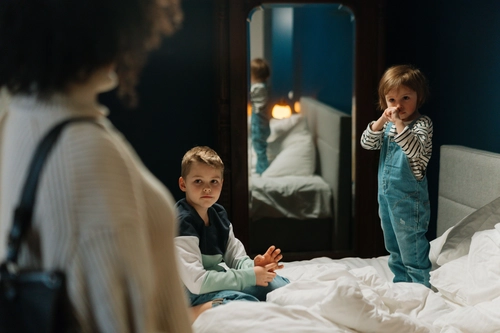
A 2-year-old who hits a baby isn’t a bully. She’s a tiny person with no impulse control and a very loud need for connection. When a new sibling arrives, the oldest loses something huge. She loses the rhythm of being your one and only. Add a parental separation on top of that, and the ground under her feet is gone. She cannot say, “I’m scared you’ll leave me too.” She can’t articulate, “I need to know I matter when the baby takes so much of you.” So her body speaks. A smack on the head gets a reaction every single time. In her mind, any attention—even a sharp “no!”—proves she exists to you. That’s not meanness. That’s survival.
Something I didn’t understand at first: my reaction was the reward. I learned this the hard way. One comment I read stuck with me: “Avoid giving bad behavior any oxygen.” I had been explaining, correcting, moving the baby away while my voice went tight and my eyes got big. To my daughter, that was a show. She’d scratch, and suddenly I was all hers. No more baby. No more split focus. So I tried something new. I stopped feeding the behavior with drama. That didn’t mean I did nothing. It meant I moved without heat. I’d pick up the baby, say a calm “I won’t let you hurt him,” and create physical space. Then I wouldn’t lecture, wouldn’t even make eye contact for a moment. The hitting didn’t vanish overnight, but the intensity dialed down.
How to Stop the Hitting and Scratching: What Finally Worked
Many parents get stuck because the standard gentle-parenting scripts feel hollow. “We use gentle hands” can become background noise after two months, especially when a child is hurting and testing and nothing changes. I found that what mattered most wasn’t my words but the non-negotiable boundary and the immediate offer of a replacement.
First, I stopped saying “Don’t hit.” I gave her something she could do. “You need to use your hands? Squeeze this pillow hard.” Or, “Stomp your feet as loud as you want.” I said it while looking straight at her face the moment after I secured the baby. Then I turned my attention away briefly, not to punish, but to show her that hurting the baby didn’t get her more of me. She learned that the only way back to connection was through the other door: the hand squeeze, the stomp, or a word like “mad.” Over time she started choosing the stomp before her hand flew. It took weeks, though, not days.
Second, I stopped trying to “fix” the behavior in the heat of the moment. I waited for a calm pocket—maybe while she was eating snacks or after a bath—and I’d say, “Earlier, when you hit your brother, you looked really upset. I wonder if you needed me.” I let the silence sit. Once she mumbled, “No baby.” I nodded. “You wanted me all to yourself. That makes sense.” She didn’t always respond, but her body softened. I think she needed to hear that her wish wasn’t shameful.
Third, I made a big change with physical closeness. I started wearing her in a soft carrier on my back or hip while I attended to the baby. I’d talk to her while I diapered him. “Look at those wiggly toes. Remember when yours were that little?” She’d rest her cheek on my shoulder. That daily sensory connection—the pressure, my smell, my voice without competition—calmed something deep. It wasn’t a cure, but her hitting episodes dropped noticeably.
A Simple Tool That Built Connection
Desperation birthed my favorite tool. One awful afternoon, after another scratching incident, I knelt down and said, “I need help. Can you be my special helper?” Her eyes lit up. I gave her a job only she could do: holding the diaper cream while I changed the baby, fetching a burp cloth, singing a silly song to make him smile. Suddenly she had a role. Not the displaced one, but the important one.
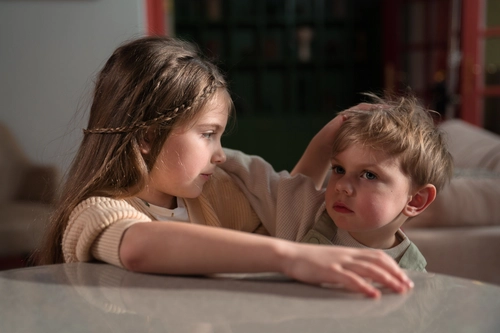
This became our ritual. Every morning I’d announce, “Special job time!” and she’d beam. The jobs were tiny and often pointless—handing me an unneeded wipe, checking if the baby’s socks were still on. The point was the belonging. When she had a purpose, she needed to hit less. She’d toddle over with a toy for him and say, “I give,” and I’d pour on praise. The aggression didn’t disappear completely, but it got pushed to the edges of our days. And when it did show up, I had more emotional credit in the bank.
When Big Changes Fuel Sibling Aggression
A family rupture isn’t just about the parents. A toddler feels it in the air, in the missing presence, in the changed tone of every morning. She doesn’t understand divorce, but she understands loss. Her baby brother wasn’t just a rival for attention; he was the thing that stayed while her dad left. In her primitive logic, maybe if the baby disappeared, her dad might come back. Or maybe she just needed to hit something because hitting felt better than crying.
I couldn’t fix the big loss, but I could give her language. I started saying, “You miss Daddy. Missing him can feel so big inside your body.” I didn’t tie it to the hitting. I just named the feeling when things were calm. She’d nod and lean into me. Once I caught her whispering to a stuffed bear, “Daddy gone, sad.” I sat on my hands so I wouldn’t interrupt. She was doing her own work, and I had to let her.
What to Say Instead of “Don’t Hit”: Small Scripts That Land
With a 2-year-old, long explanations backfire. I kept scripts short and steady. These are a few I used:
- Right after an incident: “I won’t let you hurt him. I’m moving him now.” (Said with zero anger, like stating a fact.)
- When she was reaching out angrily: “Hands are for helping. Can you help me pat his back very softly, like this?”
- In a calm moment: “Sometimes you feel so mad you want to scratch. Can you show me where the mad lives in your body?” She’d point to her tummy. We’d breathe together.
- When she was jealous: “You wish it was just you and Mommy. I hear you.”
The key was delivering these lines with my body language matching the words. Neutral face, relaxed shoulders, no chasing her for a reaction.
Babywearing for Connection: An Unexpected Tool
I discovered this by accident. One morning, exhausted, I strapped my daughter into a soft carrier while I made coffee, just to keep her from climbing the counters. She molded against my back and went still. I realized then that she hadn’t been carried in months—all the carrying was for the baby. So I started doing it intentionally during the baby’s fussy times. I’d pop her in a back carry and talk about what I was doing. She could see the baby from my shoulder, but she was literally in my space, not hovering outside it. It was like filling a cup I didn’t know was empty. The hitting lessened. Not because I punished it, but because the need behind it was being met.
FAQ: My Child Is Aggressive Toward Siblings
Q: Why is my toddler aggressive toward their new sibling?
A: A toddler who hits a baby isn’t a bully. They’re a small person with no impulse control and a very loud need for connection. The baby has taken your attention, and your toddler doesn’t have the words to say “I’m scared I’m losing you.” Hitting gets a reaction, and any reaction feels like proof they still exist to you.
Q: How do I stop my child from hitting their sibling?
A: Start by not giving the behavior drama. Move the baby calmly and say, “I won’t let you hurt him.” Then offer a replacement action: “Squeeze this pillow hard” or “Stomp your feet.” The goal is to redirect the impulse, not punish it. Also, find one-on-one time with your toddler each day—even 10 minutes—to fill their connection cup.
Q: What if gentle parenting scripts don’t work?
A: If “We use gentle hands” feels hollow after weeks of hitting, it’s because your child needs a different response. Try dropping the lecture and using a calm, firm boundary: “I won’t let you hurt him.” Then give a physical replacement for their hands. Words matter less than the energy you bring.
Q: How do I handle sibling aggression when there’s a big family change like separation?
A: Big changes like separation or divorce hit toddlers hard. They can’t name their grief, so it comes out as hitting. Give them language: “You miss Daddy. Missing him can feel so big inside your body.” Don’t tie it to the hitting—just name the feeling when things are calm. Let them know their sadness makes sense.
Q: Will my child always be aggressive toward their sibling?
A: No. With consistent boundaries, redirection, and connection, the aggression usually fades. It takes weeks, not days. The goal isn’t perfection—it’s progress. Most children who hit their siblings in toddlerhood go on to have loving relationships with them later.
One Last Thing
About a month after I changed my approach, I found my daughter stroking her brother’s head while he slept. She whispered, “Soft, Mama, soft.” I didn’t cry, but I came close. That moment wasn’t the end of our struggles—she still has days when her hands forget—but it was proof that the child I thought I was losing was still there. And so was I.
References
- Faber, A., & Mazlish, E. (2012). Siblings Without Rivalry: How to Help Your Children Live Together So You Can Live Too. W. W. Norton & Company.
- American Academy of Pediatrics. (2021). Sibling relationships: Helping your children get along. HealthyChildren.org. Retrieved from https://www.healthychildren.org
- Markham, L. (2012). Peaceful Parent, Happy Siblings: How to Stop the Fighting and Raise Friends for Life. Perigee Books.
