I was sitting in my kitchen last week, staring at a half-packed box of books. I’ve moved six times in ten years. Each time, I tell myself this one will be different. This time I’ll plant roots. But the box stayed open, and I grabbed Hala Alyan’s memoir instead. I needed to know if someone else had figured out the math of leaving.
Can you ever really go home if home was never a single place?
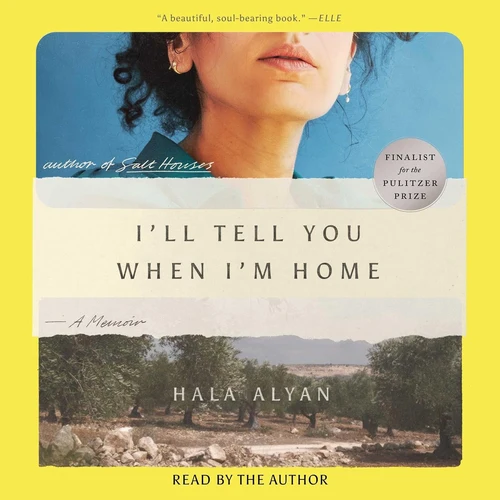
What This Book Asks About Belonging
Hala Alyan is a psychologist and a poet. She was born in Kuwait to a Palestinian family, grew up in Oman, then Jordan, then Lebanon, then the United States. Her family scattered like seeds in a wind they didn’t choose. The book traces her journey from a child who collected seashells in Kuwait to a woman who collects airport stamps instead.
The core question she wrestles with is simple and brutal. Is home a geography or a feeling? She doesn’t pretend to have an answer. Instead, she shows us the mess. The phone calls with her mother that end in silence. The apartment in New York that never quite feels like hers. The way her grandmother’s recipes taste different when cooked in a foreign kitchen.
What struck me most was her honesty about the cost. She doesn’t romanticize displacement. She describes the exhaustion of always being the translator, the explainer, the one who has to say “no, I’m not from there” and “well, it’s complicated.” There is a scene where she tries to explain her family history to a well-meaning American friend over coffee. The friend nods and says “that must be hard.” And Alyan thinks, but doesn’t say, that hard is not the right word. Hard is what happens when your car breaks down. This is something else entirely.
The book’s weakness, if I’m being honest, is that it sometimes feels too big. So many cities, so many losses, so many goodbyes. I wanted her to stay in one place longer, to let me breathe. But maybe that’s the point. Displacement never lets you breathe.
The Craft of Remembering
Alyan’s training as a psychologist shows in the gentlest way. She doesn’t diagnose herself on the page. She observes. She notices how her body remembers things her mind has tried to forget. The smell of jasmine from her grandmother’s garden in Kuwait. The sound of her father’s footsteps when he came home from work. The particular shade of blue on the tiles of her childhood bathroom.
These details are the real architecture of the book. Not the grand historical events, though they are there. The Gulf War. The checkpoints. The papers that never quite get stamped. What stays with me is smaller. The way her mother packed a suitcase. The way her father never learned to say goodbye without clearing his throat first.
The central metaphor is one of weaving. She talks about how her family’s stories are threads that cross oceans, that get tangled, that sometimes break. The work of belonging, she suggests, is not about finding the perfect fabric. It is about learning to knot the broken threads so they hold.
I found myself underlining sentences that felt like secrets. “I have lived in so many houses that I no longer dream of walls.” That one stopped me cold. Because I had never thought about it that way. When you move enough times, you stop imagining permanence. You start dreaming of what you can carry.
What It Means to Arrive
The book’s title comes from a phrase her father used to say when they were traveling as children. “I’ll tell you when I’m home.” It was a promise. A way of saying that some stories are too fragile to tell in transit. They need the safety of a familiar room.
But what happens when that room never comes? Alyan spends years waiting to arrive somewhere that feels like home. She moves to New York. She becomes a psychologist. She marries. She has children. And still, something hums underneath. A restlessness. A feeling of being slightly out of sync with the world around her.
Here is what I loved most about this book. It does not end with her finding home in a place. It ends with her finding home in a practice. In the act of telling her story to her children. In the ritual of making her grandmother’s dishes in her own kitchen. In the quiet morning hours when she writes.
She arrives not at a destination, but at a way of being.
The book has gaps, and I think they are intentional. She does not tell us everything. Some stories, as her father said, are for when you are home. And maybe home is not a place you find. Maybe it is a place you build, slowly, with your hands and your words and your willingness to stay even when staying feels like pretending.
I finished the book and looked at my box of books. I did not unpack it. But I did not close it either.
“Home is not a place you leave. It is a place you carry, and it carries you.”
