I sat on my porch last Tuesday, scrolling through another viral post from a teacher quitting mid-year. She described kindergarteners throwing chairs. Fifth graders who cannot sit still for two minutes. Parents who email to ask why their child got a consequence for cursing in class. I felt my stomach tighten. My own son starts kindergarten next fall. Am I sending him into chaos?
Then I remembered my great-grandpa. He taught music in the 1960s. One afternoon, his students lit the classroom piano on fire. On purpose. He transferred schools the next week. That is not new behavior. That is a piano in flames sixty years ago. So why does child behavior getting worse feel so true right now? I wanted to hear from teachers who have been in classrooms for decades. Not the headlines. Not the TikTok rants. The people in the trenches who can actually compare then and now.
Quick Look at the Real Story Today
If you’re worried about your child’s behavior or what school will be like, start here:
- Ask a teacher who taught in the 80s, 90s, and today what changed.
- Separate pandemic disruption from long-term trends.
- Look at what boundaries actually do for a child’s brain.
- Try one simple family rule before blaming screens.
- Notice when your own exhaustion colors how you see kids.
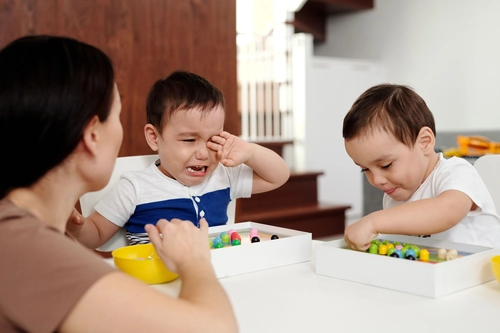
Why Do Teachers Say Child Behavior Is Getting Worse Now?
The teachers I talked to who have spent thirty-plus years in classrooms said something I did not expect. Most refused to say kids themselves are fundamentally worse. What they described was something more complicated.
A retired third-grade teacher named Margaret told me, “I had a boy in 1987 who bit me. Hard enough to break skin. I had another in 1995 who flipped desks when he got frustrated. The difference now? I had five of those kids in one room last year. Not one. Five.” The volume has shifted. Not necessarily the severity ceiling. The floor dropped. Fewer extreme outliers, maybe. But more kids struggling with basic regulation, attention, and frustration tolerance.
Another teacher, David, who started in 1992, pointed to something I had never considered. “When I started teaching, parents mostly backed us up. If their kid got in trouble at school, the kid got in double trouble at home. Now? I spend more time defending my decisions to parents than I do teaching some days. That drains you. You burn out faster. And then you have less patience for the next kid.” His voice was not angry. It was sad.
What surfaced repeatedly was not that children are monsters now. It was that teachers are carrying heavier loads with less support. The piano my great-grandpa’s students burned? That was one incident. A terrible one. But today’s teachers describe a slow, grinding accumulation of defiance, distractedness, and parental undermining. Death by a thousand paper cuts.
So is child behavior getting worse? The honest answer from those in the room for decades: yes, but not in the way I thought. It is wider, not deeper. And a lot of it traces back to us—the adults.
Rules Feel Mean Until You See What Happens Without Them
Here is what I have observed in my own house and in the homes of friends who have known me long enough to call me auntie. Kids who struggle at home often thrive at my house. Not because I am special. Because I am consistent.
One nine-year-old I have known since she was in diapers looked stunned the first time I said, “In this house, we eat together at the table. No wandering around with food.” She pushed back. Briefly. I explained why the rule existed. Not to control her. Because eating anywhere means crumbs everywhere. Crumbs mean ants. Ants mean more work for everyone. She nodded. She asked if she could help set the table to “be part of it.” I said yes. She now reminds other kids about the table rule when they visit.
Her own mother once pulled me aside. “She is a different kid at home. Fights everything. Why does she listen to you?” I did not have the heart to say what I suspected. At my house, boundaries are clear and non-negotiable. At her house, boundaries shift depending on how tired mom is that day. Kids are not confused by rules. They are confused by inconsistency.
I swear to you, children act out when they are searching for the boundary line. They are like little cartographers mapping the edges of their world. Where is the cliff? Where is the safe path? Without clear edges, they are adrift. They push harder because they need to find solid ground and cannot.
The Gentle Parenting Problem Nobody Talks About
I want to be careful here. I believe in treating children with respect. I believe in understanding the emotion behind the behavior. But somewhere along the way, many of us confused gentle parenting with no parenting at all.
I saw a TikTok recently where a mother described her sixteen-year-old daughter being late to a fast-food interview. The girl did not get the job. The mother’s response on camera? “I told her to use her pretty privilege to keep the interview.” She said this publicly. She thought this was parenting advice worth sharing.
That is not gentle parenting done wrong. That is surrender dressed up as kindness. The boundaries that child needed were simple. Leave early for the interview. Respect the hiring manager’s time. Understand that showing up late tells someone you do not value them. The mother offered none of that. She offered an excuse and called it support.
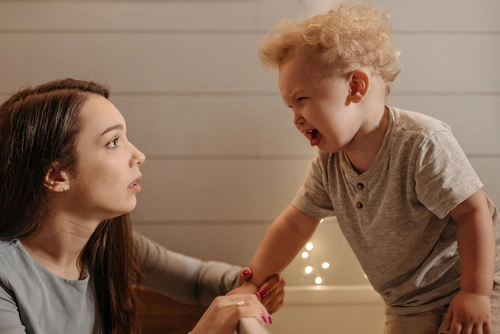
Many teachers I spoke with brought up this exact dynamic. Parents are filming their own incompetency and calling it love. They give their kids what they want instead of what they need. My rule has become very simple. Do not buy your kid a smartphone until they have demonstrated consistent real-world responsibility. Not perfect grades. Not athletic trophies. Can they wake up on time? Can they follow through on a commitment? Can they handle “no” without falling apart? If not, a phone will only accelerate the chaos.
Child Behavior Getting Worse: What Actually Helps at Home
If you are reading this and feeling a little called out, I am right there with you. Some days I enforce nothing. Some days I am the tired parent who lets snacks happen on the couch because I cannot have one more battle. We are all human. But I have found a few things that shift the dynamic without making me the villain.
Pick three non-negotiables. Not twenty. Three. In my house, it is meal times together, screens off by a certain hour, and no hurting language. Those are the hills I die on. Everything else has some flex.
Explain the why once, then stop. When my son asked why we eat at the table, I told him about the ants. Now when he forgets, I do not lecture. I say, “Ants, buddy.” He nods and sits. Two words. The connection was already made.
Let natural consequences do the work. A friend’s daughter refused to wear a coat. She argued for twenty minutes. My friend finally said, “Okay. Bring it in the car in case you change your mind.” The girl was cold at recess. She wore the coat the next day without being asked. The boundary did its job silently.
Notice when I am the problem. Last week I was grumpy after a bad night’s sleep. Everything my son did annoyed me. His humming. His questions. His perfectly normal kid energy. The problem was not his behavior. It was my tank being empty. I said out loud, “I am feeling irritable right now. It is not your fault. I need ten minutes of quiet.” He looked relieved. He brought me a blanket and played Legos in his room. I had named the boundary around my own capacity, and it helped him feel safe instead of blamed.
How to Talk to Kids About Boundaries Without Sounding Mean
The phrase “because I said so” makes me cringe. But so does a five-minute negotiation about toothbrushing. What works in between is clarity without cruelty.
| Situation | Less Helpful | More Helpful |
|---|---|---|
| Screen time ends | “Turn it off now or you lose it tomorrow.” | “Screens off in five. What do you want to do after?” |
| Hitting a sibling | “We don’t hit! Say sorry!” | “I won’t let you hit. I’m moving you here to be safe.” |
| Refusing homework | “Do it or you’re grounded.” | “What’s making this hard right now? Let’s problem-solve.” |
| Whining for candy | “Fine, just stop crying.” | “That’s not on our list today. I hear you’re disappointed.” |
None of these are fancy. None require a parenting book. But they all do the same quiet thing. They hold the line while acknowledging the person.
FAQ: Is Child Behavior Getting Worse?
Q: Is child behavior getting worse in schools, or is it just more visible now?
A: Many veteran teachers say the range has widened. Extreme behaviors existed decades ago. But now more children struggle with self-regulation, attention, and frustration tolerance, creating a heavier daily load.
Q: What do kids actually need to behave better at school?
A: Sleep, limits on screens, and parents who back up teachers. Not perfectly. Just consistently. When consequences at school are reinforced at home, kids learn faster and teachers burn out slower.
Q: Are smartphones really behind child behavior getting worse?
A: Not alone. The bigger factor is what smartphones displace—sleep, boredom, face-to-face conflict resolution, and the tolerance for waiting. Those are the skills that show up missing in classrooms.
Q: How do I set boundaries without shaming my child?
A: Separate the behavior from the person. “I love you AND I won’t let you throw that.” The word “and” matters. It holds both truths at once.
Q: What if my child’s teacher seems to dislike my kid?
A: Assume good intent and ask to listen. “Help me understand what you’re seeing” opens a conversation. “You’re targeting my child” closes it. Most teachers want the same thing you do.
One Last Thing
I still think about that piano. My great-grandpa’s classroom. 1960s. Kids who lit an instrument on fire and probably laughed. Maybe they were worse back then. Maybe every generation looks at the next one and sees decline. Or maybe we are all just tired. Tired parents. Tired teachers. Tired kids trying to find the edges of a world that keeps shifting under their feet.
Maybe the answer to whether child behavior getting worse is not yes or no. It is: boundaries have always mattered. They mattered in the 60s classroom where a piano burned. They matter in my living room when a nine-year-old sets the table and feels proud. They matter when a teacher stays in the career because parents said “we’ve got your back” instead of “my child would never.”
Kids are not worse. They are just kids. Always searching. Always testing. Always hoping someone will show them where the safe ground is.
References
- American Academy of Pediatrics. (n.d.). The importance of family routines and limits for children. HealthyChildren.org. Retrieved from https://www.healthychildren.org
- Fay, J., & Fay, C. (2010). Love and Logic: Teaching Children Responsibility.
- Council on Communications and Media. (2016). Media and young minds. Pediatrics, 138(5).
