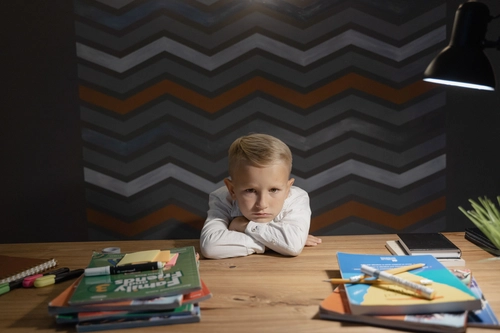
I still remember the day my son sat at the kitchen table, pencil in hand, staring at a math worksheet. Out of nowhere, he dropped the pencil, pushed the paper away, and just… stopped. He wouldn’t talk. Wouldn’t look at me. His jaw locked. His eyes went somewhere I couldn’t reach. The problem wasn’t hard math. It was the feeling that it might be hard. That was the first time I really understood: my child cannot handle frustration, and I had no idea what to do next. If you’ve seen that shutdown, you know it’s not a tantrum. It’s quieter and, honestly, scarier. You feel helpless. I did. But little by little, we found a few things that helped him uncurl and try again.
Quick Ways to Help When Your Child Shuts Down
If your child is frozen in frustration right now, start here:
- Stop breaking the work down. Sometimes “helping” feels like pressure.
- Sit beside them and do your own thing. Parallel presence is safer than teaching.
- Practice losing on purpose and narrate your feelings out loud.
- Catch them staying calm before the frustration hits—name it.
- Use a reset ritual to interrupt the panic spiral.

Why Does My Child Shut Down When Something Feels Too Hard?
What’s happening when a child cannot handle frustration and just shuts down? In our house, it wasn’t laziness. It wasn’t stubbornness. It was more like a tiny panic button getting pressed. A school psychologist I spoke with later told me she sees this more and more, especially in little kids. She said that for some children, being asked to do something that feels even slightly too hard is like asking them to fall off a cliff. There’s no in-between. It’s perfect or it’s a disaster. That perfectionism can freeze them completely.
We learned that the shutdown was actually anxiety, not defiance. He was so afraid of making a mistake that his brain just opted out. Once we saw it like that, the whole problem shifted. How do you punish that? You can’t. What makes a child feel safe enough to try when the edge feels so sharp? That’s the question I started asking every day.
How to Help a Child Who Cannot Handle Frustration: What Worked for Us
Nothing works overnight. But here’s what we tried, and what slowly—over months—helped my son risk a wrong answer again.
First, we stopped breaking the work down into smaller steps the way I’d been doing it. That still felt like “work” to him. Instead, I sat beside him and said, “I’m just gonna do mine next to you.” I’d take out my own notebook and draw or doodle. Not teaching. Not monitoring. Just parallel being. Sometimes, without the spotlight on him, he’d pick up the pencil again. Did it always work? No. But it shifted us from “task-giver and avoider” to “two people doing separate things.” That felt safer.
Another thing the psychologist recommended was to practice losing on purpose. I never would have thought of that. So we started playing short, silly games where I’d lose sometimes, and I’d narrate my feelings out loud. “Ugh, I really wanted to win. My heart is beating fast. I’m disappointed. I hate losing. But I’m okay. I’ll try again.” That kind of talk was magic. He heard me name the feeling he couldn’t name. Over time, he started losing with less shutdown. Not because he liked it, but because he’d seen me survive it.
Then we tried something else: catching him doing the right thing before the frustration hit. I’d say, “You looked at that problem and stayed calm. I saw that. That took a lot.” He’d glance at me like he’d been seen for the first time. I learned from the school psych that this kind of noticing is more powerful than any sticker chart. It’s not about rewarding the result, but the process of staying with it.
A Simple Ritual That Helped Us the Most
Eventually we built a little ritual we called the Hard Moment Reset. It only takes about three minutes. When I see the shutdown coming—the shoulders stiffening, the quiet—I don’t push. I say, “Hey, let’s pause and do our reset.” He knows what that means now. We stand up. We shake out our arms like wet noodles. I might say, “What’s your frustration number right now, 1 to 10?” He’ll mumble, “8.” I’ll say, “Okay, let’s try to get it down. You want to breathe like we’re blowing out birthday candles?” We breathe three times. Then I ask, “What’s the number now?” If it’s lower, we sit back down together. If not, we might walk to the window and count birds.
The ritual works because it names the feeling without making it a problem. And it gives us something to do together that isn’t fixing the worksheet. Why did this help? I think because it interrupted the panic spiral. It told his brain, “This isn’t an emergency. We can pause and come back.” It’s not a fancy strategy. But that three-minute reset probably saved us more than anything else.
Why Reading About a Growth Mindset Every Night Quietly Changes Everything
The school psychologist also said something that stuck with me: “Perfectionism is real and can be debilitating.” She recommended reading children’s books about making mistakes and trying hard, not for a school lesson, but just as part of bedtime. So we added picture books about characters who fail and keep going. Titles like The Most Magnificent Thing or Your Fantastic Elastic Brain. We didn’t quiz him. We just read. One night, after a story about a girl who keeps building and breaking her inventions, he said, “Mistakes happen to everyone?” I said, “Yeah. To everyone.” That was a small sentence that felt like a huge shift. Books do that. They get inside where lectures can’t. If your child cannot handle frustration because they’re terrified of being wrong, these stories can start to peck at that wall.
Organized Sports Taught My Son That Losing Is Not the End
I was nervous about signing him up for a sport. Wouldn’t more competition make it worse? But a friend who coaches Little League told me, “In the right atmosphere, kids learn that practice matters more than winning.” So we tried a non-competitive summer soccer league. He missed goals. He fell. One game, his team lost 7-0. In the car, I expected tears. Instead he said, “I almost blocked one. My foot was right there.” He wasn’t stuck on the score. He was thinking about effort. That’s a big deal for a kid who shuts down when a worksheet gets hard. Physical play let him fail in a place that didn’t feel permanent. And his body kept moving, so the frustration didn’t pool in his chest the same way. Not every sport works for every kid, but finding one where the grown-ups emphasize best effort over score might give your child a whole different experience of struggle.
What to Do When Nothing You Try Seems to Work
I’ll be honest. Sometimes the things I tried still didn’t help. Some days he shut down no matter what. I’d feel like I was failing. But I learned something from that school psychologist: sometimes a child’s anxiety is deeper than a bedtime story or a breathing exercise can reach. She mentioned that some children benefit from working with a counselor who can play games with them one-on-one, modeling how to handle mistakes, and building a simple plan where the child gets positive feedback for using the strategies they practice. She also said that in some cases, anxiety is so big that it may require more support, like outpatient therapy. I’m not a doctor, but that honesty helped me stop blaming myself. If you’ve tried everything you can think of and your child still crumbles every time they face something hard, it might be time to talk to the school counselor or your pediatrician. That’s not giving up. That’s getting your kid the kind of help that a loving parent alone can’t always give.
FAQ: Child Cannot Handle Frustration
Q: Why does my child shut down instead of getting angry?
A: Shutdown is often a freeze response to anxiety, not defiance. Some children are so afraid of making a mistake that their brain opts out completely. It’s not laziness or stubbornness—it’s a panic response to perceived failure.
Q: How do I help my child when they’re frozen and won’t talk?
A: Don’t push. Sit beside them and do your own thing quietly. Parallel presence often feels safer than direct attention. You can also try a reset ritual—shake out arms, breathe together, count birds. The goal is to interrupt the panic spiral without demanding anything.
Q: What if nothing I try seems to help?
A: Sometimes the anxiety is deeper than a bedtime story or breathing exercise can reach. It might be time to talk to the school counselor or pediatrician. That’s not giving up—it’s getting your child the support they need.
Q: How do I teach my child to handle losing?
A: Practice losing on purpose. Play silly games where you lose sometimes and narrate your feelings out loud: “I’m disappointed. That stinks. But I’m okay. I’ll try again.” Over time, they see that losing is survivable.
Q: Can sports help a child who can’t handle frustration?
A: Yes. In the right environment, sports teach kids that practice matters more than winning. Physical play lets them fail in a place that doesn’t feel permanent. Not every sport works, but one with supportive coaches can be powerful.
One Last Thing
The other night, my son got stuck on a spelling word. I saw his jaw tighten. I braced for the shutdown. He looked at me and said, “I think I need a reset.” And for the first time, he initiated it himself. I didn’t fix anything. He just knew what his brain needed. That’s what we’re after, really—not a child who never gets frustrated, but one who knows they can come back.
References
- Dweck, C. S. (2006). Mindset: The New Psychology of Success. Random House.
- Adolph, K. E., & Robinson, S. R. (2015). Motor development. In L. Liben & U. Muller (Eds.), Handbook of Child Psychology and Developmental Science, Vol. 2: Cognitive Processes (7th ed.). Wiley.
- American Academy of Pediatrics. (2018). The power of play: A pediatric role in enhancing development in young children. Pediatrics, 142(3).
