I stood in the kitchen at 7:42 a.m., one shoe on, coffee cold, already 10 minutes late. And then the toast burned. Smoke curled up, the alarm chirped, and something inside me just snapped. I didn’t yell. I didn’t throw anything. I just stood there, frozen, while my heart punched against my ribs. That was the morning I realized I had no idea how do people regulate their emotions when everything goes wrong at once.

Here’s the truth: You are not alone. This is normal. Everyone has unpleasant emotions, anger, jealousy, fear, anxiety. It is human nature. A key to living a satisfying life and getting along with others is to be able to manage your emotions and behavior even in times of stress. One way to do this is with self-regulation. And that’s exactly what we’ll unpack.
Why Do I Get Hijacked by My Feelings So Fast
Self-regulation is the act of controlling your behaviors, thoughts, emotions, choices, and impulses. It is a type of self-control. It helps you keep negative emotions in check and think before you react. But why does it feel impossible some days?
Negative emotions are disruptive. They can interfere with your happiness, productivity, and relationships. While you can’t always avoid negative feelings, you can change the way you react to them. The problem is that when we are triggered, our brain’s alarm system fires faster than our rational brain can catch up. It is not a character flaw. It is biology.
I remember a colleague once told me, “You’ll never stop the first flash of anger. That’s automatic. The second feeling, the one you choose, that’s where regulation lives.” That stuck with me. People with good self-regulation skills can still feel sad, angry, or stressed during difficult times. They have just learned to manage these challenges better. They pause long enough to let the rational part catch up.
Self-regulation draws upon emotional stability, self-discipline, flexibility in adapting to different situations, persistence in getting through tough times, and strong personal values that guide your reactions and decisions. You don’t need all of them at once. But you do need at least one anchor when a wave hits.
What Actually Works: How Do People Regulate Their Emotions in Daily Life
After that burnt-toast morning, I started collecting techniques, not from textbooks, but from people who seemed calm when I felt chaotic. Here’s what I found.
The first thing is exploring and understanding your own behaviors, emotional reactions, and impulses. Ask yourself: Do I get triggered by certain environments or people? Am I reacting to an experience from my past rather than the current situation? That question alone has saved me from a dozen pointless arguments.
Then you consider the consequences of possible responses, and consciously choose those that can lead to a more positive outcome. It sounds simple. It is not. But it gets easier with practice.
Mindfulness plays a strong role in self-regulation. It involves focusing your awareness on your breath and then expanding awareness in an open way to passing thoughts, taking the time to calm them by focusing on the present moment without judgment. Practicing mindfulness helps you appreciate the simple pleasures of life. Then, when you face stressful situations, you tap into those feelings of peace and satisfaction to help you self-regulate.
I tried the whole “sit and breathe” thing and found it useless at first. What helped was doing it when I was already calm. After a week of two-minute morning breathing, I noticed the gap between trigger and reaction got a tiny bit wider. Some experts call that the sacred pause.
Cognitive strategies also help. You identify and label your emotions. You understand the reasons for your emotions that may include distorted thoughts or catastrophizing. You learn to let painful feelings go. In her book Overcoming Parental Anxiety, Dr. Debra Kissen talks about noticing when your brain is telling you a catastrophic story and gently correcting it. That works for anyone, not just parents.
The Stop-Breathe-Reflect-Choose Routine
After many trial-and-error moments, I landed on a four-step framework that I could actually remember when upset. I call it the Stop-Breathe-Reflect-Choose Routine.
When you feel upsetting emotions, tell yourself to calm down and think more clearly. That is Stop. Literally say to yourself, “Stop.” You don’t have to say it out loud. A whisper in your mind works. It interrupts the spiral.
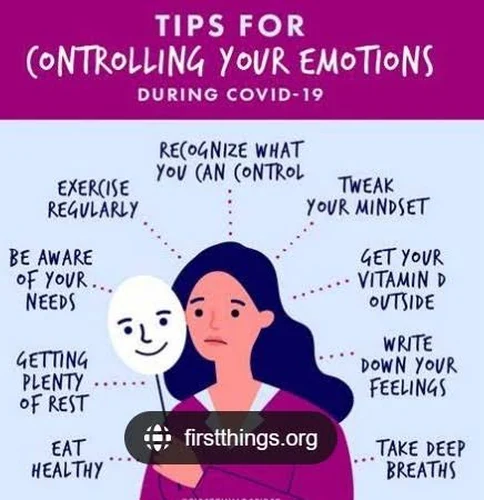
Then Breathe. Try to relax by taking deep slow breaths, counting to 10, or taking a walk. I use a trick: breathe in for four counts, hold for four, out for six. It physically slows your heart rate. One friend splashes cold water on her face. Another steps outside for 60 seconds. The key is to not react until you feel like you have your emotions under control.
Reflect: Think about responding instead of simply reacting. What outcome do you actually want? Do you want to be right, or do you want connection? Do you want to vent, or do you want resolution? That question alone shifts everything.
Choose: Pick the action that aligns with the person you want to be. Even if it’s just saying, “I need a minute.” That’s a complete, valid response.
I won’t pretend I nail this every time. Last week I snapped at my partner over a misplaced remote. But I recovered faster. I said, “Okay, that was disproportionate. I’m sorry. I’m just tired.” And the fight that would have lasted an hour ended in three minutes. That shift, from explosion to repair, felt like progress.
When the Routine Fails: What to Do When You’re Already Flooded
Some days the emotion hits too fast for a cute four-step plan. On those days, the goal is not regulation, it is containment. Get yourself out of the room. Literally say, “I can’t talk right now. Give me 20 minutes.” Go to a bathroom, a closet, your car. Let the wave crash somewhere safe.
While you’re there, resist the urge to craft the perfect comeback. Instead, name what you’re feeling. “I’m humiliated.” “I’m terrified.” “I’m exhausted.” Labeling an emotion actually reduces its intensity. I don’t know why it works, but it does. A psychologist friend told me it shifts activity from the amygdala to the prefrontal cortex. I just know that saying “I feel small and defensive” quiets something inside.
How to Build Self-Regulation When You’re Not in Crisis
The real work happens on the boring, calm days. People with good emotion regulation skills tend to have healthier behaviors: being physically active, having a good diet, and not smoking. These aren’t coincidences. Exercise, sleep, and nutrition create a biological buffer. When your body is exhausted or under-fueled, your emotional brakes wear thin.
I started tracking my triggers alongside my habits. A clear pattern emerged: I was 80% more likely to lose my cool if I had slept fewer than six hours. So I stopped trying to meditate my way out of a tantrum and started going to bed earlier. Boring, yes. Effective, absolutely.
Another invisible practice: rehearsing. When I know I’m walking into a triggering situation, say, a difficult conversation with a family member, I run a quick mental script. “If they say X, I’ll take a breath and say Y.” It sounds robotic but it keeps me from defaulting to old, reactive patterns.
FAQ
How do people regulate their emotions at work when they can’t just walk away?
In situations where leaving isn’t an option, subtle grounding techniques help. Press your feet firmly into the floor, focus on the sensation for five seconds, then take a slow breath. You can also keep a small object with a texture, a stone, a ring, to touch discreetly. The key is to activate the senses to anchor you in the present moment so you can choose a measured response instead of a reaction you might regret.
How do people regulate their emotions when the trigger is a person they love?
This is notoriously hard because intimacy lowers inhibition. Start by naming the underlying fear, not the surface anger. Instead of “You never listen,” try “I feel invisible right now and it scares me.” That shifts the conversation from blame to connection. Also, scheduling a “re-do” signal with your partner can help: a word or phrase that means “I’m flooded, let’s pause this and try again in an hour.”
Is it true that regulating emotion means hiding how I really feel?
No. Suppression is not regulation. Regulation is about choosing how and when to express emotions, not erasing them. You can honor your anger without letting it drive. The goal is flexibility: feeling the feeling fully, then deciding consciously what action, if any, to take. Some days you speak up calmly. Other days you wait. Both are self-regulation.
How do people regulate their emotions when they have a history of trauma?
Trauma changes the nervous system, making triggers feel life-or-death. Professional support is often essential. In addition, gentle body-based practices, like slow movement, weighted blankets, or humming, can help soothe the nervous system. The emphasis is on safety cues: showing your brain that the present moment is safe, even if the body remembers danger. Small, consistent practices can build a new baseline over time.
I still burn toast. I still get furious over stupid things. But I don’t freeze in the kitchen nearly as often. And when I do, I know the first step isn’t fixing the feeling. It’s just finding my breath. The feeling passes. It always does.
