I stood in the bathroom doorway one Tuesday morning and found my six-year-old humming happily while pouring my expensive conditioner into a mixing bowl with toothpaste and glitter. She had a plan. Her eyes were bright with the kind of focus that would later build elaborate forts. She did not look like a kid who was about to lose screen time. She looked like a tiny inventor mid-discovery. And that’s when I realized: my child ignores consequences not because she’s defiant, but because her brain lives so fully in the present moment that a distant punishment simply doesn’t register. When I said “no screens for a week,” she nodded, skipped into the garden, and had the best week of her life. I was left holding a bag of rules that meant nothing to her.
Quick Help When a Child Ignores Consequences
If you’re stuck in the punishment loop right now, start here:
- Redirect the impulse into a “yes” space, like a designated art wall.
- Use natural consequences that connect immediately to the action, like wiping crayon off together.
- Offer a tiny budget for “experiment” supplies so curiosity isn’t a crime.
- Let go of sticker charts if they kill intrinsic motivation.
- Name what’s underneath the behavior before you name a consequence.
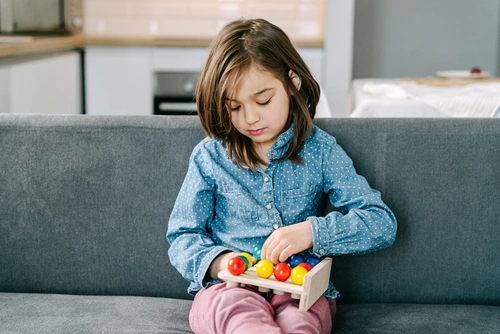
Why Does My Child Ignore Consequences Even When They’re Harsh?
For many kids between four and nine, the part of the brain that links present actions to future outcomes is still under heavy construction. A consequence that arrives tomorrow, let alone next week, can feel as unreal as a unicorn. My daughter once lost a whole month of TV because she repeatedly mixed my hair products and drew on the walls. She adapted like it was a wellness retreat. She played outside, made mud pies, and asked for more paper. I was fuming, and she was thriving. That’s not rebellion. That’s a brain that hasn’t yet wired up the “if this, then later” logic adults rely on.
Some kids also have a high need for autonomy. When sticker charts and reward systems felt like being managed, her enthusiasm vanished. She’s not lazy or manipulative. She simply values freedom over a distant sticker, and her inner world is so rich that the party moves with her. I started to see that the core question wasn’t “How do I make her care?” but “What need is driving this behavior that I’m missing?” Often, a child ignores consequences because the consequence isn’t speaking to the real need—be it sensory exploration, creative expression, or just a craving for connection in the moment.
How to Respond When Your Child Doesn’t Care About Punishment
I tried everything. I talked gently about why mixing my things wasn’t okay. I used “we don’t” statements. I took away her screens. I even glared at the one comfort toy she sleeps with, feeling like a villain for considering it. The only thing that actually shifted the dynamic was swapping punishment for partnership. I stopped taking things away and started offering a path that met her halfway.
First, I gave her a dedicated art table with butcher paper taped securely (after a few failed attempts with heavy paper that fell). That alone cut the wall drawings by more than half. Then, when she did slip, the consequence was immediate and logical: she helped wash the crayon off with a cloth and soapy water. She didn’t whine. She actually liked the bubbles. And over time, the walls stayed cleaner, not because she was afraid of losing something, but because taking care of our space became part of the activity. It felt less like a punishment and more like a natural rhythm.
For the product mixing, I borrowed an idea from a friend who raised a budding chemist. I took my daughter to the dollar store with three dollars and let her pick out her own little bottles of shampoo, lotion, and toothpaste—her own supplies, in her own plastic bin, with one rule: experiments happen only at the kitchen table with a tray underneath. When a child ignores consequences but lights up at the chance to be trusted with real materials, that’s your clue. Curiosity isn’t the enemy. The lack of a safe outlet is.
A Simple Framework That Worked for Us
I started calling this our Curiosity Lab—a made-up name that made her feel like a real scientist. Here’s how it works: whenever you catch a behavior that’s driving you up the wall, ask yourself, “What valid urge is underneath this?” Drawing on walls? The urge to create large-scale art. Mixing products? The urge to experiment with textures and reactions. Refusing schoolwork to pretend to be a cat? The urge to inhabit a playful role when the task feels too rigid. Once you name the urge, you design a safe upgrade instead of a crackdown.
In our Curiosity Lab, we have a few simple zones: a big roll of paper on an easel, a plastic bin of approved gooey things for mixing, and a corner with dress-up clothes for those moments she needs to be someone else. When she starts to drift toward a not-okay version of her curiosity, I just say, “Looks like a Curiosity Lab kind of moment. Want to use your bin or the easel?” Nine times out of ten, she redirects herself happily because the invitation feels like a gift, not a restriction. The framework isn’t about permissiveness. It’s about channeling the fire into a fireplace before it burns the house down.
Why Sticker Charts Often Backfire with Deeply Curious Kids
You might be wondering if you should try sticker charts again but do them better. I wondered that too. For my daughter, rewards lost their magic fast. She’d earn three stickers, realize the big prize was days away, and lose interest completely. The future reward didn’t create internal motivation; it just made the present task feel like a chore someone else wanted her to do. Some kids thrive on external tracking, but kids who live intensely in the now often need a different fuel: autonomy and immediate relevance.
I discovered that when I said, “If you clean up your lab by dinner, we’ll have time for a volcano experiment tomorrow,” she was more engaged than when I said, “Five stickers equal a toy.” The difference was subtle but huge. The first connected effort to a real experience she cared about soon, not a symbolic token. So if charts have lost their power, consider retiring them guilt-free. You’re not giving up. You’re adapting to the child in front of you.
One more idea that helped: I began narrating consequences in the present tense. Instead of “You’ll lose dessert tonight,” I’d say, “The walls have crayon on them. We’ve got the cloth right here. Let’s get them clean now together.” The connection was immediate, sensory, and didn’t ask her to hold an abstract future in her mind. It worked far better than any delayed penalty.
Understanding the 4–9 Age Window
Children in the 4–5 range still think very concretely. A consequence is only real if it happens right now. At 6–7, some kids start grasping cause-and-effect with a bit more distance, but strong emotions can still override logic. By 8–9, you can begin to talk through hypothetical scenarios and reflect on choices. With my daughter at six, I had to stay firmly in the concrete lane. When she was older, I could say, “Last time we lost a shampoo bottle for a week, how did that feel?” and she actually remembered. That tiny shift opened space for growth.
It’s also worth noting that some kids have a more persistent “present orientation” that lingers longer. If your child ignores consequences well into age eight or nine, she isn’t broken. She might just need a few extra years of practice with flexible, in-the-moment support before future thinking clicks.
FAQ: Child Ignores Consequences
Q: Why does my child ignore consequences even when they’re harsh?
A: For many kids, the brain’s “if this, then later” wiring is still under construction. A consequence that arrives tomorrow can feel unreal to a child who lives in the present. It’s not defiance—it’s developmental.
Q: What should I do when my child doesn’t care about punishment?
A: Swap punishment for partnership. Instead of taking things away, offer a “yes” space for the urge behind the behavior. Give them a dedicated area to draw, a bin of approved mixing supplies, or a budget for experiments. Meet the curiosity halfway.
Q: Why don’t sticker charts work for my child?
A: Some kids, especially highly curious ones, lose interest in distant rewards. Sticker charts can make tasks feel like chores someone else wants them to do. Try connecting effort to a real experience soon—”If you clean up, we can do a volcano experiment tomorrow.”
Q: How do I use natural consequences effectively?
A: Keep them immediate and logical. Instead of “You’ll lose dessert,” say, “The walls have crayon on them. Let’s wipe them off together now.” The connection is sensory and real—not abstract and delayed.
Q: When will my child start to understand future consequences?
A: Most kids begin to grasp cause-and-effect more clearly around 6–7, but strong emotions can still override logic. By 8–9, you can start reflecting on past choices together. Every child develops at their own pace.
One Last Thing
A few months into our Curiosity Lab experiment, I caught a glimpse of my daughter at her art table. She was mixing colors with a focus so intense the world could have melted away. All that manic wall-drawing had shapeshifted into something beautiful. I realized the consequences I’d tried to impose were trying to solve a problem that wasn’t a problem at all. The real work wasn’t teaching her to fear losing things. It was teaching myself to see the scientist hiding inside the mischief.
References
- Faber, A., & Mazlish, E. (2012). How to Talk So Kids Will Listen & Listen So Kids Will Talk. Scribner.
- Siegel, D. J., & Bryson, T. P. (2011). The Whole-Brain Child: 12 Revolutionary Strategies to Nurture Your Child’s Developing Mind. Delacorte Press.
- Markham, L. (2012). Peaceful Parent, Happy Kids: How to Stop Yelling and Start Connecting. Perigee Books.
