I picked up this book on a Tuesday night, sitting on my kitchen floor with a cup of tea that went cold. My phone buzzed with a text from my mother. Three words: “Hope you’re well.” No question mark. No follow-up. I stared at it for ten minutes, trying to decode the hidden meaning. Was she angry? Disappointed? Just busy? I realized I had been doing this my whole life.
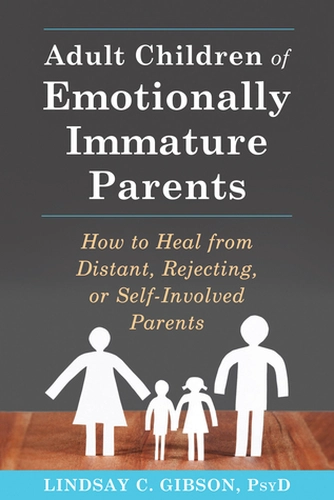
Lindsay C. Gibson’s Adult Children of Emotionally Immature Parents names the thing I had felt but could never articulate. She calls it “emotional loneliness” — and it’s not about being alone. It’s about being in a room with a parent who cannot see you. The book argues that some parents remain stuck in emotional childhood, unable to offer genuine connection, empathy, or validation. Their adult children spend decades trying to earn something that was never available in the first place. Does recognizing this pattern actually change anything? Or does it just give us a new label for old pain?
The Four Types and the Healing Fantasy
Gibson divides these parents into four types: emotional, driven, passive, and rejecting. I saw my mother in the rejecting type and my father in the driven type. The emotional parent needs you to manage their feelings. The driven parent is obsessed with achievement and cannot slow down. The passive parent avoids conflict by disappearing. The rejecting parent makes you feel like a burden just for existing. This is not a cheerful categorization. It’s a scalpel.
The core conflict she presents is simple: you cannot make an emotionally immature adult become mature. You cannot love them enough, fix them enough, or perform well enough. They simply lack the internal wiring for reciprocity. The book’s structure is straightforward. Each chapter describes a pattern, gives examples from Gibson’s clinical practice, and then offers a strategy for the adult child. The strategy is always the same at its core: stop engaging from your child self and start engaging from your adult self. Gibson calls this “being an internal observer” instead of an emotional reactor. I’ll be honest, that sounds easier than it is. The first time I tried it with my mother, I lasted about thirty seconds before I felt like a six-year-old again.
The imagery that stuck with me was Gibson’s description of “the healing fantasy.” This is the belief that if you just try hard enough, your parent will finally see you. Gibson says this fantasy is the most powerful obstacle to real healing. Letting it go feels like losing something you never had. It’s not dramatic. It’s hollow. I read that paragraph three times.
What This Book Gives You, and What It Doesn’t
What the book does well is naming the quiet damage. It’s not the big fights that wear you down. It’s the subtle moments where you share something vulnerable and get a blank stare, a sigh, or a quick change of subject. Gibson describes this as “the disappearing of your inner world.” She says that emotionally immature parents cannot tolerate emotional intimacy, so they deflect, dismiss, or change the subject whenever you bring up something real. Over time, you learn to stop bringing up anything real at all. You become a ghost in your own life.
The critique I have is that the book sometimes feels too clinical. Gibson’s writing is clear and practical, but it lacks warmth. She describes the patterns with precision, but I wanted her to sit with the grief a little longer before rushing to solutions. The chapter on how to interact with these parents uses a technique called “detached observation” that feels a bit like a cold shower. It works, but it’s not comforting. I guess that’s the point. Comfort is not what these relationships need.
This book is for people who have spent years feeling confused by their parents’ behavior. It’s for the ones who still think, “Maybe if I say it differently this time, they’ll understand.” It’s not for people who have already done years of therapy and are looking for deeper philosophical reflection. It will not solve your relationship. It will not make your parent change. What it will do is give you permission to stop running after a door that was never going to open.
“Emotionally mature people can be close to others without needing to control them or lose themselves in the process.”