I remember the first time my two-year-old hurled her bowl of blueberries across the kitchen. She had asked for them, and my husband was just squishing them so she wouldn’t choke—something we always did. But that day, she screamed “No!” and swatted the plate right off the table. Then yesterday, mid-conversation, she yelled “Stop talking!” and flung the remote at the couch. I stood there wondering: why does my child throw things when angry, and why does saying “that’s not okay” feel so useless?
I’m guessing you’ve been there too. The hard truth: a two-year-old’s brain isn’t wired for restraint. They feel a tidal wave of frustration, and throwing is immediate, physical, and loud. It gets a reaction. But here’s what shifted for us—realizing we needed to teach her what to do instead, not just what not to do.
Quick Help for When Your Child Throws Things When Angry
If your toddler is in the middle of a throwing fit right now, start here:
- Lead with connection, not correction: get down to eye level.
- Name the feeling: “You’re so mad right now.”
- Redirect to a throwing-safe activity instantly.
- Offer a tiny choice to return a sense of control.
- Apply a natural consequence without anger.
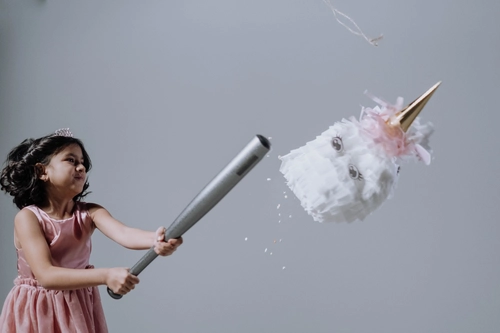
Why Does My Child Throw Things When Angry?
Does it feel like your toddler turns into a tiny tornado the moment they hear “no”? Mine certainly did. The neuroscience is actually reassuring. In toddlers, the prefrontal cortex—the part responsible for impulse control—is barely online. They can’t pause and think, “I should use my words.” Their big emotions just erupt. And throwing? It’s efficient. It releases physical energy, makes a satisfying noise, and often gets an adult’s attention faster than any word could.
I remember reading in The Whole-Brain Child that young children are often “flooded” by their right-brain emotions with no access to logic. That description matched my daughter perfectly. She wasn’t trying to be defiant. She was telling us, “I can’t handle this feeling, someone help me.” Once I understood that, the behavior felt less personal. She wasn’t giving me a hard time. She was having a hard time. The question then became: how do I respond in a way that actually helps her learn?
What to Do When Your Child Throws Things When Angry
I tried the gentle “We don’t throw things” for weeks. It did nothing. One day, after she threw her sippy cup at the window, I crouched down and said something that felt almost too simple: “You’re angry. You wanted the blue cup not the green one. It’s okay to be angry. You can throw this soft ball instead.” She looked at me, grabbed the ball, and hurled it at the door. Then she laughed. That was the turning point.
Here’s what we built from that moment:
1. Create a “throwing spot” for calm times.
We filled a small basket with soft beanbags, squishy balls, and plush animals. We named it the “angry basket.” Even when she wasn’t upset, we’d practice throwing them into a laundry basket. She learned: throwing has a time and a place. When she got frustrated later, I could say, “Let’s go throw your angry balls.” It felt like giving her a script she already knew.
2. Tell them what they CAN do, every single time.
Instead of “Stop throwing!”, I’d say, “You can stomp your feet,” or “You can hit this cushion.” Offering a specific, physical release worked faster than any lecture. My partner and I started modeling it too. When I felt annoyed, I’d say out loud, “Mommy is feeling frustrated, I’m going to take a deep breath and stomp my feet.” She copied us more than I expected.
3. Offer tiny choices before the explosion.
A lot of her anger came from feeling powerless. At meals, I’d ask, “Do you want the blue plate or the red one?” Or “Should we put the blueberries in a bowl or on your tray?” It didn’t stop every meltdown, but those little yes/no decisions reduced the tantrum frequency. When she did still throw things, I knew it was less about control and more about emotional overflow.
4. Use consistent, natural consequences—not punishments.
The moment she threw her food, I’d calmly say, “You’re throwing. That means you’re all done.” I’d lift her out of her high chair, put the food away, and wait a minute before offering a second chance. No yelling, no long explanations. Just a predictable rhythm. Over time, she connected the action to the outcome. If I throw, the meal pauses. If I sit calmly, we continue. This one took the most patience, but it honestly worked.
The Angry Basket Ritual That Saved Our Sanity
I didn’t invent this idea—I stumbled on it in a parenting forum. Someone suggested designating a physical container for anger. We used a bright yellow basket and filled it with five safe throwing items: a beanbag frog, two small plush balls, a pair of balled-up socks, and a squishy star. I placed it on a low shelf in the living room where she could reach it.
At first, we’d only grab it during a meltdown. Then we started a five-minute morning game: “Angry Practice.” I’d say, “Let’s practice being angry!” and we’d both pretend to be mad, throwing items into the basket and stomping our feet. It was silly and loud. She loved it. And weirdly, it made the real moments less charged. When she got upset later and reached for the remote, I could say, “Where’s your angry basket?” and her body would pause. Sometimes she actually ran to get it. Not always. But often enough.
Why did it help? Because it gave her a motor pathway for rage that didn’t involve destruction. It told her: your anger belongs, and here is a safe place to put it. That felt like a lesson I needed too. I grew up thinking anger was something to hide. Now I see it’s just energy looking for an exit.
What About the Screaming That Comes With It?
Can we talk about the ear-splitting screams? When she’d start shrieking, my instinct was to shush her. That never worked. What helped was giving her loudness an alternative too. I’d say, “We can’t scream inside, but you can yell into this pillow, or we can go outside and roar like a lion.” She’d press her face into the couch cushion and let out a muffled yell. Sometimes I’d do it with her. The neighbors probably thought we were losing it, but it diffused the tension. The screaming phase didn’t vanish overnight, but it got shorter. And when I stayed calm beside her, she came down from the peak faster.
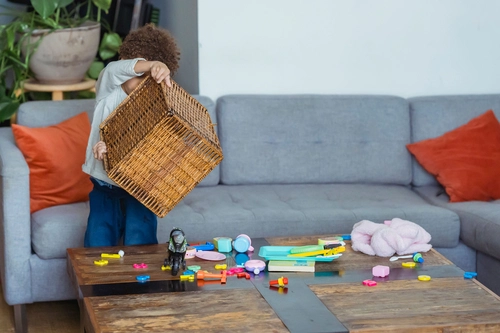
For Mealtimes, a Different Approach
Mealtimes were the worst. The high chair seemed to trigger her. I realized she hated feeling trapped. So I gave her a “throwing alternative” right on the tray: a few Cheerios she was allowed to toss onto a napkin. Sounds messy, I know. But it met her need to throw something without ruining the whole meal. If she threw her real food, I’d remove the plate without a word, wait thirty seconds, and ask, “Are you ready to try again?” Most of the time, she nodded. The lesson stuck, not because I explained it, but because the pattern was predictable.
One afternoon, after a rough week, she threw her spoon. I carried her to the angry basket. She threw the beanbag three times, then hugged me. Then she said, “Mama, I mad because I want cheese.” We got the cheese. I nearly cried from relief. This was working.
FAQ: Toddler Throwing Things When Angry
Q: Why does my toddler throw things when angry?
A: Toddlers have underdeveloped impulse control. When they feel overwhelmed by frustration, throwing is a physical release that feels immediate and powerful. They’re not trying to be bad—they just don’t have the words or brain wiring to handle big feelings yet.
Q: How do I get my child to stop throwing things when angry?
A: Replace the behavior, don’t just punish it. Give them a safe alternative like soft balls or beanbags. Name their feeling (“You’re really mad”), redirect to the safe item, and let them release the energy. Consistency is key.
Q: What if my child throws things at people?
A: Safety first. Calmly say, “I won’t let you throw at people. You can throw this ball at the wall.” Then physically remove the unsafe object and offer the safe alternative. If they keep throwing at you, step away and say, “I need to keep my body safe. I’ll come back when you’re ready.”
Q: Should I punish my toddler for throwing things?
A: Punishment usually backfires with toddlers because they can’t connect the consequence to the behavior in the moment. Try natural consequences instead: “You threw your food, so mealtime is done for now.” Predictable, calm, and immediate works better than anger.
Q: When will my child stop throwing things when angry?
A: Most children grow out of the throwing phase by age 3-4 as their language and impulse control develop. But you can speed it up by consistently teaching alternatives. The more practice they have with safe throwing outlets, the faster they’ll learn.
One Last Thing
Last Tuesday, she threw her shoe at the cat. I breathed, walked to the angry basket, and waited. She followed, picked up the beanbag frog, and threw it at the wall instead. Then she said, “I throw frog not cat.” We sat on the floor together, and she told me she was mad because I’d turned off the TV. I said, “I know. It’s hard to stop.” She climbed into my lap. Nothing was fixed, but we were both calm. That’s the thing about this phase: it’s not about getting it right every time. It’s about showing them that when their feelings are too big, we’ll still be there—with a soft ball and a quiet lap.
References
- Siegel, D. J., & Bryson, T. P. (2011). The Whole-Brain Child: 12 Revolutionary Strategies to Nurture Your Child’s Developing Mind. Delacorte Press.
- American Academy of Pediatrics. (2018). Discipline and your child. HealthyChildren.org. Retrieved from https://www.healthychildren.org
- Essau, C. A., & Agarwal, S. S. (2018). Temper tantrums in toddlers: Etiology and management. Journal of Pediatrics and Child Health, 54(6), 592–596.
