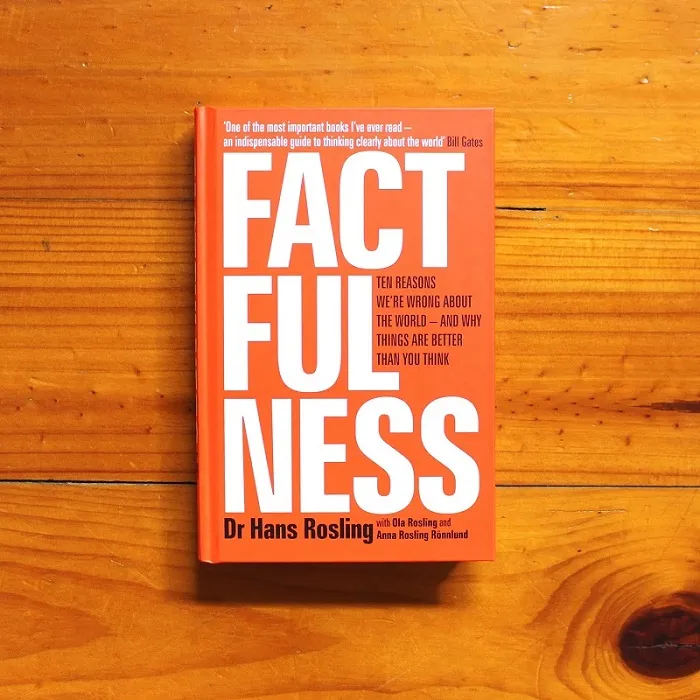
I’ll be honest. When I picked up *Factfulness* by Hans Rosling, I thought it would be another one of those self-help books telling me to think positively. My son had left it on the coffee table after finishing it over three days, and I figured I’d skim a few pages. Instead, I found myself sitting there at midnight, unable to put it down. The book starts with a survey where most people score worse than chimpanzees on basic global facts. Worse than random guessing. That made me sit up. How could even well-informed people be so wrong about the world? And if we’re all this wrong, what does that say about how we think?
The Core Problem: Our Instincts Mislead Us
Rosling doesn’t just say we’re wrong. He explains *why*. The book identifies ten instincts that distort our perception. For example, the fear instinct makes us overestimate dangers, and the gap instinct makes us see things in simple opposites — when in reality, the world is a spectrum. Each chapter is built around one instinct, with real data and stories that make you laugh and cringe at the same time. The writing is clear, almost conversational. He uses simple charts instead of complex statistics. You don’t need a degree in economics to follow it. My twelve-year-old son understood it perfectly, and that says something about the book’s accessibility.
The uncomfortable truth is that most of us carry a dramatic worldview shaped by news media that profits from fear, by activists who exaggerate to get attention, and by our own brains that evolved to notice threats more than gradual improvements. Rosling doesn’t blame us. He just points out the trap we’re in.
Where the Book Succeeds: Data That Comforts
The strongest part of *Factfulness* is its demolition of the idea that the world is getting worse. Rosling presents data on poverty, health, education, and violence — all of which show steady improvement over decades. Extreme poverty has halved. Child mortality has dropped. Access to electricity has expanded. These are not opinions. They are numbers from the UN, the World Bank, and other reliable sources. Reading this, I felt a strange relief. The constant flow of bad news had made me believe everything was falling apart. Turns out, much of it is not.
But there is a catch. The book sometimes feels too optimistic. It acknowledges climate change and inequality, but the tone can come across as dismissive of real problems. One reviewer said Rosling sounds like someone telling you to relax while your house is on fire. That is not entirely fair, but I understand the frustration. Progress does not mean we should stop worrying. It just means we should worry about the right things.
Who Should Read This
If you feel overwhelmed by the news and want a grounded perspective, read this book. If you teach critical thinking or data literacy, this is a goldmine. My son loved it because it gave him tools to argue with friends who share doom-and-gloom posts. But do not read it if you want a deep dive into any single issue. This is a broad framework, not a policy manual. And if you are deeply pessimistic about the world, the book might annoy you more than help you. It asks you to change your worldview, which is hard work.
After finishing the book, I started noticing how often I fall into the gap instinct, seeing things as either good or bad. I began checking my assumptions before sharing alarming news. I also started asking better questions, like “Compared to what?” and “Over what time period?” These small shifts have changed how I talk about the world with my son. We now have conversations that start with data instead of fear.