You raised your voice over spilled milk, a forgotten water bottle, or backtalk. Then the house goes quiet. Your child looks away or freezes mid-step.
Right after you yell, your kid usually needs one main thing. They need to feel like the loud part is done and nothing else is coming. That’s emotional safety. They also need a little sign that you’re still the same mom who loves them, even if you just lost it for a second.
Many child development specialists talk about repair after yelling as a key part of parenting. The way you handle the moment after a yell often shapes your child’s sense of security more than the yell itself. You don’t have to be a parent who never shouts. You only need to know how to come back.
Here is what I have learned about how to repair after yelling at child?
Should You Apologize After Yelling?
I asked myself this question for years. Would an apology make my kids respect me less? Would they think my words didn’t matter?
Here is what I have seen instead. Apologizing shows my children that adults make mistakes and own up to them. A calm apology doesn’t weaken your role as a parent. It strengthens it. Your child learns that authority includes honesty.
Keep the apology short. A quiet sentence or two works better than a long speech. You’re not begging for forgiveness. You’re just closing a hard moment so you can both move forward.
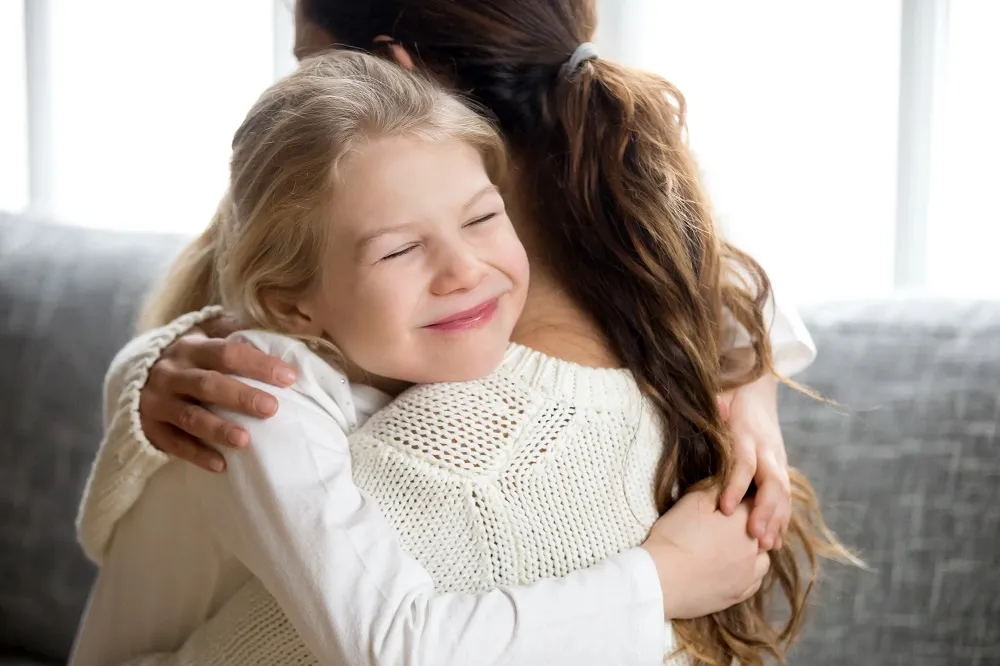
How to Apologize to Your Child for Yelling
Let me tell you what this actually looks like in my house. I will walk through each small step.
Step 1: Name what happened out loud
I wait a few minutes until my own heart rate slows down. Then I find my child. I crouch down to their eye level or sit next to them on the couch. I keep my voice low, almost like I am telling a secret.
I say, “I yelled at you just now.”
That is the whole sentence. I do not add reasons. I do not explain my stress. I just name the action.
If my child will not look at me, I wait a few seconds. Sometimes I say it again softer. Then I stop and let the words sit in the air.
Step 2: Take responsibility without excuses
After a breath, I add, “That was not okay. I should not have done that.”
I keep my voice steady. No long explanation follows. If I feel the urge to list all the reasons I got frustrated, I pause and put those reasons aside. The apology is only about my actions, not their behavior.
Sometimes I say, “That is not how I want to talk to you.” That small sentence says everything.
Step 3: Acknowledge how it might have felt for them
I do not always know exactly what my child felt. So I make a gentle guess.
“That probably felt pretty scary, didn’t it?” or “I think that might have upset you.”
Then I wait. If they shake their head, I adjust. If they say “I was just mad,” I say, “Okay, you were mad. That makes sense.”
The goal is to show that I am thinking about their experience. I am not trying to be right. I am trying to be present.
Step 4: Offer safety through words and a small physical cue
I look at my child’s body language. If they seem open to touch, I place a hand on their arm or rest my palm on the couch between us. An open hand says more than a grabby hand.
Then I say, “I love you. I am right here. You are safe.”
I let those words land. Sometimes my child leans into me. Sometimes they take a breath and relax their shoulders. Sometimes they stay quiet.
The whole apology takes about thirty seconds. A long speech would undo the calm.
Here is a concrete example. Last week my younger child left her shoes in the rain again. I had asked her three times to bring them inside. I yelled louder than I meant to. She froze with her hands at her sides. After a minute, I crouched down and said, “I yelled at you. That wasn’t okay. That probably felt scary. I love you and I’m here.” She nodded and picked up her shoes. We didn’t have a long talk. The moment just ended.
What to Skip When Apologizing
Some phrases slip out easily but make the apology fall flat.
“I am sorry I yelled, but you made me angry.”
“I would not have yelled if you had just listened.”
These sentences put the blame back on your child. A clean apology leaves out the word “but.” It leaves out any hidden accusation. You can talk about your child’s behavior later, in a separate calm conversation. The apology is only for your part.
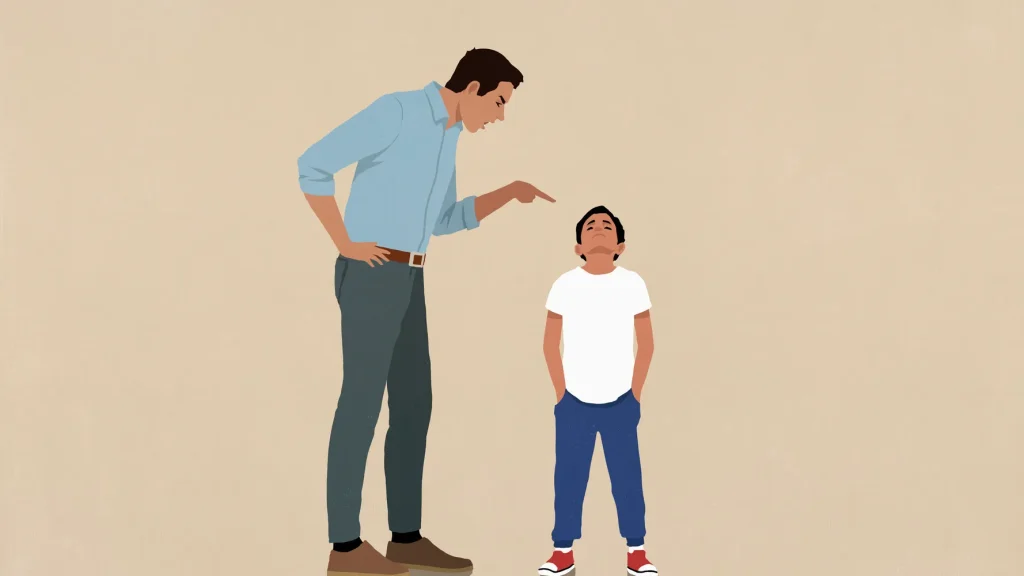
When Your Child Stays Silent After Your Apology
My older child has given me the silent treatment after a yell more than once. I apologized and got nothing back. No nod. No eye contact. Just quiet.
I used to panic and apologize again or ask “Are you okay?” ten times. That never helped.
Now I say one more sentence and then step back. “You don’t have to talk right now. I’m here when you’re ready.”
Then I go do something nearby. I fold laundry. I wipe the counter. I don’t hover. I don’t stare. I just stay close enough that my child knows I haven’t left.
Sometimes five minutes pass. Sometimes an hour. My child usually comes over when they’re ready. The repair doesn’t have to happen inside one conversation. It happens across small moments.
Rebuilding Trust With Your Child After a Yell
One apology does not rebuild trust. Trust rebuilds through patterns over days and weeks.
Here is a small method I use. I pay attention to the moments right before I want to yell again. I pause for a few seconds. Then I say out loud, “I’m getting frustrated. I need a second.” Then I step back or turn around.
My children watch what I do after an apology. If I yell again ten minutes later, that apology loses its weight. But if I handle the next hard moment a little differently, with a quieter voice or a pause, that starts to rebuild something.
You don’t need to stay calm all the time. You only need to stay calmer than before, one small moment at a time.
Here is another concrete method. After a yelling incident, I try to create one positive interaction before the day ends. I read a book with my child. I make their favorite snack. I sit and listen to a long story about their game. That one good moment doesn’t erase the yell, but it adds to the pile of safe moments. Over time, the safe pile grows bigger than the loud pile.
Practical Steps to Reduce Yelling and Guilt
Parent guilt after yelling feels heavy. But guilt by itself does not change your behavior. You need small practical tools.
Here are three methods that have helped me.
Name the feeling early. Before I reach the yelling point, I try to say the feeling out loud. “I am so frustrated right now.” Just hearing my own voice say those words sometimes lowers the pressure.
Take sixty seconds for yourself. I tell my children, “Mom needs a minute. I will be right back.” Then I go to the bathroom or step outside the back door. I breathe three slow breaths. That short break changes everything.
Use a reset phrase. After a hard moment passes, I sometimes say, “Let us start over.” Those three words draw a line between the yelling and what comes next. My child usually says okay, and we move on.
I still yell sometimes. Less than before, but not never. That is normal. Reducing yelling is a slow process, and slow is fine.
Start today: the next time you feel yourself rising, pause for a breath, and follow the apology steps above. Small moments rebuild trust.
Sources:
- The Whole-Brain Child by Daniel J. Siegel and Tina Payne Bryson
- Greater Good Science Center at UC Berkeley, articles on parent-child repair
- American Psychological Association, resources on family conflict and connection