I saw The Yellow Wallpaper on the reading list of the book club. That day, I deliberately stayed home alone, made a cup of tea, and quietly opened this thin brochure.
I saw The Yellow Wallpaper on the reading list of the book club. That day, I deliberately stayed home alone, made a cup of tea, and quietly opened this thin brochure.
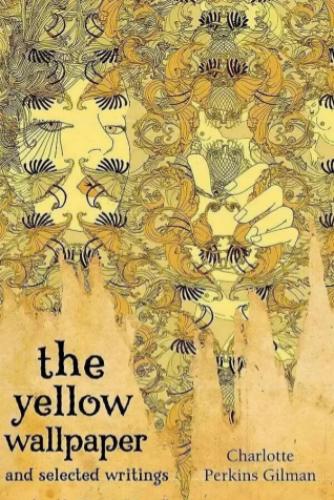
After reading it, I found that this book is not just a novel; it is a spiritual stripping.
The story is very simple: a wife suffering from postpartum depression was taken by her husband John, a doctor, to a mansion in the countryside for recuperation. John applied the popular rest therapy to her at that time and forbade her from doing anything, especially writing. She was locked up in an old nursery on the top floor, its walls covered with yellow wallpaper. Bored, she began to hate the wallpaper, and then became fascinated by it. Finally, she saw a woman struggling desperately behind the wallpaper. At the end of the story, she tore off all the wallpaper crazily and crawled in the room. Her husband fainted on the spot after opening the door. She stepped over his body and continued to crawl.
What impressed me most was this ending. The picture was too striking: a woman was on all fours, crawling along the wall, her hands full of shredded paper, while the authoritative, rational and loving husband fell to the ground motionless.
When I read this, I asked myself: Is this victory or destruction?
My answer is a tragic victory. She finally came out of the wallpaper, even if the price was becoming completely crazy. Compared with her previous meek and depressed self—who pretended to be getting better and secretly panted in her diary every day. she is at least real and free. The moment she crossed her husband’s body, the power relationship was reversed. He said it was for her own good; he said she needed to rest, and he said not to think nonsense anymore. These sounds finally became quiet, because she was above and he was below.
I think this love is indeed true. John is not a bad person. His every word of concern is not pretended, and those diagnoses also have a medical basis. But it is precisely because of this that people feel even more breathless. The strongest cage is never an iron railing, but that kind of golden warmth. If you want to break free, as soon as your fingertips touch the edge, “I’m all for your good” will sound in your ear. As long as you are a little weak and less resolute in resisting, it will entangle you more tightly until all the exits are sealed.
There is a detail in the book that I can’t forget: the heroine has been writing secretly. That’s the only way she can resist. But writing didn’t save her; it made her collapse faster. She sorted out what she saw little by little in her diary, slowly saw the woman behind the wallpaper, and slowly identified herself with that image. Words are like a double-edged sword, helping her stay awake for the last moment while pushing her deeper into illusion. Gilman herself experienced this therapy. She wrote this novel to prove how absurd that therapy was. She uses writing to resist, and the tool of her resistance is also writing. The struggle in this cycle makes me shiver more than any ghost story.
I paused for a long time when I read a line: there is a woman behind the paper. She is walking around behind the wallpaper, and I can see her figure.
This line is like a needle, piercing the heart of every reader who has ever felt trapped. That figure is not an illusion, but the truth. It is the image of everyone whose feelings are denied, who is told not to think too much, and who is forced back into a proper place, shaking the railings desperately behind the wallpaper.
On the afternoon after reading this book, I put down my teacup and took a look at the wallpaper in my home. It is warm and gentle. But at that moment, it became strange. I remembered that when I was in high school, I was scolded by my father for complaining that I had no place to do my homework. I instinctively put up my arms to block him. That was the first time I said no to absolute authority. Later, I never put any wallpaper up in my residence again. I left only four white walls
—the cleaner, the better.
The Yellow Wallpaper was written in 1892. More than 130 years have passed, and the wallpaper patterns have changed again and again, but the structure of the wall has not changed much. Those bans under the banner of care and those controls wrapped in love still happen every day.
This book is not meant to drive people crazy, but to save people from madness. To refuse to be forgotten and stuffed back into the wallpaper is probably the only way for us to save ourselves.
