I was charging my phone the other night. Plugged it in without thinking. The little battery icon filled up green and I went to sleep. It sounds trivial, but I haven’t done that casually since I read this book.
Here is the question Nicolas Niarchos plants in your mind: What if the thing that powers your life is also destroying someone else’s?
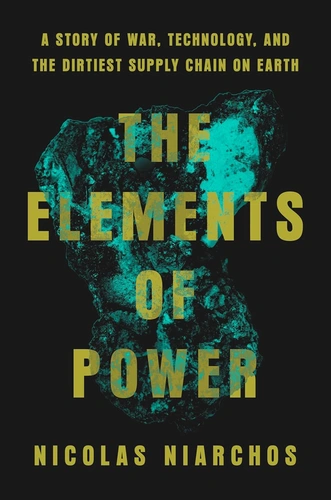
Character and Plot: A Journalist Who Follows the Dust
Niarchos is our guide. He is not a hero. He is a man with a notebook and too many questions. We follow him from corporate boardrooms in London to muddy pits in the Democratic Republic of Congo. The protagonist here is not a person exactly. It is a substance: cobalt. The gray metal that makes our batteries hold a charge.
The story moves like a detective thriller. A man in a suit says the supply chain is clean. Niarchos goes to see for himself. He finds children digging in tunnels that collapse. He finds men who breathe toxic dust for two dollars a day. He finds that your electric car might be powered by a teenager’s hands.
I will not tell you how it ends. I will say this: there is no tidy resolution. The book does not offer a solution. It offers a mirror. And the mirror shows you holding a phone.
Theme and Imagery: The Weight of a Battery
The core theme is invisibility. We do not see the cost of convenience. Niarchos makes it visible.
His key imagery is dirt. Not metaphorical dirt. Actual dirt. Wet. Brown. Sticking to skin. He describes the pits of Kolwezi where the earth is clawed open by hand. The sky is gray from dust. The rain turns everything to mud. And in that mud, women sift for precious metal with their bare hands.
The author’s craft is brutal. He does not preach. He describes. A child’s hands. A broken shovel. A boss who pays in alcohol. You realize that the clean energy revolution runs on dirty labor. The thing we call ethical is built on a foundation of exploitation. This character’s struggle is the struggle of the modern world. We want progress. We do not want to look at what progress eats.
I found myself holding my phone differently after this section. Heavier.
Elevation and Call to Action: The Battery in Your Pocket
Niarchos completes his argument by connecting the dots. The Congo mines are not an accident. They are the system working as designed. Global demand for lithium and cobalt has created a race. And in that race, the poor lose first.
This book crosses eras. It echoes the coal mines of the Industrial Revolution. It predicts the battles of the next century. We will fight over these metals. We already are. The author shows us that technology is never neutral. Every battery has a birthplace. Every birth has a cost.
The truth is, I almost did not finish this book. It made me uncomfortable. It made me angry at myself. But I think that is the point.
Here is my recommendation: read this book if you own a phone. Read it if you drive a car. Read it if you care about justice and do not know where to start. It will not make you a better person. It will make you a more honest one. And maybe that is the first step.
You will never plug in your phone the same way again. That is not a threat. It is a gift.
