I was at a dinner party recently. Someone brought up politics. The room went quiet. Not because people disagreed. Because no one knew how to disagree anymore. We have opinions, but we lack the language to test them. We have arguments, but we lack the theater to make them matter.
That is what I thought about while reading Sam Tanenhaus’s new biography, “Buckley: The Life and the Revolution That Changed America.” It was named one of the New York Times’s notable nonfiction books of 2025. And I understand why. It is not really a political book. It is a book about a man who understood that ideas are only as powerful as the performance they live in.
So here is the question the book forced me to ask: What does it mean to change a culture when you are not in power?
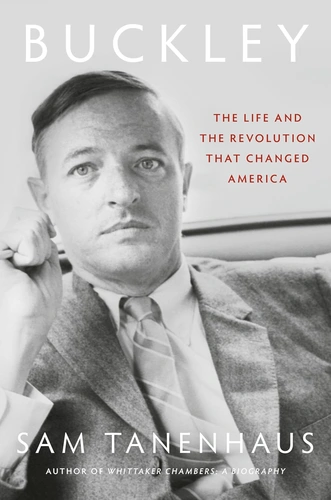
The Protagonist Who Refused to Be Marginalized
William F. Buckley Jr. was, on paper, an unlikely revolutionary. He was wealthy. He was Catholic. He spoke with a patrician accent that seemed to belong to another century. He used words like “sybaritic” in casual conversation. I should have hated him. I have met people like him. They are exhausting. They know everything. They let you know that they know.
But Tanenhaus shows us something else. Buckley was not a man of policy. He was a man of performance. He founded the National Review magazine in 1955. It was a small operation. He had almost no money, and even fewer readers. Conservatives at the time were scattered. They were seen as cranks, as reactionaries, as the people who lost the argument fifty years ago.
Buckley did not try to win elections first. He tried to win the conversation. He debated everyone. He appeared on television. He wrote books that were not just arguments but events. He understood something we have forgotten: that a movement begins not with a policy paper, but with a sentence that sticks in your head.
The tension of the book, for me, is whether Buckley was genuine or performing. I think Tanenhaus leaves the question open. Because maybe the answer is both. Maybe a man can be deeply convinced and deeply theatrical at the same time. That is what makes him so hard to dismiss.
The Craft of Making Ideas Feel Alive
Tanenhaus’s central achievement, I think, is that he treats ideas as dramatic material. Most political biographies are boring. They list positions, votes, and speeches. This one is different. It shows how Buckley used language as a weapon, a shield, and a stage.
One small detail stuck with me. Buckley once debated a leftist student on a college campus. The student was nervous. Buckley noticed. He walked over to the student before the debate and said, “Don’t worry. I will not embarrass you.” And then he did. He eviscerated the student’s arguments on live television. But he did it with a smile. He did it with such grace that the student later thanked him for the experience.
That is the imagery that defines the book. A velvet glove with a steel hand inside. Buckley understood that persuasion is not about being right. It is about being watchable. You cannot change someone’s mind if they have already left the room.
The broader theme here is about the nature of influence. Tanenhaus shows that Buckley’s revolution was not about winning every debate. It was about changing the terms of the debate. He took conservatism from the fringes and made it a respectable, even glamorous, intellectual project. He did not convert everyone. But he made the unconverted pay attention.
What This Book Asks Us to Consider
I have a confession. I do not agree with Buckley on almost anything. His politics are not mine. His worldview feels foreign to me. And yet, I could not put this book down. Because Tanenhaus has written something bigger than a biography. He has written a meditation on how a single voice, over decades, can reshape the landscape.
The book has its limits. It is dense. It assumes you know who some historical figures are. It does not always connect Buckley’s story to our current moment as clearly as I wanted. But maybe that is the point. Maybe the reader is supposed to make those connections themselves.
Here is what I took away. Influence is not about being loud. It is about being consistent. Buckley showed up for fifty years. He wrote. He spoke. He debated. He lost some fights. He won others. But he never stopped. And because he never stopped, the conversation shifted around him.
I recommend this book to anyone who has ever wondered how an idea changes the world. Not through legislation. Not through power. Through the slow, grinding work of saying the same thing in different ways until people start to listen. You do not have to agree with Buckley to learn from him. You just have to be willing to watch a master at work.
Maybe that is what this book is really about. Not conservatism. Not liberalism. But the craft of making a life out of a conviction. And the strange, uncomfortable truth that sometimes, the people we disagree with most are the ones who teach us the most about how to speak.
