I was standing in line at a coffee shop last week. A woman in front of me was counting coins, slowly, embarrassed. She had a small dog tucked inside her jacket. She paid, bought nothing for herself, and walked out. I thought about her all day. Why do we do that? Why do we give when we have nothing left?
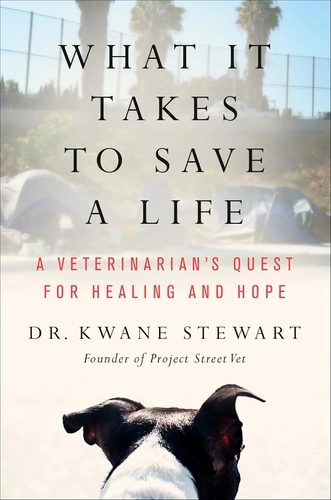
Dr. Kwane Stewart’s book, What It Takes to Save a Life, is not a feel-good memoir. It is a hard question. He is a veterinarian who walked the streets of California, treating the pets of homeless people. For free. For years. The book asks: when a person has lost everything, why do they still fight to keep a cat or a dog alive?
The People Who Stay
The protagonist of this book is not Dr. Stewart. It is the people he meets. A man living under a bridge, who shares his last can of food with his dog. A woman who refuses shelter because they will not take her cat. Stewart does not judge them. He watches them. He treats their animals. He slowly realizes something strange. These animals are not just pets. They are the last thread. The only thing that still makes them human.
I found myself holding my breath during one story. A man named Marcus had a dog named Buddy. Buddy was sick, very sick. Marcus had nothing. No money, no home, no future. But he had Buddy. Stewart treated Buddy for free. Later, he saw Marcus crying. Not for himself. For the dog. That moment broke me. It is not about the animal. It is about what the animal holds. Love. Purpose. A reason to wake up.
What We Carry for Each Other
The core theme of this book is simple but brutal. We do not care for things because they are useful. We care for them because they make us feel real. Stewart writes about a woman who slept on the street with her cat for seven years. She said the cat was the only one who never left. I think about that. The imagery of the book is spare, almost raw. Stewart does not romanticize the streets. He talks about the smell, the cold, the fear. But he also talks about the soft fur of a dog, the purr of a cat, the moment a homeless person smiles because their pet is okay.
There is a moment in the book where Stewart treats a parrot. Yes, a parrot. A man had carried this bird across three states. The bird was sick. The man was desperate. Stewart asked him why he did not just let the bird go. The man said, “Because she knows my name.” That is the whole book. It is not about saving an animal. It is about being known. Being seen. Being the one who stays.
The Real Cost of Love
So what did I learn from this book? I learned that my idea of “worth” is broken. I thought worth was about money, status, usefulness. But these people taught me something else. Worth is about what you hold onto when everything else is gone. Dr. Stewart himself is not a saint. He admits he was burned out, tired, angry. He almost quit. But he kept going. Not because he was good. Because he saw something in those eyes that he could not ignore.
There is no grand ending. No miracle. The book ends quietly. Stewart is still working. The homeless are still there. The animals are still sick. But something changed. He changed. I changed. I read this book and I thought about the woman in the coffee shop. I thought about what I carry. What I would carry if I had nothing.
I recommend this book to anyone who has ever wondered why we love. Not the easy love. The hard love. The love that costs you something. This book will not give you answers. It will give you a better question.
