I asked myself a hard question recently. I was standing on a muddy bank in Louisiana, watching the Mississippi River slide past. It looked calm. Deceptively calm. I had just finished Tyler J. Kelley’s book, and I could not shake the feeling that I was looking at something alive. Something that would not be told what to do.
The question was this. Why do we spend so much energy trying to control things that will never be controlled?
That is the quiet ache at the heart of this book. Kelley shows us engineers, farmers, and politicians who have spent two centuries building levees, dredging channels, and installing massive gates. All to hold back the river. And the river keeps winning. It floods. It shifts. It swallows towns. I found myself thinking about my own life. The relationship I tried to force. The career I tried to steer. The child I tried to shape. We build our own levees, don’t we?
The Protagonist We All Are
There is no single protagonist here. The main character is the river. Or maybe it is our shared human stubbornness. Kelley gives us a vivid portrait of the people who live along the Mississippi. There is the levee commissioner who spends his days checking for cracks. There is the farmer who watches his land disappear under brown water. There is the Army Corps of Engineers official who believes, genuinely believes, that the next project will finally work.
The core conflict is simple. Humans versus nature. But Kelley makes it feel personal. I felt the suspense. Will the levee hold? Will the channel stay open? The answer is always the same. It holds for now. But never forever. Kelley never reveals the final outcome in any dramatic way. He does not need to. The tension is in the waiting. In the knowing that the river will eventually do what it wants.
I will be honest. I wanted the engineers to win. I wanted to believe that our cleverness could triumph. But Kelley shows us the cost of that belief. The false security. The endless maintenance. The way our need for control blinds us to the truth. We are not in charge.
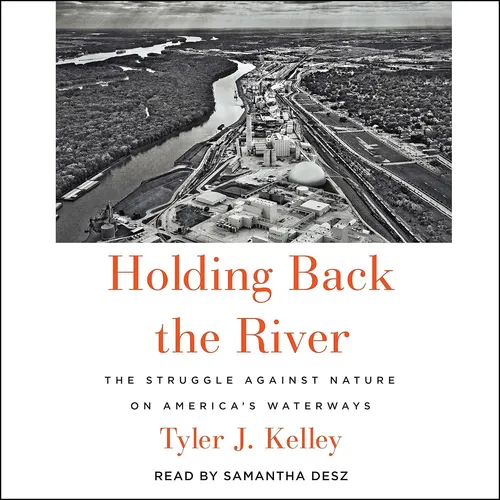
The Craft That Reveals Our Pattern
Kelley’s central theme is hubris. Not the loud, proud kind. The quiet, well-intentioned kind. He writes about levees that actually make floods worse downstream. About channels that need constant dredging because the river wants to be somewhere else. The key imagery is the levee itself. A wall of dirt and concrete. A symbol of our refusal to accept nature’s will.
But Kelley does not just blame. He shows us the beauty in the struggle. There is a passage about a group of people who live in a floodplain. They know the water will come. They accept it. They build their houses on stilts. They move their livestock to high ground. They do not fight the river. They live with it.
That is the universal pattern. Our character’s struggle reveals something about all of us. We spend so much energy resisting what is inevitable. Loss. Change. Time. We build levees in our hearts. And they always crack.
What This Book Does to You
This book is for anyone who has ever tried to hold back something. A breakup. A failure. A child growing up. It is for the person who keeps working on a relationship that is already over. For the parent who cannot let their child make mistakes. For the manager who micromanages every detail.
Kelley’s book has one weakness. It is dense with technical details about river engineering. I found myself skimming some sections. But that is also a strength. The detail makes the point land harder. You feel the weight of human effort. The sheer scale of our delusion.
What you will get from reading this is a new perspective. You will see your own battles differently. You will ask yourself. Which levees am I building? Which rivers am I trying to hold back?
The truth is, I finished this book and felt lighter. I stopped trying to control a few things in my own life. I let a disagreement go. I stopped pushing a project that was going nowhere. Maybe that is what Kelley wanted. Not to teach us about rivers. But to teach us about ourselves.
I still think about that muddy bank in Louisiana. The river was moving. Slow. Patient. It did not care about my plans. It did not care about the levees. It just kept flowing. And I realized something. Maybe the point is not to hold back the river. Maybe the point is to learn to float.
