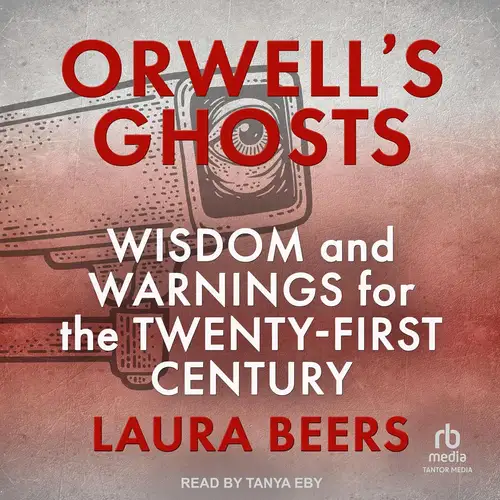
I was in a meeting last week. Someone said we needed to “empower” the team. I nodded. But I felt a small, cold twist in my stomach. That word. It used to mean giving someone real power. Now it means giving someone permission to do what you already decided they should do. I started thinking about all the words we have stolen and hollowed out. “Orwellian” is one of them. Laura Beers knows this. Her book, Orwell’s Ghosts, asks a simple, terrifying question: What happens when the language of warning becomes the language of control?
The Protagonist: A Ghost Who Refuses to Stay Dead
The protagonist of this book is not a person. It is an idea. Or, more precisely, a ghost. The ghost of George Orwell. Beers does something I have never seen before. She tracks the life of a metaphor. “Big Brother” was born in 1949 to describe totalitarian surveillance. By 2025, it is a term used by both sides of every political aisle. A senator calls a privacy law “Big Brother.” The tech company that broke the law calls the regulation “Big Brother.” The word has lost its teeth. It has become a costume. Beers shows us how the American right first adopted “Orwellian” to attack the left, then the left threw it back. And somewhere in that fight, the original warning died. She does not give us plot twists. She gives us something more unsettling: a story about how we all, willingly, participated in the burial of a cautionary tale.
Theme and Imagery: The Language We Breathe
Beers argues that the greatest victory of authoritarian language is not that we believe it. It is that we stop noticing it. She points to “doublespeak” from Nineteen Eighty-Four. War is peace. Freedom is slavery. We laugh at these phrases. But then she shows us modern politicians who say “enhanced interrogation techniques” for torture. Or “right to work” laws that weaken unions. The phrase sounds like freedom. It is the opposite. The core theme here is not just political manipulation. It is our own fatigue. We have heard so many lies that we have stopped listening for the truth. Beers uses a subtle light throughout the book. She does not scream. She documents. She shows how the CIA secretly funded translations of Animal Farm during the Cold War to use as propaganda. Orwell himself would have hated this. A book about the corruption of language was corrupted by the very forces it attacked. The author’s craft is in the quiet accumulation of evidence. It is not dramatic. It is damning.
Elevation and CTA: The Whisper That Might Save Us
So what do we do with this knowledge? Beers does not give easy answers. That is her honesty. She admits she does not know how to reclaim “Orwellian” from its misuse. But she does offer one small, fragile hope. She calls it “linguistic vigilance.” The idea is simple. We must pay attention to the words we use. Every time we say “Orwellian” to describe a mildly annoying policy, we weaken the term. Every time we use “literally” to mean “figuratively,” we break a tool. This book is not for someone who wants a quick fix. It is for someone who is willing to sit with discomfort. It is for the person who has felt the same cold twist I felt in that meeting. The person who knows something is off but cannot name it. Orwell’s Ghosts gives you the name. And then it asks you to decide if you will protect the name or let it die. I closed the book and sat in silence for a minute. I recommend it. But I warn you. You will never hear a politician say “freedom” the same way again.
