I went to a friend’s housewarming party last month. Everyone was cheerful, holding wine glasses, talking about renovations and promotions. I stood by the window and watched a crack in the plaster. It ran from the ceiling to the floor, thin and jagged. Nobody mentioned it. But I could not stop looking at it. That crack reminded me of something I had been carrying for years. A fracture in my own life. A moment when everything fell apart and I had to decide: Do I try to glue the pieces back exactly as they were? Or do I make something else entirely?
Suleika Jaouad’s new memoir, The Book of Alchemy, asks a version of that question. She does not promise easy answers. She does not tell you that suffering is a gift. She asks something harder: What if the point is not to get over it, but to let it change you? What if the crack is not a flaw, but an invitation?
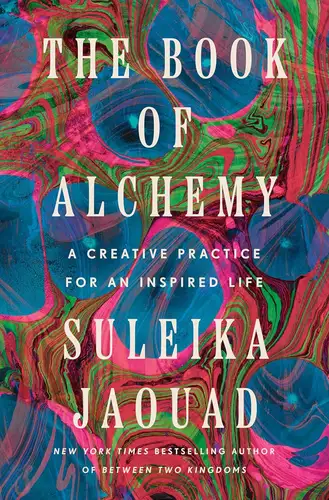
The Woman Who Learned to Live With a Sword Over Her Head
Suleika Jaouad became famous for her first book, Between Two Kingdoms, where she wrote about surviving leukemia in her twenties. That book was about the raw fight to stay alive. The Book of Alchemy is about what comes after. She is no longer in the hospital, but she is not exactly free either. The fear of relapse hangs over her like a sword that might drop at any moment. She describes a kind of phantom limb pain. The cancer is gone. The anxiety remains.
What I love most about this book is how honest Jaouad is about her own mess. She does not pretend to be a Zen master who has transcended pain. She gets angry. She isolates herself. She pushes away the people who love her. There is a scene where she screams into a pillow for so long that her throat bleeds. It is not pretty. It is not inspirational. It is real.
The core conflict of the book is not external. It is not about doctors or treatments. It is about whether she can stop seeing herself as a victim. Whether she can find a way to live that is not just a reaction to what happened to her. I will not tell you how she resolves this. But I can say that the resolution surprised me. It was not what I expected. It was better.
The Craft of Turning Lead Into Gold, Or at Least Into Something Bearable
The central metaphor of The Book of Alchemy is obvious from the title, but Jaouad handles it with surprising subtlety. She does not beat you over the head with it. Instead, she lets it emerge slowly, like a shape forming in fog. Alchemy, she explains, was never really about turning lead into gold. It was about purification. About taking something base and crude and subjecting it to intense heat until it became something else entirely.
Here is where I think Jaouad’s craft shines. She uses light as a recurring image. Not dramatic sunlight. More like the pale, watery light that comes through a hospital window. Or the glow of a single lamp in a dark room. She writes about how, after her illness, she could not bear bright light. It felt too exposing. Too cheerful. She needed the soft, forgiving light of dusk. That image stayed with me. I kept thinking about how we all need different kinds of light at different times. And how hard it is to admit that we are not ready for the full sun yet.
There is a moment in the book where Jaouad visits an actual alchemist’s workshop in Prague. The man shows her a flask with some dark residue. “This is what remains after the fire,” he says. “Most people think the fire destroys everything. But it leaves something. A powder. A possibility.” I read that sentence three times. I think it is the heart of the book. Not that pain creates something beautiful. That is too easy. But that pain leaves something. And what you do with that something is up to you.
What We Do With the Remains
I finished The Book of Alchemy on a Tuesday night. I sat on my couch for a long time, not reading, not doing anything. I thought about the crack in my friend’s wall. I thought about the things in my own life that I have tried to hide or fix or forget. Jaouad’s book does not give a formula. It does not say “do this and you will be healed.” It says something more radical. It says: The fire will come. Maybe it already has. But the residue is yours. You can throw it away. Or you can see what it might become.
The book is not perfect. There are moments when Jaouad’s self-reflection feels a little too polished, a little too aware of its own profundity. But that is a small complaint. The honesty of the book outweighs its occasional self-consciousness.
Who should read this? Anyone who has been through something that broke them. Anyone who is tired of hearing that everything happens for a reason. Anyone who suspects that the opposite of despair is not happiness, but creation. Jaouad does not tell you to be grateful for your pain. She tells you that you have a choice. You can be the lead that sits in the dark. Or you can let the fire do its work. The heat will come either way. The only question is what you do with what remains.
