I have a question I never thought I’d ask. What if your body started acting like a rental car? A tire goes flat, the engine coughs, you just swap the parts and keep driving. Mary Roach has been asking this question for years, and her new book, “Replaceable You: Adventures in Human Anatomy,” is the result. She follows the people who get swapped: organ recipients, amputees with bionic hands, folks with artificial hearts. The book made me laugh. It also made me grip my own arm, just to check it was still mine. Here is the real question: If you replace every part of a person, are they still the same person? Or do they become someone else, assembled from strangers?
Roach introduces us to a man with a borrowed heart. He is not a dramatic hero. He is a regular guy who now carries a piece of a dead cyclist inside his chest. He wonders if he will start liking energy bars. He worries about the family of the donor. Roach does not treat this as tragedy. She treats it as a strange, funny, deeply human predicament. She talks to a woman who lost both hands and now uses robotic ones. The woman says she cannot feel her children’s skin when she touches them. But she can still hug them. The core conflict here is not medical. It is emotional. What do we lose when we gain a new part? What do we gain? Roach never wraps this up neatly. She lets the stories breathe. She lets them stay messy.
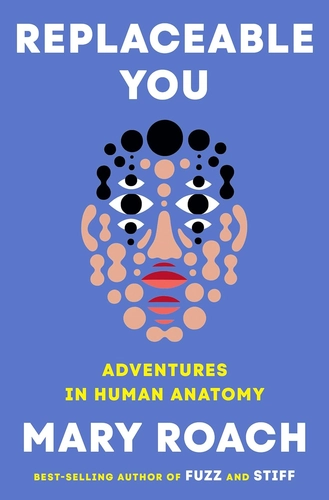
The core theme of this book is identity. It is not simple. Roach shows us that our sense of self is stitched into our bodies, but the stitching can be undone. The key imagery here is the seam. Every transplant is a seam where two lives meet. A surgeon’s scar is a seam. A prosthetic socket is a seam between flesh and machine. Roach writes about a woman who received a face transplant. Her new face is not her old face, but it is not the donor’s face either. It is a third face, a hybrid. That is the universal pattern. We are all hybrids. We are born with one body, but we spend our lives exchanging parts of it. Cells die and are replaced. Teeth fall out. Knees give up. Roach makes you see your own body as a collection of borrowed things. It is unsettling. It is also liberating.
I finished this book and I felt something unexpected. I felt grateful. Not for my health, exactly. More for the strangeness of being alive in a body. Roach has a gift for making you think about your own mortality without despair. She makes you laugh about your own fragility. She makes you wonder what you would swap. A heart for a chance to see your daughter graduate. A hand for the ability to hold a cup of coffee. The book is not perfect. Some sections are dense with medical jargon. Roach tries too hard to be funny in places. But those are small flaws. The big thing she does is simple. She reminds us that our bodies are not solid. They are provisional. They are replaceable. And maybe that is the most human thing about us. We are always becoming something new, stitched from borrowed parts. Real emotion: I closed the book and touched my own chest. I felt my heart beating. It felt like mine. For now.
