I was scrolling through a shopping app last week, looking for a plain white T-shirt. Nothing fancy. The recommendations came fast: a push-up bra, a dress for a wedding I wasn’t attending, a skincare serum for “mature skin.” I’m thirty-two. I felt seen in a way that made me uncomfortable. Seen by something that wasn’t human. That moment stuck with me. It made me wonder: How many times a day do these invisible systems tell us who they think we are? And what if they are wrong?
The Protagonist Is a Mirror
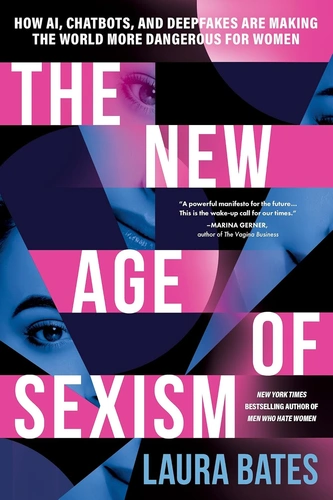
Laura Bates doesn’t give you a single hero to root for. The protagonist, if you can call it that, is the reader’s own experience. She builds the book around stories. A woman whose online job applications were filtered out because the AI associated leadership with male names. A teenager whose social media feed slowly pushed her toward diet culture and self-harm content. A researcher who found that voice assistants like Siri and Alexa are programmed to respond to sexual harassment with flattery or silence. Bates never tells you the ending of these stories. She leaves them hanging, unresolved. That’s the point. The conflict isn’t solved. It is happening right now, in real time. I found myself putting the book down and staring at my phone. I felt complicit. You might too. The question the book asks is not academic. It is deeply personal: How do we fight something we can’t see?
Patterns Hidden in Plain Sight
Bates’s key imagery is simple: the black box. The algorithm is a black box. We put data in, we get results out, but we cannot see what happens inside. She uses this metaphor to explain how bias becomes invisible. A training dataset is mostly male voices? The AI learns that women’s voices are less important. A recommendation engine is optimized for engagement? It learns that anger and division keep people clicking. The author’s craft here is subtle. She does not scream at you. She shows you the light, or rather the lack of it. She argues that the problem isn’t just bad actors. It is the system itself. The algorithm is not neutral. It reflects the biases of its creators, who are mostly men. I realized this: the technology we trust to be objective is actually a mirror of our worst assumptions. That is a chilling thought.
A Mirror We Cannot Look Away From
So what do we do? Bates offers no simple fix. That is the book’s weakness, maybe its only one. She says we need regulation, diverse teams, transparency. She says we need to demand explanations from companies. She says we need to teach digital literacy. All true. All hard. But the core insight she leaves you with is this: The question is not whether technology is sexist. It is. The question is whether we are willing to see it. Because once you see it, you cannot unsee it. I close the app. I put the phone down. I feel the weight of that black box in my pocket. And I know that the real fight is not against machines. It is against our own comfort.
