I went to a work reunion recently. Someone brought up a project that had failed spectacularly two years ago. Around the table, heads nodded. Everyone had a story about how they saw it coming. The problem was, I remembered those meetings clearly. No one said a word back then.
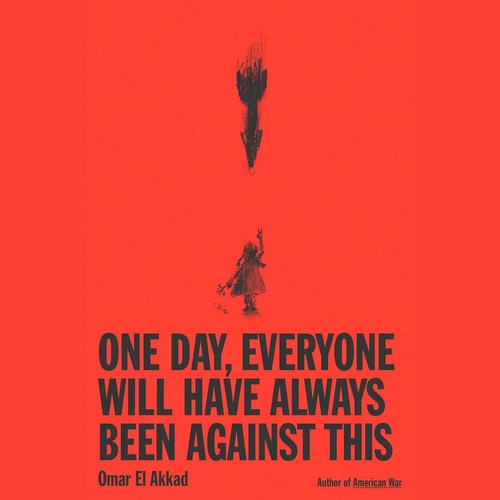
That night I started Omar El Akkad’s “One Day, Everyone Will Always Have Been Against This.” The title hit me like a slap. It names something we all do but never say out loud. We rewrite our own history to make ourselves look smarter, braver, more righteous than we actually were. The question that stayed with me through every page: what are we so afraid of that we need to keep lying to ourselves?
What This Book Is Really About
El Akkad is an Egyptian-Canadian writer. He wrote “American War,” a novel about a second American civil war. This new book is a work of nonfiction, but it reads like a confession. It is not an academic argument. It is a personal excavation.
The book’s core idea is simple and brutal. We live in a culture that punishes uncertainty. Being wrong is not just embarrassing. It is a moral failing. So we invent a version of the past where we were always on the right side. We were against the war before it started. We knew the company was going to collapse. We never trusted that politician. The problem is, most of us did not. We went along. We stayed quiet. We waited to see which way the wind blew.
El Akkad does not let himself off the hook either. He admits his own failures of courage. That honesty is what makes the book work. It is not a lecture from above. It is a hand reaching out from the same mud.
The Imagery That Stays With You
The author uses one image again and again. It is the crowd. The people who show up after the battle to claim they were on the winning side all along. He describes them as “ghosts who forgot they were dead.” I found that line haunting.
He also writes about the weight of being wrong in public. The fear is not just about losing an argument. It is about losing your place in the tribe. We are social animals. We need to belong. So we shape our memories to fit the group’s story. The book shows how this happens at every level. In families. In workplaces. In nations.
The writing itself is careful. El Akkad chooses his words like a surgeon. He does not scream. He lays out the evidence and lets you feel the shame. I had to put the book down twice because I recognized myself too clearly.
What You Walk Away With
This is not a comfortable read. It will not make you feel good about yourself. But it might make you more honest.
The book has limits. El Akkad focuses mostly on American and Canadian politics. The examples are from the Iraq war, the Black Lives Matter movement, the pandemic. A global reader might want more. But the pattern he describes is universal. I saw my own country in it. I saw my own family.
The deepest insight for me came near the end. El Akkad suggests that moral amnesia is not a flaw in our character. It is a survival strategy. The cost of seeing ourselves clearly is too high. So we blur the edges. We soften the memories. We become the hero of a story that never happened.
I finished the book feeling less alone. That sounds strange for such a dark book, but it is true. Knowing I am not the only one who has failed this way, who has rewritten his own past to avoid pain, that is oddly freeing. Maybe the first step is just to stop pretending.
