Have you ever stood in your kitchen, baffled, while your eleven-year-old begs for a specific brand of sneakers, the same ones every kid in his class is wearing? I have. Last fall, my son Liam came home insisting he needed a pair of chunky white trainers. Not because they were comfortable, he admitted, but because “everyone has them.” That was it. I opened my mouth to argue about individuality and then I remembered my own eighth-grade year. The scrunchies. The exact brand of backpack. The way I nodded along to a band I secretly found annoying just so I’d have a lunch table to sit at. conformity psychology examples aren’t confined to textbooks. They play out every morning in our homes, in the school drop-off line, in the whispered worries after lights out.
Quick Ways to Spot Conformity in Your Child:
- Notice sudden shifts in style that mirror a friend group
- Listen for the phrase “everyone else is doing it”
- Watch for facial expressions when other kids make a different choice
- Ask what would happen if they wore something different tomorrow
- Pay attention to music or hobbies that appear overnight and fade just as fast
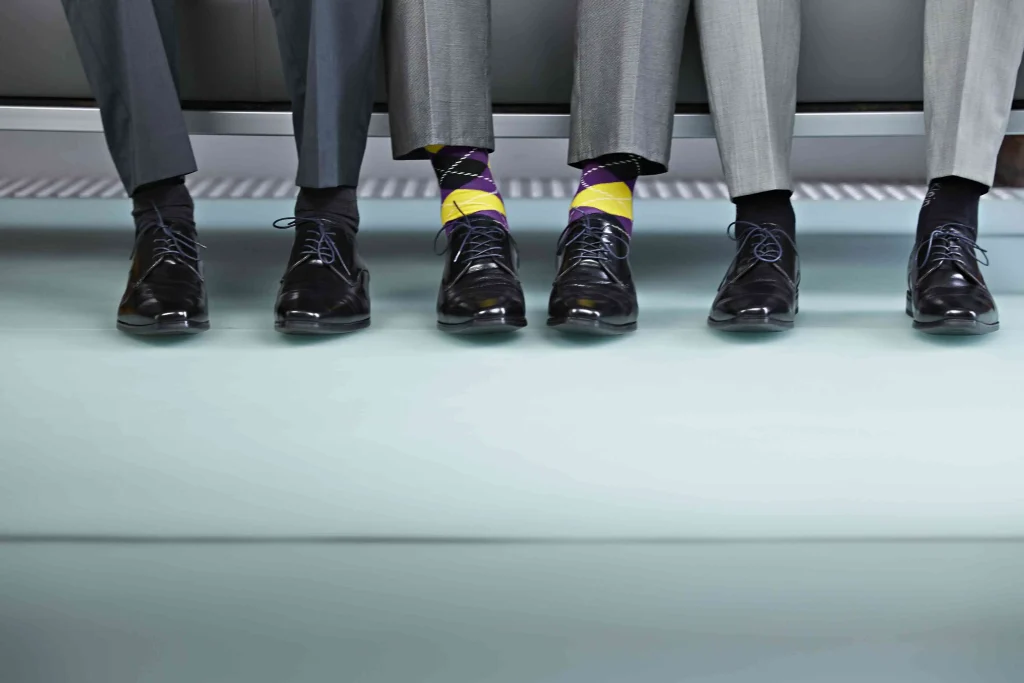
Why Do We All Conform? The Psychology Behind Everyday Examples
Conformity is simply the process of changing your attitudes, beliefs, or behavior to match a group. This change happens in response to real or imagined pressure, even when no one asks you directly. Humans are wired to connect, and fitting in keeps things smooth and predictable.
I used to think of peer pressure as a dramatic thing, a movie scene with a cigarette offered behind the gym. But most conformity psychology examples are much quieter. It is my daughter choosing the same water bottle brand as her friends. It is my husband laughing at a joke he does not fully understand at a work dinner. It is me, last week, turning around in an elevator because a group entered facing the other way. Yes, I did that. I watched a video of that classic experiment once and thought, “I would never.” Then I caught myself doing it, a grown woman, turning my body purely because the majority shifted. We are a tribal species. Even countercultural groups form communities, all wearing the same anti-conformity uniform.
The core reason we do this breaks down into two needs. The first is a hunger to be liked, what researchers call normative social influence. The second is a need to be correct, what they call informational social influence. When the right answer is unclear, we look around and assume the group knows better. My son did not know which shoes were “good” for middle school survival. The crowd told him. And he believed them.
How Can I Help My Child Navigate Conformity Without Losing Themselves?
This is the question I kept asking myself after the sneaker incident. I did not want to crush his social world. But I also did not want him to become someone who always waits for the crowd to decide what he likes.
So I started asking different kinds of questions. Not “Why do you want those?” because that made him defensive. Instead, I said, “Tell me what you like about them. If no one else had them, would you still want them?” He paused. He actually paused. That tiny hesitation became our doorway.
Now, when a new trend sweeps through his friend group, I try a few things that have helped. I share my own stories first. I tell him about the band I pretended to love in high school and how I later realized I could not name more than two songs. I make myself the example, not the lesson. That lowers the shame. Then we name the feeling together. “Is this about liking the thing or about staying part of the group?” Sometimes it is both. And that is okay. Some conformity psychology examples are harmless, even sweet, like learning to say “please” and “thank you” because everyone in our family does it.
The “Mirror Test” Check-In: A Simple Tool for Families
My family is not big on formal rituals. We are more of a chaotic dinner table crew. But one thing that stuck was something my husband started calling the Mirror Test. It came from a late-night conversation after our daughter changed her entire music playlist to match a new friend. We were worried she was losing pieces of herself.
The Mirror Test asks just two questions. First: If you were standing in front of a mirror, completely alone, would you still make this choice? Second: Whose reflection would you see, yours or the group’s?
We also have a phrase we use: “Is this really your song?”
When Conformity Helps: The Good Side of Fitting In
| Age Group | Common Conformity Example | What It Often Feels Like |
|---|---|---|
| Toddlers (2-4) | Copying the play of nearby children | A way to learn, pure imitation |
| Early Elementary (5-7) | Wanting the same lunchbox as a friend | A bridge to friendship |
| Tweens (8-12) | Adopting a specific brand | A shield against teasing |
| Teens (13-18) | Altering opinions to match a group | A survival strategy for social standing |
Frequently Asked Questions
Q: What are some conformity psychology examples in everyday life as a parent?
A: You see it when you dress your baby in a gender-coded color because that is what the in-laws expect. These are subtle shifts to avoid social friction, and they reflect real conformity psychology examples in daily life.
Q: Are there conformity psychology examples that are positive?
A: Yes. Many conformity psychology examples include learning gratitude, cooperation, and safety norms from peers and family groups.
One Last Thing
The morning after our sneaker talk, I drove Liam to school. He was wearing the shoes. I did not stop him. As he hopped out of the car, he turned and said, “I still like them, Mom. For real.”
Maybe the goal is not to eliminate conformity psychology examples from his life. Maybe it is just to make sure he can still hear his own footsteps inside them.