Last fall, I sat across from a friend in a coffee shop, my stomach tight, and said, “When you canceled our plans three times without telling me, it hurt.” She stared at me, then her face hardened. “I can’t believe you’re making this a thing,” she said. “You really need to work on your conflict resolution skills.” And then she left. I never heard from her again. That moment broke something open in me. I didn’t fail. I just understood something I’d sensed for years: some people use “conflict resolution skills” as a weapon to shut you up.
Quick Reality Check Today
If someone has told you that you lack conflict resolution skills, ask yourself:
- Recognize when the label is a dodge, not a diagnosis.
- Trust your calm. If you stayed respectful, you’re not the problem.
- Stop chasing those who disappear after one honest conversation.
- Practice a simple reflection statement to expose real avoidance.
- Remember that true conflict resolution takes two willing people.
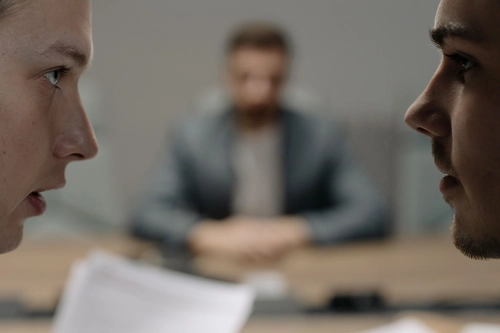
Why Your Conflict Resolution Skills Aren’t the Problem
I used to think I was terrible at conflict. Every time I brought something up gently, I’d get ghosted, or the other person would blow up and accuse me of being aggressive. It happened so often I started to believe the label. But then I looked closer. In most of those situations, I’d prepared for days. I’d chosen soft words. I’d even rehearsed with my partner. And it didn’t matter. The pattern was always the same: I’d state my need, and they’d vanish or attack. Why was I the only one doing the learning?
The truth is, many people have never learned to tolerate a moment of honest tension. Research on defensive communication shows that when someone perceives even a mild criticism, their brain often reacts as if under threat, and they lash out or shut down. So the accusation “you have poor conflict resolution skills” is often a projection, not a fact. It means “I feel uncomfortable so I’ll make it your fault.” I’ve heard it from friends, relatives, and colleagues. In those moments, I wasn’t the one lacking skills. I was just the only one willing to name the problem.
I began to see myself in a different light. In many relationships, I’d been cast as a supporting role in someone else’s one-person show. I was supposed to be always agreeable, available, and selfless. The moment I had a need, I’d revealed myself as a real person, not a prop. And that was unforgivable to them. So they left, and they called it my fault. Does that sound familiar? Have you ever felt like a side character in your own life, only to be discarded when you dared to have a boundary?
How to Build Real Conflict Resolution Skills When No One Will Meet You Halfway
I decided to stop chasing people who ran at the first sign of discomfort. Instead, I started practicing the only half of conflict resolution I could control. That meant stating my need clearly, without apology, and paying close attention to the response. Here’s what I do now. When something bothers me, I might say: “I felt hurt when you didn’t return my call. Can we talk about it?” That’s it. No blame, no long explanation. If they get defensive, I don’t engage. I’ll say, “I hear you’re upset, and I’m open to talking later when we’re both calmer.” Then I step back. If they never come back, I have my answer. They weren’t ready to resolve anything.
Some people will accuse you of lacking conflict resolution skills right then. They’ll call you difficult. But notice what they don’t do. They don’t offer to find a middle ground. They don’t ask what you need. They label you and leave. That’s not failed conflict resolution. That’s a person revealing they can’t handle accountability. Real conflict resolution isn’t about being nice or small. It’s about staying grounded when someone tries to push you off-center. And sometimes the most skillful move is to let them walk.
Have you ever noticed how often you’re expected to be the “bigger person,” while the other adult throws a tantrum? That’s not a skill gap on your side. That’s a social script that protects people who never learned to sit with discomfort. I don’t follow that script anymore. I’ll say, “I’m open to fixing this together. Let me know when you’re ready.” And then I hold the space, but I don’t fill it.

A Simple Statement to Reveal Avoidance
After too many painful silences, I started using a simple reflection statement I think of as the Mirror Script. It’s the exact words I use when someone starts to shut down or lash out. The statement is: “It sounds like this conversation is making you uncomfortable. Do you want to take a break and come back to it, or would you rather not talk about this again?” That’s it. I say it without sarcasm, without edge. Just a quiet reflection of what’s happening.
Why does this work? Because it puts the responsibility back on them without blaming. It forces them to name their own avoidance. In my experience, about half the time the person will mutter “whatever” and leave. The other half might actually pause and say, “I need a break.” Both outcomes give me information. If they leave, I know I tried. If they stay, we might start a real conversation. Either way, I’m not absorbing the label of “poor conflict resolution skills” while they escape. I’m holding up a mirror.
Try it next time. You don’t need to be clever or forceful. You just need to be clear. When you stop performing the role of peacekeeper for people who won’t meet you even a quarter of the way, you reclaim your energy. This isn’t about winning. It’s about not losing yourself in someone else’s inability to communicate.
When This Happens at Work
A few years ago, a coworker took credit for my idea in a meeting. Afterwards, I pulled her aside and said calmly, “I’d appreciate if you’d mention my name next time. That project meant a lot to me.” She stared at me coldly and said, “You’re so sensitive. You need to work on your people skills.” Then she avoided me for weeks. Did I handle that badly? I don’t think so. I think she couldn’t tolerate being called out, and it was easier to make me the problem. In workplaces, this is common. The person who speaks up is labeled “difficult,” even when their point is valid. I learned to document things and to pick my battles. But I never accepted the idea that my conflict resolution skills were lacking. They weren’t. I had simply stepped outside the role of the agreeable team member. And sometimes that role is a trap.
Friendships That End at the First Mistake
I had a friend who always ran late. Not five minutes, an hour. Every time, I’d wait, and she’d breeze in with a story. One day I said, “I love seeing you, but when you’re late, I feel like my time doesn’t matter.” She froze. Then she said, “I didn’t realize you were keeping score. I thought you were more easygoing.” She stopped replying to my texts after that. I replayed the conversation a hundred times. Had I been too harsh? I don’t think so. I think she had a script for me, and when I deviated from it, I became work. The minute I expressed a need, I’d outlived my purpose in her life. That’s not poor conflict resolution. That’s poor friendship design.
When Family Calls You Defensive for Setting Boundaries
Family can be the hardest. Last year, I told my brother that his teasing about my job made me feel small. He rolled his eyes and said, “You can’t take a joke. You’re so defensive.” I didn’t argue. I just said, “I’m telling you how it feels. If you don’t care, that’s your choice.” That ended the conversation, and we didn’t talk for a month. To outsiders, maybe that looked like a failed attempt at conflict resolution. But for me, it was a boundary. I wasn’t going to keep pretending his words didn’t hurt just to keep the peace. Real conflict resolution doesn’t require you to swallow your truth. It requires two people willing to hear each other. He wasn’t willing, and I stopped trying to force it.
FAQ: When You’re Told You Lack Conflict Resolution Skills
Q: How do I know if I genuinely lack conflict resolution skills or if the other person is avoiding accountability?
A: Look at the pattern. Do you approach conflicts calmly, with specific examples and clear language? Do you leave room for the other person to respond? If yes, and the other person consistently deflects, attacks, or disappears, the issue is likely on their side. One honest conversation doesn’t make you the problem.
Q: What should I do when someone labels me as “difficult” or “too sensitive” after I raise a concern?
A: Stay grounded. You might say, “I hear that. I’m still sharing how I feel.” Don’t defend or over-explain. The label is often a tactic to stop the conversation. Your job isn’t to prove you’re “easygoing.” It’s to state your truth and let their reaction be theirs.
Q: Is it ever worth trying to resolve a conflict with someone who always runs away?
A: Sometimes, but only if they show a willingness to engage. You can leave the door open with a simple statement: “I’m open to talking when you’re ready.” Then let go. You can’t force someone to meet you halfway. Chasing them only drains you.
Q: How do I explain my side without sounding defensive?
A: Use “I” statements and describe impact, not intent. “When X happened, I felt Y.” Avoid “you always” or “you never.” Speak slowly. If they interrupt, say, “I’d like to finish my thought, then I’ll listen to yours.” Calmness is your anchor.
Q: What if I actually do need to improve my conflict resolution skills?
A: That’s possible too. Ask a trusted person who will be honest with you. Look for patterns across relationships. If multiple people tell you the same thing, it’s worth exploring. But make sure the feedback is specific, not just a label. Real growth comes from concrete behavior, not blanket criticism.
One Last Thing
I still think about that coffee shop. I wish I could say it was the last time I was blamed for someone else’s refusal to communicate. But it wasn’t. What changed is that I stopped believing the label. Now when someone says I lack conflict resolution skills, I hear a different message: “I refuse to be accountable.” And that’s not a skill I need to learn. It’s a lesson they do.
References
- Rosenberg, M. B. (2015). Nonviolent Communication: A Language of Life (3rd ed.). PuddleDancer Press.
- Patterson, K., Grenny, J., McMillan, R., & Switzler, A. (2011). Crucial Conversations: Tools for Talking When Stakes Are High (2nd ed.). McGraw-Hill.
- Lerner, H. (2014). The Dance of Anger: A Woman’s Guide to Changing the Patterns of Intimate Relationships. William Morrow Paperbacks.
