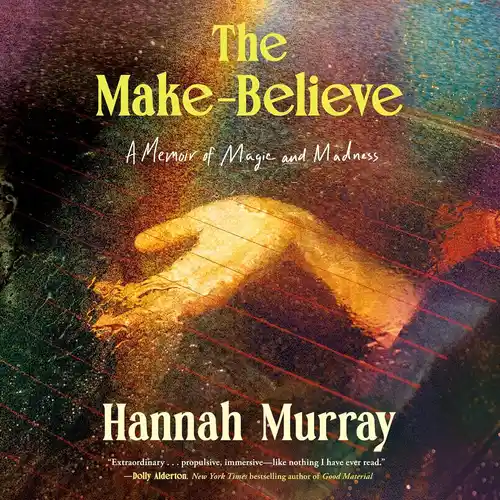
I stood at a wedding recently. The groom’s vows were perfect, the kind you see on social media. Everyone cried. And I found myself thinking about Hannah Murray. She was an actor on Skins and Game of Thrones. Then she joined a wellness group. Then she got sectioned under the Mental Health Act. The diagnosis was bipolar disorder. I looked at the happy couple and wondered: how many of us, in our loneliest moments, would trade everything for the feeling of being understood? How do we know when that understanding is real? Murray’s new memoir, The Make-Believe, doesn’t just tell her story. It asks the question that makes me uncomfortable: why do we believe the things that will hurt us?
The Protagonist Who Won’t Let You Pity Her
Murray writes herself with a kind of clarity that stings. She doesn’t present as a fool. She was sharp and successful. She had a career, friends, a life. But she also had a hollow space inside. The wellness group filled it. She describes the first encounter with a woman who seemed to see right through her. The woman said, “You’re not broken. You’re just waking up.” I felt my chest tighten reading that. It’s what we all want to hear. Murray didn’t lose her mind overnight. She lost it in small, reasonable steps. She stopped drinking coffee. She stopped talking to skeptical friends. She started believing that her own judgment was the enemy. The tension in the book is unbearable at times, because you see the red flags she misses. I wanted to shout at the page. But that’s the point. I’ve never been in a cult. But I have ignored a friend’s warning and stayed in a bad relationship. I have convinced myself that something was fine when it wasn’t. Murray’s story is extreme, but the pattern is ordinary. She never asks for pity. She asks for understanding. And that’s harder to give.
Light, Shadow, and the Seduction of Certainty
The core image in this book is light. Murray writes about the group’s leader as someone who “shone.” The rooms were bright. The people smiled. There was no ambiguity. That’s the trap. Ambiguity is painful. We want a clear answer. The group offered one. You are sick because you are disconnected. You will heal by belonging. It sounds beautiful. The deeper theme is the seduction of absolute certainty. Murray shows how a person can drift into a world where doubt is forbidden. She calls it “the make-believe.” Not a lie, exactly. More like a story that everyone agrees to believe together. The author’s craft is quiet. She does not scream at you about manipulation. She simply shows the small moments where she chose the story over reality. A phone call she didn’t return. A doctor’s opinion she dismissed. The book’s power is in these tiny decisions. They add up. They form a wall between the person you were and the person you are becoming. Murray’s struggle reveals something universal. We all want to be chosen. We all want a map. The question is: who gets to draw it?
What You Find When the Make-Believe Ends
I finished the book on a Saturday morning. I sat with it for a while. Murray ends her story not with triumph, but with a kind of tired honesty. She does not claim to be fully healed. She does not say she has all the answers. She says she learned to trust her own instincts again. That sounds small. It is actually enormous. The book’s greatest strength is that it refuses to simplify. The wellness group was not pure evil. The people in it were kind, in their way. Murray herself was not a passive victim. She was a willing participant. That complexity is what makes this memoir unforgettable. It would be easier if the villains were villains. They are not. They are people who also believed. And that is terrifying. The core insight is this: vulnerability is not a weakness. It is the condition that allows belief. The question is not whether you will be vulnerable. You will be. The question is whether you will recognize the shape of the story someone is telling you. Murray helps you see that shape. She does not promise you will never be fooled again. She promises you will recognize the feeling when it comes. That might be enough.
