I was sitting in my kitchen the other night, staring at a half-finished painting I’d abandoned months ago. It was supposed to be about heartbreak. Instead, it was just a mess of muddy colors. I wondered: when does personal pain become something useful, something that reaches beyond yourself? Neneh Cherry’s A Thousand Threads arrived in my mailbox the next day. It felt like an answer I hadn’t known I was asking.
The book opens with a question Cherry has carried her whole life. She is a writer, a visual artist, a woman who grew up in the shadow of trauma. But she is also someone who refused to let that shadow swallow her. The question is simple: how do you take the sharpest pieces of your past and weave them into something that holds, rather than cuts? It is the same question I was asking about my failed painting. She just had a much bigger answer.
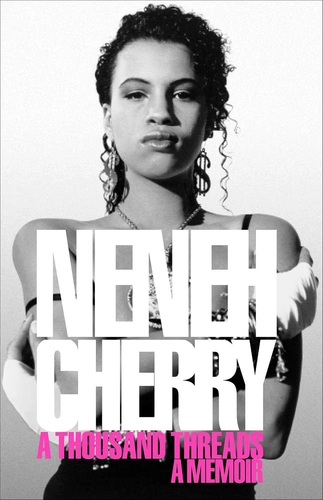
The Protagonist Who Refuses to Be a Victim
Cherry does not start from a place of strength. She starts from a place of fracture. Her childhood was marked by violence, displacement, and a kind of quiet chaos that leaves no visible scars but changes everything. You feel it in the way she describes her earliest memories: fragmented, like shards of glass. She does not romanticize the pain. She names it.
But here is where the book surprised me. Cherry does not dwell in the wound. She moves through it. Her core conflict is not with the people who hurt her. It is with herself. Can she trust the world enough to create something new? Can she risk being seen? Her art becomes the bridge. She paints, she writes, she speaks. Each act is a small defiance. Each brushstroke is a refusal to stay broken.
I found myself holding my breath during certain chapters. Not because of drama, but because of her honesty. She admits she didn’t always know what she was doing. She stumbled. She made ugly work. But she kept going. The suspense is not about whether she will succeed. It is about whether she will give up. She doesn’t. That is the quiet miracle of this book.
The Craft of Turning Pain Into a Pattern
Cherry’s central argument is that personal trauma, when processed through art, can become a public good. It sounds neat in a sentence. In practice, it is messy and slow and often invisible. She does not claim to have a formula. She shows us the process.
The key imagery in the book is the thread. She uses it over and over. Threads connect. Threads can be tangled or straight. A single thread is fragile, but many together become a rope. Cherry’s art is that rope. She pulls her own story into it, then invites others to pull theirs. The movement she helped build is not about one voice. It is about many voices finding a common rhythm.
What struck me most was her refusal to separate the personal from the political. For Cherry, there is no such division. Her pain was political from the start. The systems that hurt her were not random. They were structures of power. Her art, then, is not just self-expression. It is resistance. She does not say this loudly. She says it quietly, in the spaces between words. I found myself underlining passages. Then I found myself putting the book down and staring at the wall. That is what good art does. It makes you stop.
What This Book Asks of You
I finished A Thousand Threads three days ago. I still think about it. Not because it gave me easy answers, but because it refused to. Cherry does not promise that art will save you. She promises only that it is worth trying.
The book is for anyone who has ever felt stuck in their own story. It is for the person who has a wound they don’t know what to do with. It is for the activist who is tired, the artist who is blocked, the person who wants to believe that their small act of creation matters. It has flaws. Some sections feel rushed. Cherry assumes you already know certain historical contexts, and if you don’t, you might feel lost. I wished for more grounding in a few places.
But the core insight is this: your pain is not a dead end. It is raw material. You can weave it, shape it, hand it to someone else. That is what Cherry did. That is what she teaches us to do. I went back to my half-finished painting after the book. I didn’t fix it. I started over. That felt right.
