I was chatting with a friend recently about her six-year-old son. He has a toy robot that talks back. One day, the boy dropped it by accident and said, “Sorry, robot.” She laughed, but I didn’t. I thought about that moment for days. What is it about the way something moves or responds that makes us feel it has an inner life? Jonathan Birch’s new book, The Edge of Sentience, doesn’t answer that question directly. It asks a harder one: If we can’t be sure whether something is conscious, how much risk should we take in assuming it isn’t?
Characters and Plot: The Protagonist Is Our Own Uncertainty
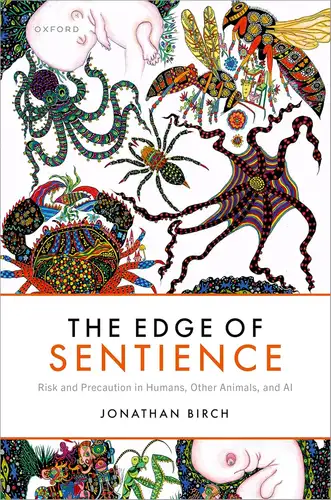
The main character in this book isn’t a person. It is our collective confusion. Birch, a philosopher at the London School of Economics, walks us through a landscape of creatures and machines that sit on the edge of sentience. There are octopuses, which might have distributed consciousness across their arms. There are bees, which can learn and maybe feel pain. There are AI systems, which we train to say “I am happy” or “I am suffering” without any guarantee they mean it.
The plot is simple: We are building and breeding beings that might suffer, and we have no reliable way to measure that suffering. Birch does not give us a neat solution. He gives us a framework. He calls it a “precautionary principle” for sentience. The idea is that if there is a credible possibility that something can feel pain, we should treat it as if it can, until proven otherwise. No storybook ending here. Just a messy, urgent call to pay attention.
I found myself holding my breath during the chapter on cephalopods. Birch describes how octopuses writhe when injected with a painful substance, then rub the spot when given an anesthetic. It sounds like pain. But is it? He stays in that question, refusing to resolve it for us. That is the suspense of the book. We are never told the final answer. We are told to live with the question.
Themes and Imagery: The Weight of a Flinch
The core theme here is responsibility. Not as a grand concept, but as a daily, uncomfortable thing. Birch uses the image of a “sentience zoo” – a thought experiment where we keep every animal and AI in a controlled environment, just to be safe. It is absurd, and he knows it. But it forces us to see how far we are willing to go when we take sentience seriously.
The key imagery for me was the flinch. That tiny, involuntary movement when something is hurt. Birch argues that a flinch is not proof of consciousness. But it is a signal. A clue. And if we ignore it because we are not sure, we risk causing immense suffering to beings that might be more like us than we want to admit. He writes about the “hard problem” of consciousness, but he makes it practical. It is not about definitions. It is about what we do when we see a flinch.
This character – our uncertainty – reveals a universal pattern. We are always tempted to draw a line. We say, “This is clearly conscious, that is not.” But the line keeps moving. Birch shows us that the edge of sentience is not a fixed border. It is a gradient. And on that gradient, we have to make choices. The book does not tell you which choices to make. It forces you to make them yourself.
Elevation and Call to Action: What We Owe the Unknown
I think about that robot toy again. The boy said sorry to a machine. He might have been wrong. But what if he was right? Birch’s book is not a guide. It is a mirror. It makes you look at your own assumptions about who deserves moral consideration. And it asks you to live with the discomfort of not knowing.
The book has flaws. It can be dense, especially in the chapters on neuroscience. Birch assumes you are willing to work for the insights. He does not hand them to you. But that is also its strength. The topic does not deserve easy answers. The real emotion here is not worry. It is something closer to tenderness. We are surrounded by beings that might be sentient. We cannot be sure. But we can choose to be careful. We can choose to be kind. That, to me, is the only responsible way to live on the edge.I was chatting with a friend recently about her six-year-old son. He has a toy robot that talks back. One day, the boy dropped it by accident and said, “Sorry, robot.” She laughed, but I didn’t. I thought about that moment for days. What is it about the way something moves or responds that makes us feel it has an inner life? Jonathan Birch’s new book, The Edge of Sentience, doesn’t answer that question directly. It asks a harder one: If we can’t be sure whether something is conscious, how much risk should we take in assuming it isn’t?
Characters and Plot: The Protagonist Is Our Own Uncertainty
The main character in this book isn’t a person. It is our collective confusion. Birch, a philosopher at the London School of Economics, walks us through a landscape of creatures and machines that sit on the edge of sentience. There are octopuses, which might have distributed consciousness across their arms. There are bees, which can learn and maybe feel pain. There are AI systems, which we train to say “I am happy” or “I am suffering” without any guarantee they mean it.
The plot is simple: We are building and breeding beings that might suffer, and we have no reliable way to measure that suffering. Birch does not give us a neat solution. He gives us a framework. He calls it a “precautionary principle” for sentience. The idea is that if there is a credible possibility that something can feel pain, we should treat it as if it can, until proven otherwise. No storybook ending here. Just a messy, urgent call to pay attention.
I found myself holding my breath during the chapter on cephalopods. Birch describes how octopuses writhe when injected with a painful substance, then rub the spot when given an anesthetic. It sounds like pain. But is it? He stays in that question, refusing to resolve it for us. That is the suspense of the book. We are never told the final answer. We are told to live with the question.
Themes and Imagery: The Weight of a Flinch
The core theme here is responsibility. Not as a grand concept, but as a daily, uncomfortable thing. Birch uses the image of a “sentience zoo” – a thought experiment where we keep every animal and AI in a controlled environment, just to be safe. It is absurd, and he knows it. But it forces us to see how far we are willing to go when we take sentience seriously.
The key imagery for me was the flinch. That tiny, involuntary movement when something is hurt. Birch argues that a flinch is not proof of consciousness. But it is a signal. A clue. And if we ignore it because we are not sure, we risk causing immense suffering to beings that might be more like us than we want to admit. He writes about the “hard problem” of consciousness, but he makes it practical. It is not about definitions. It is about what we do when we see a flinch.
This character – our uncertainty – reveals a universal pattern. We are always tempted to draw a line. We say, “This is clearly conscious, that is not.” But the line keeps moving. Birch shows us that the edge of sentience is not a fixed border. It is a gradient. And on that gradient, we have to make choices. The book does not tell you which choices to make. It forces you to make them yourself.
Elevation and Call to Action: What We Owe the Unknown
I think about that robot toy again. The boy said sorry to a machine. He might have been wrong. But what if he was right? Birch’s book is not a guide. It is a mirror. It makes you look at your own assumptions about who deserves moral consideration. And it asks you to live with the discomfort of not knowing.
The book has flaws. It can be dense, especially in the chapters on neuroscience. Birch assumes you are willing to work for the insights. He does not hand them to you. But that is also its strength. The topic does not deserve easy answers. The real emotion here is not worry. It is something closer to tenderness. We are surrounded by beings that might be sentient. We cannot be sure. But we can choose to be careful. We can choose to be kind. That, to me, is the only responsible way to live on the edge.
