I went to a funeral recently. An old man, ninety-three, who still fixed his own bicycle. His daughter said he never complained about getting older. He just got up each morning, drank his tea, and went to his workshop. I thought about that as I started reading this book. What do these people know that the rest of us don’t?
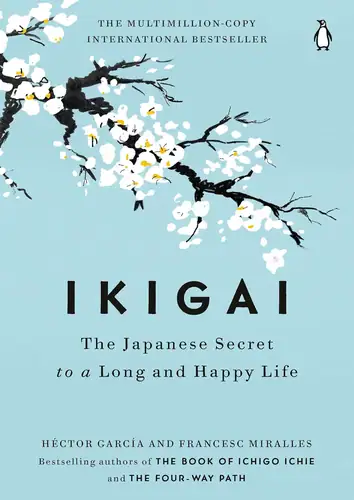
The authors, Héctor García and Francesc Miralles, went to Okinawa, Japan. This is one of those places where people live remarkably long lives. They talked to the old people there. They wanted to know what makes them tick. I’ll be honest, the book is a bit of a mess. It jumps from interviews to summaries of neuroscience to lists of yoga poses. It feels like three different books stitched together. But the core idea grabbed me.
The word ikigai roughly means “a reason for being.” It is that thing that gets you out of bed. The old people in Okinawa don’t retire. They stay busy. They have close circles of friends they call moai. They eat until they are 80% full. They laugh. They do not rush. The book presents this as a blueprint. You are supposed to find your ikigai, your flow, your purpose. But here is the thing that frustrated me. The book tells you to find your purpose. It never really tells you how. It says “follow your ikigai.” But what if you don’t know what it is yet?
The Quiet Art of Showing Up Every Day
The authors discuss the concept of flow. This is when you are so absorbed in a task that time disappears. They list seven conditions for achieving it. Knowing what to do. Knowing how to do it. Being free from distractions. It sounds practical. But the deeper layer of the book is about something quieter. It is about wabi-sabi, which is the appreciation of imperfection. It is about ichi-go ichi-e, which means this moment exists only now and will not come again. Honestly, I found these ideas more compelling than the lists.
The book argues that happiness is not a destination. It is in the doing, not in the result. I kept thinking about that old man with his bicycle. He was not trying to be happy. He was just fixing the bike. The book has a strange way of circling around this truth. It offers techniques like Naikan meditation, where you ask yourself what you have received from others and what you have given. It sounds like a self-help gimmick. But when I tried it, I found something uncomfortable. I realized how much I take for granted. The book’s strength is not in its novelty. It is in its reminders. Things we already know but forget.
Maybe We Are Asking the Wrong Question
The book has flaws. It is poorly structured. It repeats itself. It includes a chapter on how to do a sun salutation that feels like filler. I almost put it down. But then I reached the last pages. The authors list ten rules of ikigai. The first one is “Stay active, don’t retire.” The last one is “Follow your ikigai.” I realized the book is not really a manual. It is an invitation. It asks you to stop chasing the big answers and pay attention to the small ones.
I think we are asking the wrong question. We ask “What is my purpose?” as if it is hidden in a treasure chest. The people of Okinawa seem to ask a different question. They ask “What can I do today?” They do not need a grand mission. They need a reason to get out of bed. A friend to talk to. A task to complete. A meal to share. The book’s core insight is simple and uncomfortable. Finding your ikigai is not about discovering something new. It is about recognizing what is already there.
