I read the first page sitting on my couch, a cup of tea going cold in my hands. The opening line hit me: “So, you f*cked up.” I laughed. Then I stopped laughing. Because this book isn’t for people like me, people who have never been in a cell. It’s for the ones who have, and the ones who might.
The central question of this book is simple and terrifying: what does it take to survive when the rules are unwritten, and everyone around you has nothing left to lose?
Tom Nelson knows. He spent decades inside. Taylor Sheridan, the filmmaker behind Yellowstone and Landman, writes like a man who listened hard and didn’t flinch. The protagonist here isn’t a single person. It’s the “fish,” the new prisoner walking into a maximum-security yard for the first time. You can feel his heart racing. His palms sweating. The silence when fifty pairs of eyes turn to look at him.
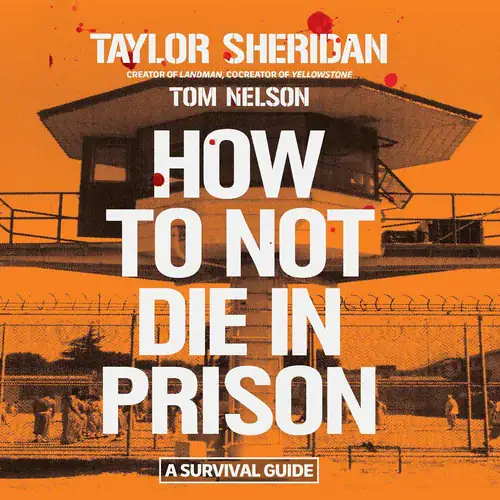
The book doesn’t give you a hero’s journey. It gives you a checklist. How to stand. How to eat. How to walk past a man who wants to hurt you without looking weak or looking like a challenge. Every chapter feels like a knife blade. Short. Sharp. Honest. The core conflict isn’t man versus system. It’s man versus his own pride. The fish who talks back doesn’t survive. The fish who keeps his mouth shut and watches might.
What struck me most was the emotional restraint. Nelson doesn’t wallow. He doesn’t ask for pity. He describes the moment he learned to sleep with one eye open, and he moves on. There is no drama, only data. You realize this is what survival looks like when nobody is coming to save you.
The Cage We Carry
The core theme here is invisible chains. Nelson and Sheridan argue that the real prison isn’t concrete and steel. It’s the story you tell yourself about who you are. The strongest cage, they suggest, was never iron bars. It was the belief that you have no choice.
The key imagery that stayed with me is the “yard.” A flat piece of concrete surrounded by fences. Men walk in circles. They pace. They never stop moving. Sheridan describes it like a human zoo, but the animals are smarter than the zookeepers. They have learned to read body language the way a blind man reads Braille. Every twitch. Every glance. Every breath. A man who cannot control his face will be read like a book, and the chapter will end badly.
I’ll be honest. This part made me uncomfortable. Because I saw myself in that yard. Not literally, but in the way I walk through my own life. How often do I react before I think? How often do I speak when silence would serve me better? The book doesn’t say this directly. It doesn’t have to. The metaphor sits there, heavy and undeniable.
The problem with this book, if you can call it that, is that it refuses to offer false hope. It doesn’t say “you can change.” It says “you can survive.” And for some people, that is not enough. For others, it is everything.
The Gift of Hard Truth
Here is what the book does not do. It does not make prison sound noble. It does not romanticize the men inside. Some of them are monsters. Some are just tired. The book treats them all the same: as dangerous variables to be managed.
The writing is lean, almost journalistic. Sheridan’s background in screenwriting shows. Every scene has a purpose. Every line earns its place. There is no fat here, no poetry for its own sake. The prose feels like a man whispering advice in your ear while you stand in a line that could get you killed.
Who should read this? Anyone who has ever felt trapped. Anyone who has ever wondered what they would do if the bottom fell out. Anyone who works in corrections, or knows someone who does. Who should not read it? People who want comfort. People who want to believe that the system is fair. People who cannot handle the idea that sometimes, the only way out is through.
The real emotion at the end is not relief. It’s not inspiration. It’s a quiet, cold gratitude. You realize that the rules for surviving prison are not so different from the rules for surviving life. Keep your head down. Know who you can trust. Never let them see you bleed.
I closed the book and looked around my living room. The walls felt different. The door felt like a privilege I had never earned. This book won’t save you. But it might make you feel slightly less lost in the moments when the rules disappear and you have to figure it out alone.
